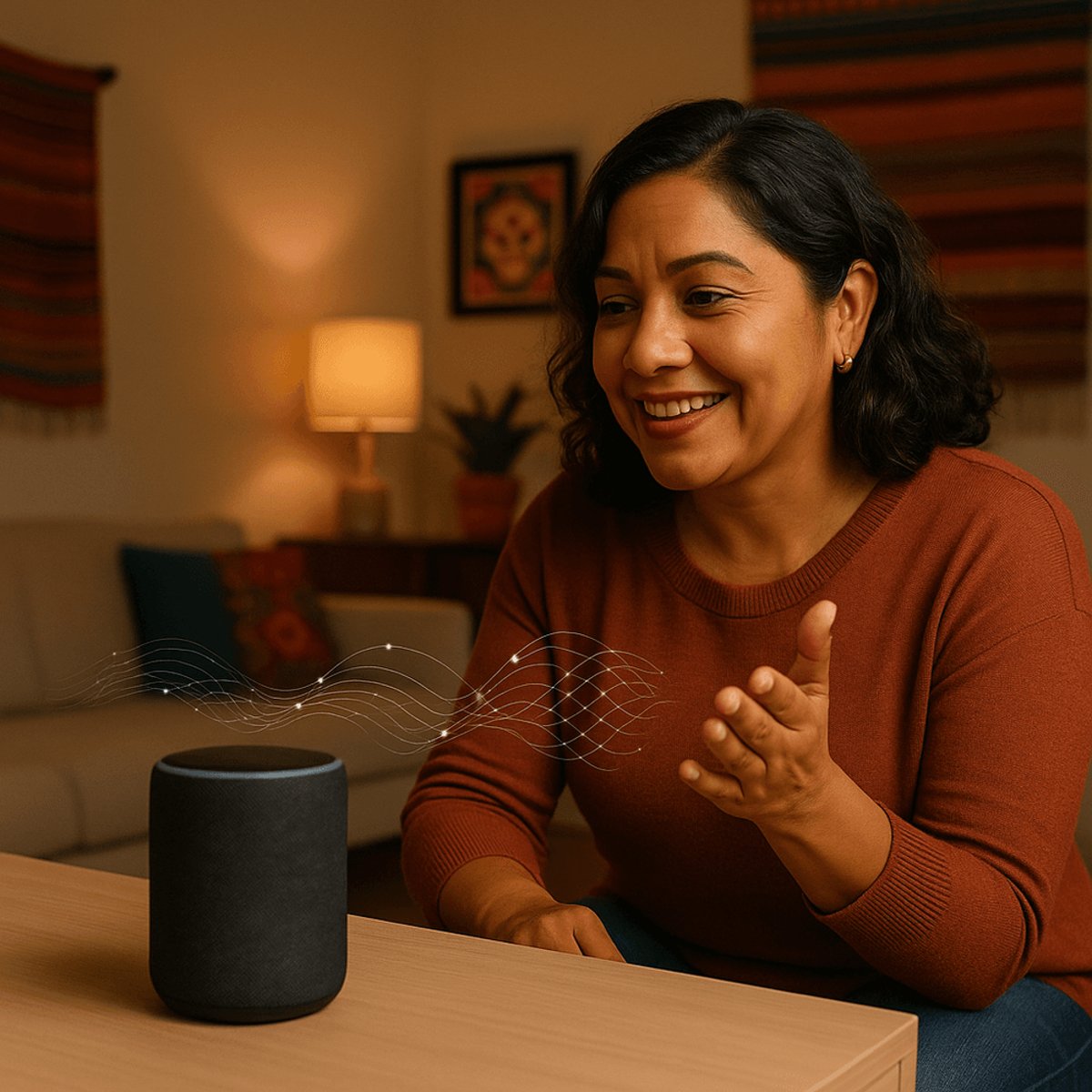
Amazon just launched Alexa+ in Mexico, marking the AI assistant's first expansion beyond English-speaking markets. But this isn't just about translation - it's about teaching artificial intelligence the subtle difference between speaking Spanish and understanding Mexican culture. The move signals a major shift in how tech giants approach global AI deployment, prioritizing cultural fluency over simple language conversion as voice assistants race to become truly universal.
Amazon is rewriting the playbook on AI localization. The company's launch of Alexa+ in Mexico isn't just a language update - it's a fundamental rethinking of how voice assistants need to understand the world.
The Mexico launch, announced today through Amazon's official news channel, marks Alexa+'s first venture outside English-speaking territories. And it's revealing just how much complexity lies beneath what seems like a straightforward translation project. Teaching an AI to speak Spanish is one thing. Teaching it to understand when a Mexican user is being polite, sarcastic, or using regional slang is something else entirely.
This cultural training goes far deeper than previous localization efforts. While earlier versions of Alexa offered Spanish-language support, Alexa+ has been trained to recognize context that's deeply embedded in Mexican culture - from understanding references to local holidays and traditions to grasping the nuances of formal versus informal address that vary significantly across Spanish-speaking regions.
The technical challenge is substantial. Large language models traditionally struggle with cultural context because they're trained primarily on text data that doesn't capture the unwritten rules of social interaction. Amazon's approach involves training Alexa+ on culturally-specific datasets that include everything from Mexican television transcripts to social media conversations, allowing the AI to pick up on patterns that go beyond literal translation.
This matters because voice assistants are increasingly competing on their ability to feel native rather than foreign. In markets like Latin America, where Google Assistant and local alternatives have been building cultural competency for years, Amazon can't afford to launch a product that sounds like it's speaking textbook Spanish. Users expect their AI to understand them the way a neighbor would, not the way a translator would.
The Mexico launch also serves as a testing ground for Amazon's broader global ambitions. Latin America represents a massive growth market for voice AI, with smartphone penetration rising and smart home adoption accelerating. Getting cultural AI right in Mexico provides a template for expansion into other Spanish-speaking markets, each with its own distinct cultural markers.
But there's a bigger implication here for the AI industry. As models become more sophisticated, the competitive advantage shifts from pure technical capability to cultural intelligence. An AI that can nail the technical aspects of language but misses cultural cues will struggle to gain user trust and sustained engagement. This is especially critical for voice assistants, which users interact with in intimate, everyday contexts where cultural missteps feel particularly jarring.
The approach Amazon is taking with Alexa+ could influence how other tech giants think about global AI deployment. Rather than treating localization as a post-development checkbox, it's being baked into the core training process. This requires significantly more investment in regional expertise, local content partnerships, and culturally-diverse training data - resources that favor larger players with deep pockets.
For Amazon, the stakes are clear. The company has been working to revitalize Alexa's market position as competitors advance their own AI assistants. Establishing Alexa+ as the culturally-intelligent choice in non-English markets could provide a crucial differentiator. It's not just about being available in more languages - it's about being preferred because the AI genuinely understands the user's world.
The Mexico launch is just the beginning. Amazon hasn't disclosed which markets come next, but the cultural training methodology being tested here could accelerate expansion into other regions where language alone isn't enough. Portuguese for Brazil, French for West Africa, Hindi for India - each represents not just a new language but an entirely new cultural framework that Alexa+ will need to master.
Amazon's Mexico launch with Alexa+ represents more than geographic expansion - it's a signal that the next frontier in AI competition is cultural intelligence. As voice assistants move beyond early adopter markets into regions with rich linguistic diversity, the winners won't be those who simply translate their products, but those who genuinely understand the cultural context in which their AI operates. For users, this means AI assistants that feel less like foreign technology and more like natural extensions of their daily lives. For the industry, it means localization is no longer an afterthought but a core technical challenge that could determine which platforms achieve truly global reach.