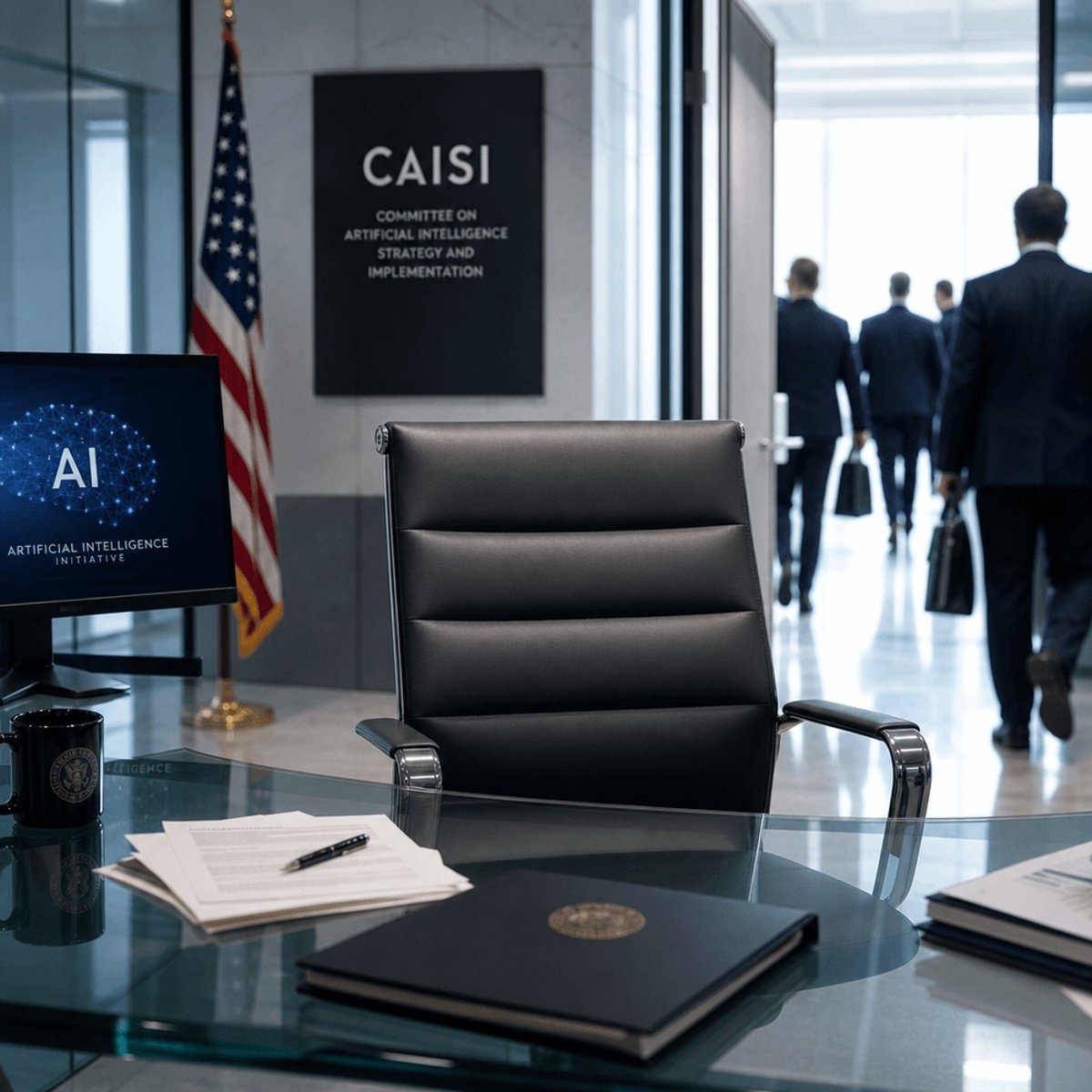
The Trump administration's efforts to establish coherent AI policy just hit another roadblock. The latest director of the Center for AI Standards and Innovation (CAISI) has resigned, making this position a revolving door since venture capitalist David Sacks departed as AI czar earlier this year. The sudden exit raises questions about the federal government's ability to provide stable leadership on artificial intelligence regulation at a time when the technology is reshaping everything from healthcare to national security.
The director's chair at the Center for AI Standards and Innovation keeps getting colder. Trump's latest appointment to lead the federal government's AI policy coordination has already walked away from the job, according to a TechCrunch report. It's the latest sign that Washington can't seem to get its act together on artificial intelligence, even as the technology fundamentally reshapes the global economy.
The resignation continues a pattern of instability that started when David Sacks, the PayPal Mafia veteran turned venture capitalist, left his position as AI czar. Sacks had been brought in to bring Silicon Valley credibility to the role, but his departure opened the floodgates. Since then, CAISI's director role has cycled through appointees faster than most startups burn through Series A funding.
The timing couldn't be worse. Companies like OpenAI, Google, and Microsoft are pushing the boundaries of what large language models can do, while Meta and Amazon pour billions into AI infrastructure. Meanwhile, the government body supposedly setting standards and coordinating policy can't keep anyone in the top job long enough to unpack their office supplies.
CASISI was established to bring some order to the federal government's fragmented approach to AI. The center is meant to develop standards, coordinate research priorities, and help position the United States to compete with China's state-directed AI development. But that mission requires sustained leadership and institutional knowledge, something a revolving door makes nearly impossible.
The departure also highlights a broader problem: top tech talent doesn't want to work in government. The pay gap between Silicon Valley and Washington is massive, the bureaucracy is suffocating, and the political environment is toxic. Why would a talented AI policy expert take a government job when they could make ten times the salary at a major tech company or land a cushy consulting gig?
This leadership vacuum has real consequences. As Nvidia chips power an arms race in AI computing and companies race to deploy autonomous systems across industries, someone needs to be thinking about safety standards, testing protocols, and oversight frameworks. The European Union has already passed comprehensive AI regulation. China's government maintains tight control over AI development within its borders. The United States, meanwhile, can't even staff its coordinating body.
The instability at CAISI also affects how the U.S. engages internationally on AI governance. When your chief representative keeps changing, it's hard to build the relationships and trust needed for effective diplomacy. Other countries notice when America can't get its house in order.
Industry insiders say the role has become poisoned by unrealistic expectations, insufficient resources, and political interference. One former government official told colleagues the job involves "all the responsibility with none of the authority," a recipe for frustration that sends talented people running back to the private sector.
The resignation comes at a particularly sensitive moment for AI policy. Congressional committees are actively debating legislation around AI transparency, copyright issues related to training data, and national security concerns about the technology. Having stable leadership at CAISI would help inform those discussions with technical expertise and coordinated agency perspectives. Instead, lawmakers are left to navigate these complex issues without consistent guidance from the executive branch.
The Trump administration hasn't yet announced a replacement or addressed why the position has become such a hot potato. That silence speaks volumes about how seriously the White House takes AI governance compared to the rhetoric about American technological leadership.
The revolving door at CAISI isn't just an embarrassing footnote in Washington dysfunction—it's a strategic vulnerability. While tech giants race ahead with AI development and adversaries like China maintain centralized control over their AI ecosystems, the United States can't keep anyone in charge of coordinating its own approach. Until the administration figures out how to make this role attractive and effective, American AI policy will continue to be reactive rather than strategic, leaving the most transformative technology of our time largely ungoverned. The question isn't whether someone will eventually fill this role again. It's whether they'll stick around long enough to actually accomplish anything.