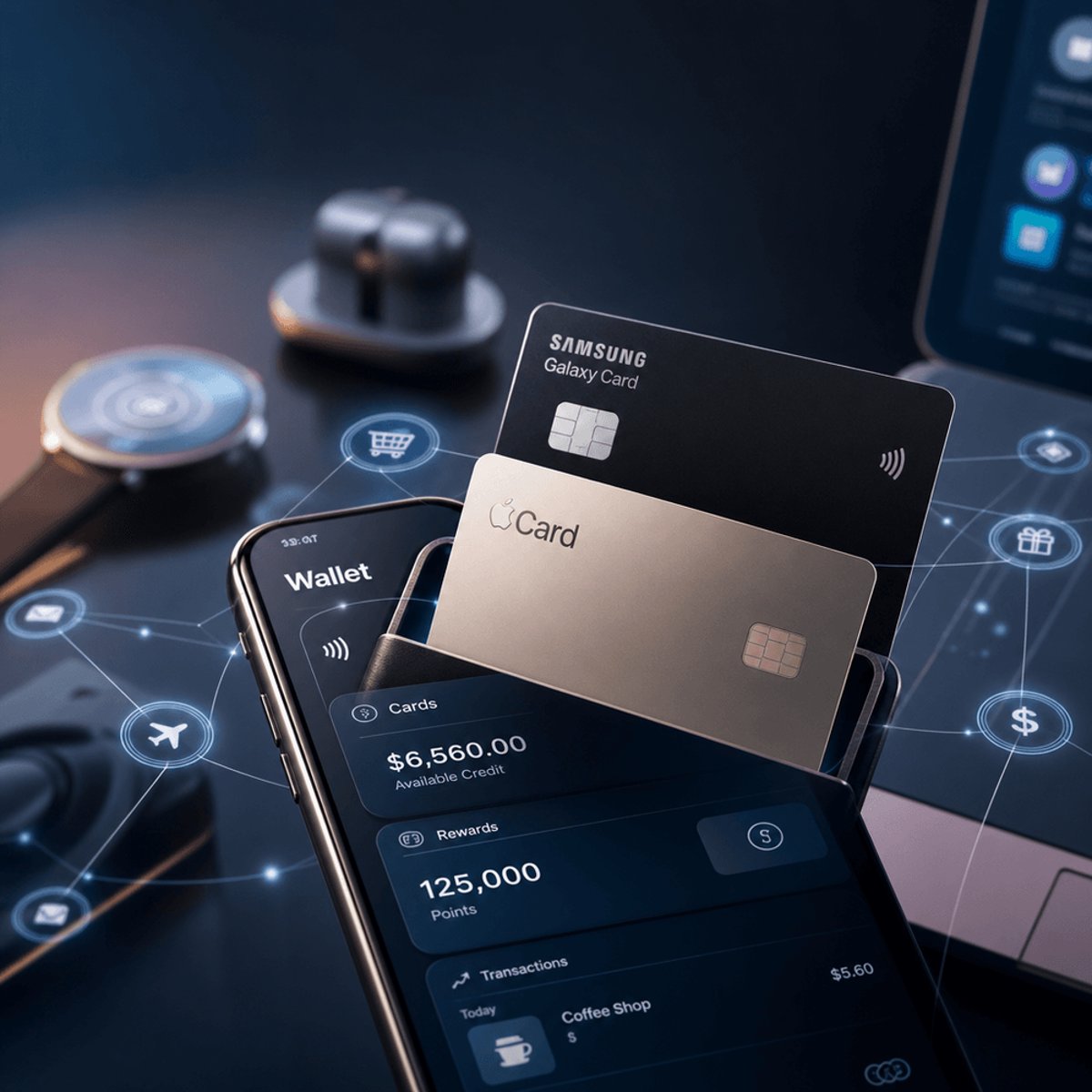
Samsung just fired back at Apple in the financial services arena. The electronics giant unveiled the Galaxy Card, a cash-back credit card that slots directly into Samsung Wallet, marking its most aggressive move yet into consumer fintech. The launch puts Samsung in direct competition with Apple Card, which has racked up millions of users since its 2019 debut, and signals how device makers are increasingly betting on financial services to deepen customer loyalty and unlock recurring revenue streams.
Samsung isn't content letting Apple own the tech-branded credit card space. The company just pulled back the curtain on the Galaxy Card, a cash-back offering that lives exclusively within Samsung Wallet and aims squarely at the company's most devoted customers. According to Wired's report, the card arrives with rewards structures designed specifically for people already deep in Samsung's ecosystem, from Galaxy phones to smart home devices.
The timing couldn't be more pointed. Since Apple launched its credit card partnership with Goldman Sachs back in 2019, the product has become a case study in how hardware companies can extend into financial services. While neither Apple nor Goldman regularly disclose exact user numbers, industry analysts estimate the card attracted several million users in its first few years, demonstrating that brand loyalty can translate into wallet share. Samsung clearly took notes.
What makes the Galaxy Card interesting isn't just that it exists, but where Samsung's placing its bets. The card integrates directly into Samsung Wallet, the company's digital payment platform that competes with Apple Pay and Google Wallet. That native integration means Galaxy phone users can apply, get approved, and start spending without ever leaving Samsung's app ecosystem. It's the kind of friction-reducing move that Apple perfected with its own card, which similarly lives entirely within the iPhone's Wallet app.
The cash-back structure follows familiar territory. While specific reward tiers weren't detailed in the initial announcement, the model mirrors what's become standard in the tech card space: higher rewards for purchases within the company's ecosystem, competitive rates for general spending, and presumably some perks tied to Samsung products or services. Apple Card offers 3% back on Apple purchases and select partners, 2% on Apple Pay transactions, and 1% on everything else. Samsung will need to match or beat those numbers to make its offering compelling.
But here's where it gets tricky for Samsung. Apple Card succeeded partly because of Apple's unmatched brand loyalty and partly because Goldman Sachs brought serious financial infrastructure to the table. Samsung hasn't disclosed which financial institution is backing the Galaxy Card, and that partnership will matter enormously. The card issuer determines everything from credit limits to customer service quality to how aggressively the product gets marketed. Apple's Goldman partnership hit some turbulence recently, with reports suggesting Goldman wanted to exit the consumer banking business entirely, though the card continues operating.
The broader context here is that device makers see financial services as the next frontier for customer lock-in. When you're already buying a Samsung phone, tablet, and smartwatch, adding a Samsung-branded card that rewards that behavior creates one more reason not to switch to a competing ecosystem. It's the same logic driving Apple's expansion into savings accounts, buy-now-pay-later services, and other financial products. These aren't just revenue plays, they're moat-deepening strategies.
Samsung faces a different challenge than Apple did at launch, though. Apple Card arrived when the idea of a tech company issuing credit cards felt novel and exciting. Now it's a known playbook. Google has experimented with similar offerings, and even companies like Amazon have long-standing co-branded cards. Samsung needs to prove it can execute on rewards, user experience, and financial management in ways that stand out in an increasingly crowded market.
The card's success will likely hinge on Samsung's installed base. The company ships millions of Galaxy devices annually and maintains fierce loyalty among Android users who prefer its hardware to competitors. If even a fraction of those customers apply for the Galaxy Card, Samsung could quickly build a meaningful financial services business. But credit cards come with regulatory complexity, fraud management challenges, and customer service demands that are worlds apart from manufacturing smartphones.
One thing working in Samsung's favor is that the consumer credit card market remains robust despite economic uncertainties. People are spending, and cash-back cards that integrate seamlessly with existing payment methods continue attracting users. The question isn't whether there's demand, it's whether Samsung can deliver an experience compelling enough to make users choose Galaxy Card over the dozens of other options already in their wallets.
The launch also signals how Samsung views its competitive position against Apple. Rather than ceding any ground, the company's matching Apple move for move across services. Where Apple has Apple TV Plus, Samsung has Samsung TV Plus. Where Apple built Apple Pay, Samsung countered with Samsung Pay and now Samsung Wallet. The Galaxy Card is the latest volley in a rivalry that spans hardware, software, and now financial products.
What remains unclear is the card's availability and rollout timeline. Apple Card launched exclusively in the US and has only slowly expanded internationally. If Samsung follows a similar approach, it'll take years before the card reaches the company's global customer base. That staggered rollout could limit the product's impact, or it could give Samsung time to refine the offering based on early user feedback before going wide.
Samsung's Galaxy Card arrival proves that fintech has become the new battleground for tech ecosystem wars. Whether the card succeeds depends less on its cash-back percentages and more on whether Samsung can deliver the seamless experience and customer trust that turned Apple Card into a legitimate financial product. For consumers, it means more choices and potentially better rewards as companies compete for loyalty. For Samsung, it's a bet that its hardware customers will embrace its financial services with the same enthusiasm they've shown for its devices. The coming months will reveal whether that gamble pays off or if the credit card market proves harder to crack than the smartphone business.