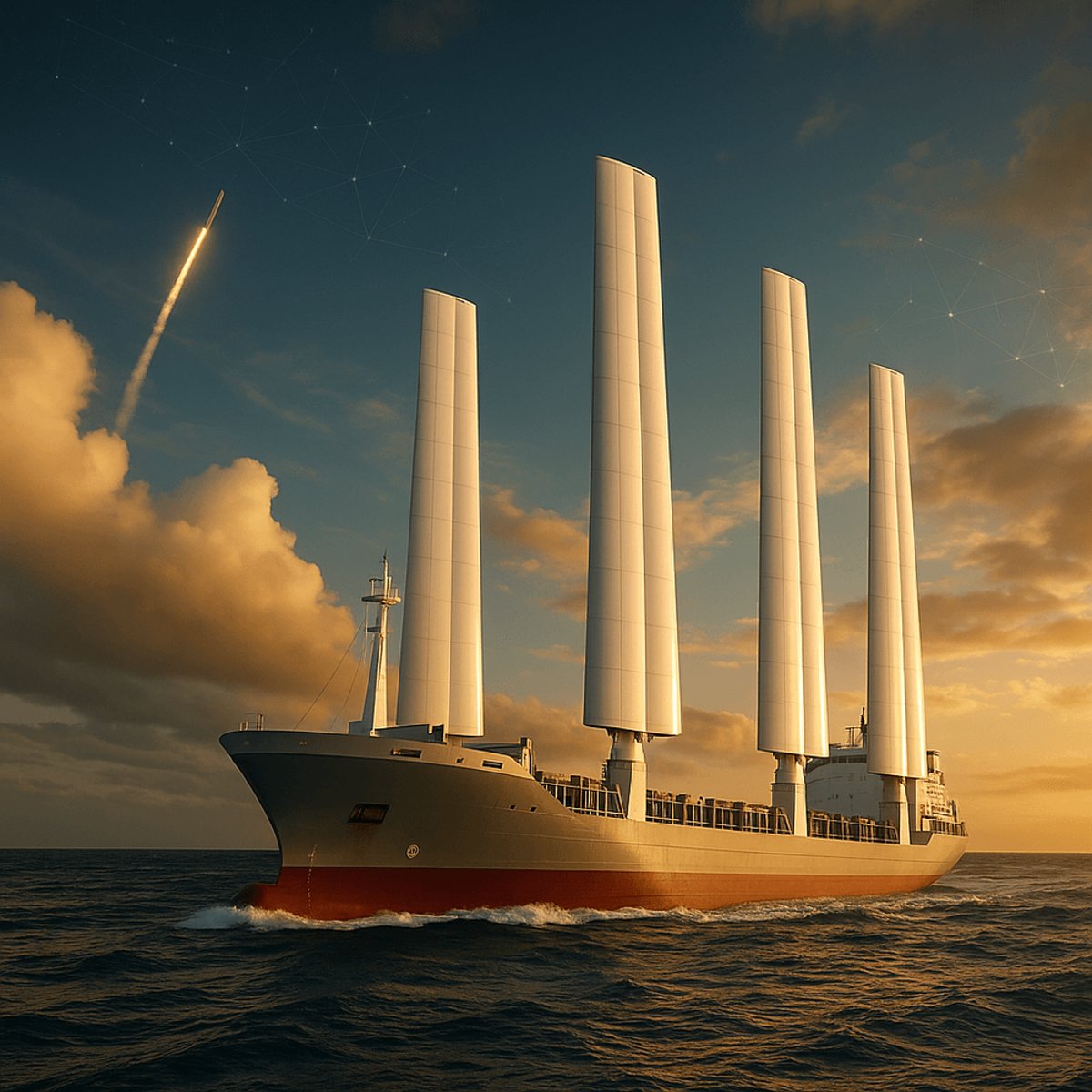
Amazon's satellite internet ambitions just caught a major tailwind. The hybrid cargo ship Canopée departed Bordeaux this week carrying Ariane 6 rocket components for Amazon Leo's inaugural launch with European partner Arianespace - the first of 18 missions that will reshape the global broadband landscape. This maritime milestone marks Amazon's deepest push into European space infrastructure, bringing high-speed internet to underserved communities worldwide.
Amazon just turned satellite logistics into an ocean adventure. The hybrid cargo ship Canopée left Bordeaux this week loaded with Ariane 6 rocket components, marking the company's most ambitious European space partnership yet. This isn't just another cargo run - it's the start of Amazon Leo's 18-mission marathon with Arianespace that could reshape global internet access.
The timing couldn't be more critical. While SpaceX dominates headlines with Starlink, Amazon has quietly built momentum with over 150 satellites already deployed. "We already have six successful Amazon Leo missions under our belt," Amazon Leo VP Rajeev Badyal told reporters, adding that Ariane 6's heavy-lift capacity will "accelerate deployment plans." The LE-01 mission will add 32 more satellites to the constellation when it launches in early 2026.
The ship itself embodies Amazon's sustainability push. Canopée features four wing sails rising 121 feet above deck, using "Oceanwings" technology that cuts fuel consumption by 35% in optimal conditions. It's a fitting symbol for Amazon's broader climate commitments through The Climate Pledge, which targets net-zero emissions by 2040.
But this partnership runs deeper than environmental optics. According to Oxford Economics research, Amazon Leo will pump €2.8 billion into EU GDP between 2022 and 2029, supporting an average of 3,270 jobs annually. In France alone, the launch partnerships will contribute €1.38 billion to GDP and sustain 1,590 jobs through 2029.
"This collaboration reflects Amazon's long-standing commitment to France, where we have invested more than €30 billion since 2010," Frédéric Duval, amazon.fr country manager, explained during the departure ceremony. The partnership gives Amazon crucial European launch capacity while providing Arianespace with commercial backing for its next-generation rocket program.
Arianespace CEO David Cavaillolès sees this as validation of Europe's space independence strategy. "Canopée is now beginning a tour of several European ports to load the Ariane 6 stages and components," he said, describing the weeks-long Atlantic crossing to French Guiana's spaceport. The mission represents "the future of independent European access to space."
The competitive dynamics are intense. Amazon Leo aims to deliver "high-speed, low-latency broadband to customers worldwide," directly challenging SpaceX's Starlink dominance. Each Amazon Leo satellite is manufactured at the company's Kirkland, Washington facility before shipping to Cape Canaveral for final processing. The service targets "communities beyond the reach of traditional networks," positioning Amazon to bridge the digital divide in remote regions.
Amazon's approach differs from competitors through its integration with existing logistics infrastructure. The company's global delivery network gives it unique advantages in satellite deployment and ground terminal distribution. Amazon Leo is also a signatory of the European Space Agency's "Zero Debris Charter," emphasizing sustainable orbital operations.
As Canopée crosses the Atlantic, it carries more than rocket components - it represents Amazon's bet on space as the next frontier for its everything-everywhere strategy. The ship arrives in French Guiana in January, where final assembly begins for a launch that could determine whether Amazon can compete with SpaceX's head start in satellite internet.
Amazon's ocean voyage to space represents more than logistical innovation - it's a strategic play for European market dominance in satellite internet. As Canopée makes its Atlantic crossing, Amazon positions itself as both a technology leader and economic partner for Europe's space ambitions. The success of this partnership could determine whether Amazon can close the gap with SpaceX while building the infrastructure for truly global broadband access.