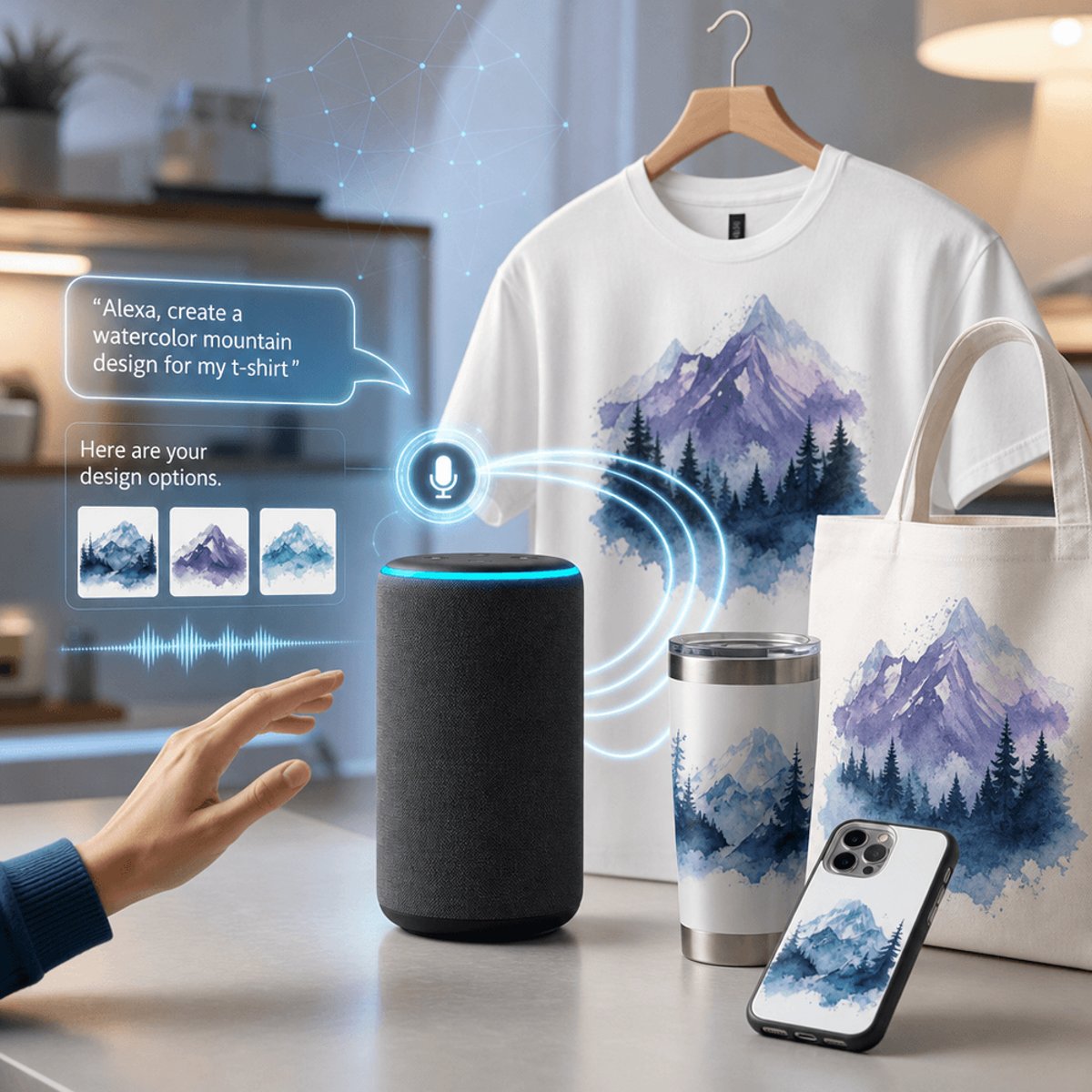
Amazon just turned Alexa into a personal design studio. The company quietly rolled out an AI-powered merchandise design tool that lets shoppers create custom graphics for t-shirts, tumblers, and other products just by describing what they want. It's Amazon's latest push to weave generative AI into everyday shopping, moving beyond product recommendations into actual creative production—and signaling how the e-commerce giant plans to compete in the AI-driven personalization wars.
Amazon is making its biggest play yet to turn generative AI into a shopping companion. The company announced today that customers can now design custom merchandise directly through Alexa for Shopping, using AI to transform text prompts into graphics that appear on t-shirts, tumblers, phone cases, and other products available through Amazon's marketplace.
The feature lets shoppers describe what they want—"a watercolor portrait of my golden retriever" or "matching shirts for my bachelorette party"—and the AI generates design options in seconds. According to Amazon's announcement, the tool handles everything from personalized pet portraits to group event merchandise, categories that have traditionally required either graphic design skills or paying premium prices on custom merchandise platforms.
It's a strategic expansion of Amazon's AI ambitions beyond the recommendation engines and search improvements the company has been testing. While competitors like Etsy have built billion-dollar businesses around custom and personalized goods, Amazon has mostly left that territory to third-party sellers. This tool changes that calculus, giving Amazon a direct pipeline into the high-margin world of personalized products.
The timing aligns with Amazon's broader AI integration push. The company has been steadily adding generative AI features across its ecosystem—from AI-generated product review summaries to conversational shopping assistants. But this marks the first time Amazon's letting customers use AI to actually create products, not just find them. It's a subtle but significant shift that could reshape how people think about Amazon's role in their creative projects.
The feature taps into the same consumer appetite that's driven the explosion of AI image generators like Midjourney and DALL-E. But Amazon's bet is that most people don't want to generate images just to save them—they want to put those designs on actual physical products. By collapsing the gap between creation and commerce, Amazon positions itself as both the creative tool and the fulfillment engine.
What makes this particularly interesting is the print-on-demand implications. Amazon already operates Merch on Demand, its platform for creators to sell custom-designed products without inventory risk. This new AI tool could supercharge that business by lowering the barrier to entry even further. Now anyone with an idea can become a merchandise creator, no design skills required.
The competitive pressure is real. Shopify has been aggressively courting creators and small businesses with AI tools for product descriptions, marketing copy, and storefront design. Printful and similar services have built entire businesses around making custom merchandise accessible. Amazon's advantage is its massive customer base and logistics network—if the AI can generate designs people actually want to buy, Amazon already has the infrastructure to produce and ship them at scale.
There's also the data play. Every design prompt teaches Amazon's AI what customers want, feeding a recommendation engine that could eventually suggest personalized products before you even think to ask. The company could analyze trending prompts to identify emerging design trends, then surface those insights to sellers or use them to guide its own product development.
The technical execution matters here. If Amazon's AI generates generic or low-quality designs, customers will quickly revert to professional designers or specialized platforms. But if the tool can consistently produce designs that feel personal and polished, it could become as essential to shopping as product search—another way Amazon embeds itself deeper into consumer behavior.
This also raises questions about the creative economy. Independent graphic designers and small merchandise businesses have thrived on platforms like Etsy precisely because their designs feel unique and handcrafted. If Amazon's AI can approximate that aesthetic at lower prices and faster turnaround times, it could pressure the very creators who've built businesses around custom design work.
For now, Amazon's keeping the focus consumer-friendly—pet portraits and party shirts, not complex graphic design projects. But the infrastructure being built here could eventually extend to business logos, marketing materials, or product packaging. Amazon Business already serves millions of corporate customers who might pay premium prices for AI-assisted design tools integrated directly into procurement workflows.
Amazon's AI design tool represents more than just another generative AI feature—it's a strategic wedge into the personalized merchandise market and a signal of how the company plans to use AI to create entirely new shopping behaviors. By making custom design as simple as telling Alexa what you want, Amazon collapses the friction between imagination and purchase. The real test will be whether the AI produces designs compelling enough to keep customers coming back, or whether this becomes another experimental feature that shoppers try once and forget. Either way, the creative economy just got more complicated, and Amazon's competitors in the custom merchandise space should be paying very close attention.