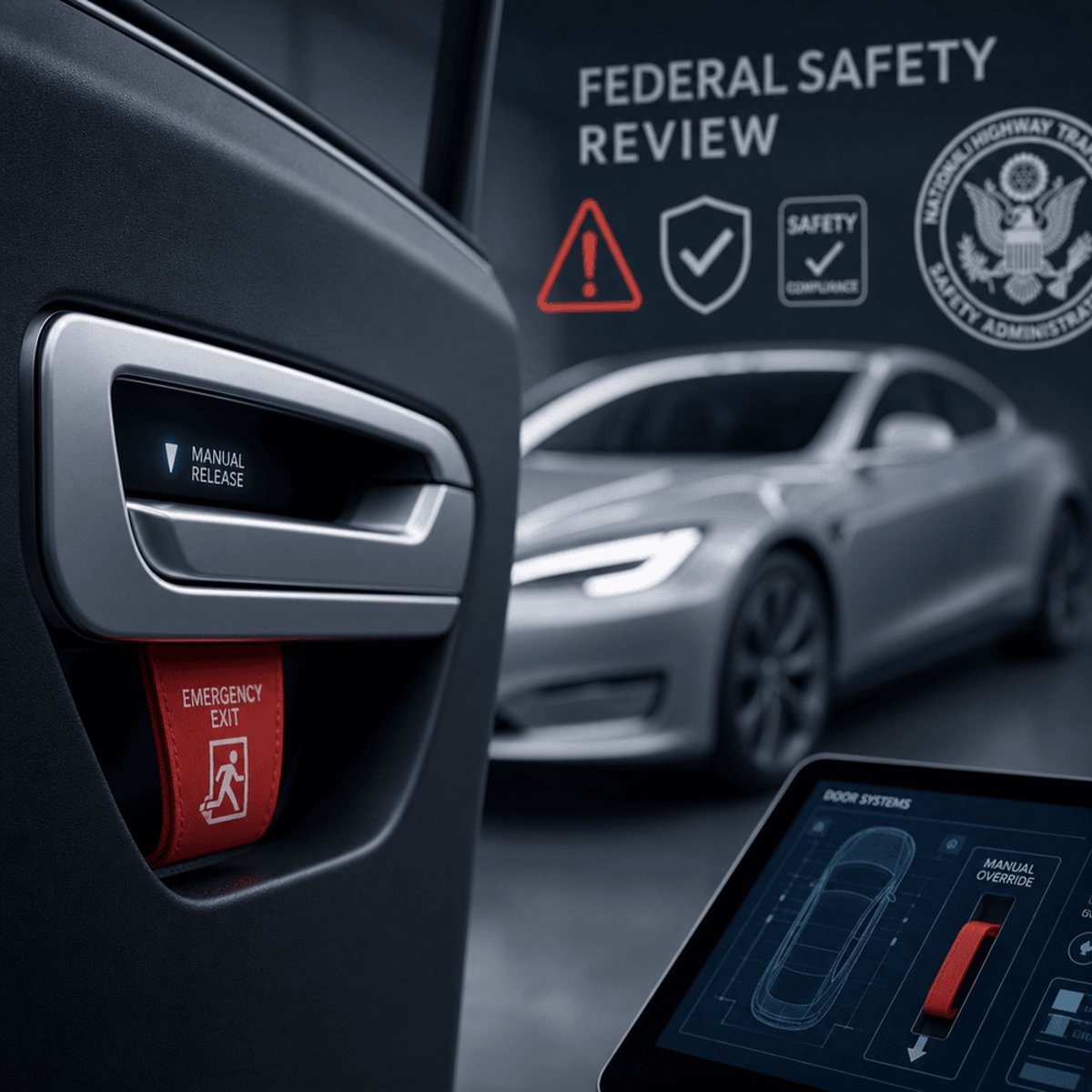
Tesla's innovative door handle designs are now under federal scrutiny. The National Highway Traffic Safety Administration has launched a rule-making process to establish new standards for vehicle emergency exits, following a series of incidents where occupants became trapped inside cars—some with fatal outcomes. The move could reshape safety requirements across the entire electric vehicle industry, potentially forcing automakers to rethink how passengers escape during emergencies when electronic systems fail.
Federal safety regulators are taking aim at one of Tesla's most distinctive design elements. The National Highway Traffic Safety Administration confirmed Thursday it's launching a formal rule-making process to establish comprehensive standards for emergency vehicle exits, a direct response to mounting concerns about electronic door systems that can trap occupants during critical moments.
The investigation centers on Tesla's use of electronic door handles and buttons across its Model S, Model X, Model 3, and Model Y lineup. Unlike traditional mechanical handles, these systems rely on electrical power to release door latches. When a vehicle loses power during a crash or fire, passengers unfamiliar with hidden manual release mechanisms have found themselves unable to escape. According to TechCrunch, multiple fatal incidents have been reported where this design contributed to deaths.
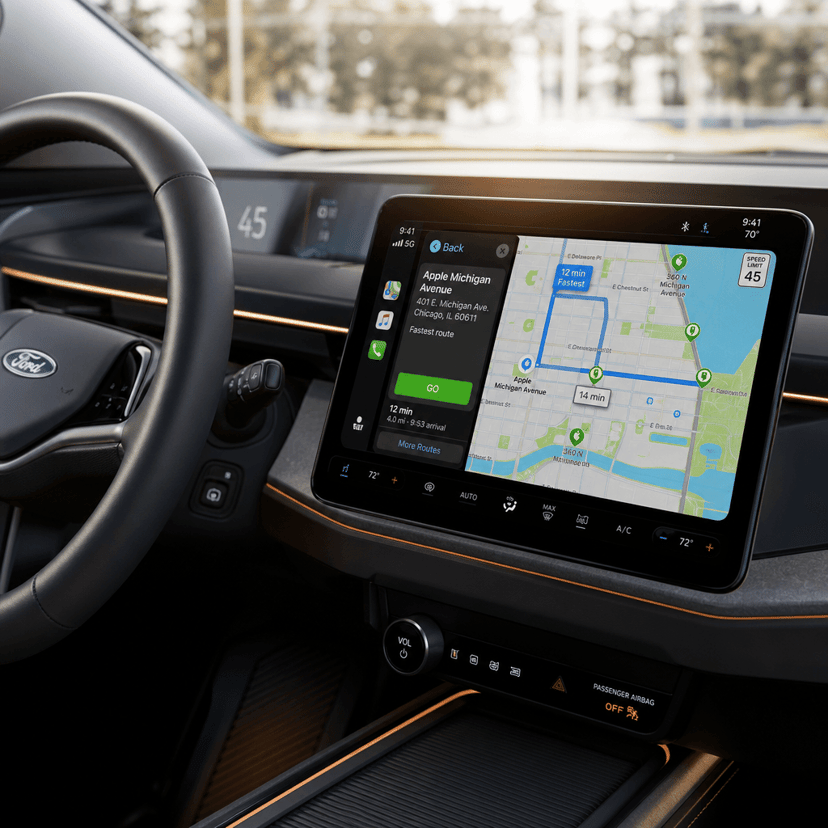
The timing couldn't be more critical for the EV industry. As electric vehicles proliferate, more automakers are adopting similar electronic door systems to improve aerodynamics, reduce weight, and create sleeker exterior designs. Rivian, Lucid Motors, and even legacy automakers like Ford have introduced electronic door mechanisms in their latest electric models. A sweeping federal mandate could force wholesale redesigns across product lines.
Tesla has long defended its door handle design, pointing to manual release mechanisms built into each door. But critics argue these backup systems are poorly marked, counterintuitive to locate during emergencies, and in some cases require multiple steps to activate. The Model X's falcon-wing rear doors have drawn particular scrutiny—their manual release requires removing a speaker grille and pulling a cable, a process few owners know exists.
The regulatory push builds on years of consumer complaints and lawsuits. Court documents from pending litigation reveal at least a dozen cases where occupants suffered severe injuries or died after being unable to exit burning or submerged Tesla vehicles. In one 2023 incident in Florida, a Model S caught fire after a collision, and the driver couldn't operate the electronic door release with the power cut. A bystander eventually broke the window to extract the unconscious driver.
NHTSA's rule-making process typically takes 18 to 24 months, involving public comment periods, industry consultations, and cost-benefit analyses. The agency is expected to propose minimum standards for mechanical backup systems, including requirements that manual releases be clearly marked, intuitively positioned, and operable by children and elderly passengers. Some safety advocates are pushing for standardized placement across all vehicles, similar to existing regulations for fuel filler doors and hood releases.
The financial implications could be substantial. Auto industry analysts estimate that redesigning door systems to meet new federal standards could cost manufacturers between $200 and $500 per vehicle, depending on the stringency of final requirements. For Tesla, which delivered 1.8 million vehicles last year, compliance costs could exceed $900 million over the next production cycle. Smaller EV startups operating on thin margins may face existential challenges.
Competitor response has been mixed. Traditional automakers like General Motors and Toyota, which have maintained more conventional door mechanisms even in their EV offerings, see potential competitive advantage. But companies that bet heavily on minimalist electronic designs face expensive pivots. Lucid Motors, whose Air sedan features retractable door handles, has already begun engineering alternative designs in anticipation of regulatory action.
Consumer safety groups are applauding the federal review. "This is long overdue," said Jason Levine, executive director of the Center for Auto Safety, in a statement. "Innovation shouldn't come at the cost of basic emergency egress. We've seen too many preventable tragedies because designers prioritized aesthetics over safety fundamentals."
Tesla hasn't issued a formal response to the NHTSA announcement, but the company has a contentious history with federal safety regulators. CEO Elon Musk has previously criticized NHTSA investigations as overreach and defended Tesla's safety record as superior to traditional automakers. The company's approach to regulatory compliance—often fighting requirements it views as unnecessary—suggests a potential confrontation ahead.
The rule-making process arrives as Tesla faces broader scrutiny over its safety practices. The company is currently under investigation for multiple issues, including its Autopilot and Full Self-Driving systems, battery fire risks, and suspension failures. Adding door handle regulations to this list compounds pressure on the automaker's engineering and legal teams.
Beyond Tesla, the proposed regulations could influence global automotive design standards. European and Asian regulators often follow NHTSA's lead on safety requirements, meaning new US rules could effectively set worldwide standards. That global reach makes this rule-making process particularly significant for automakers planning international EV launches.
The NHTSA's move to regulate vehicle emergency exits represents a watershed moment for electric vehicle design philosophy. What started as a Tesla-specific concern has evolved into an industry-wide reckoning about the balance between innovation and fundamental safety. As regulators, automakers, and safety advocates negotiate the specifics over the coming months, one thing is clear: the era of purely electronic door systems without robust mechanical backups is likely ending. For consumers, that means future EVs may look slightly less futuristic—but they'll be considerably easier to escape when seconds matter most. The rule-making process will test whether the industry can adapt quickly enough to prevent more tragedies while maintaining the design innovation that makes electric vehicles appealing.