Anthropic is in talks with Samsung to develop custom AI chips, according to a TechCrunch report. The move comes just days after rival OpenAI announced its own custom chip partnership with Broadcom, signaling a seismic shift as AI leaders race to break free from Nvidia's grip on the infrastructure powering large language models. The development marks a critical inflection point in the AI hardware wars, where controlling the silicon could determine who dominates the next decade of AI.
Anthropic just fired the latest salvo in the AI chip wars. The Claude maker is in discussions with Samsung to build custom silicon designed specifically for training and running large language models, TechCrunch reports. The timing couldn't be more pointed - the news breaks barely a week after OpenAI unveiled its own custom chip partnership with Broadcom, suggesting we're watching a coordinated industry pivot away from total Nvidia dependence.
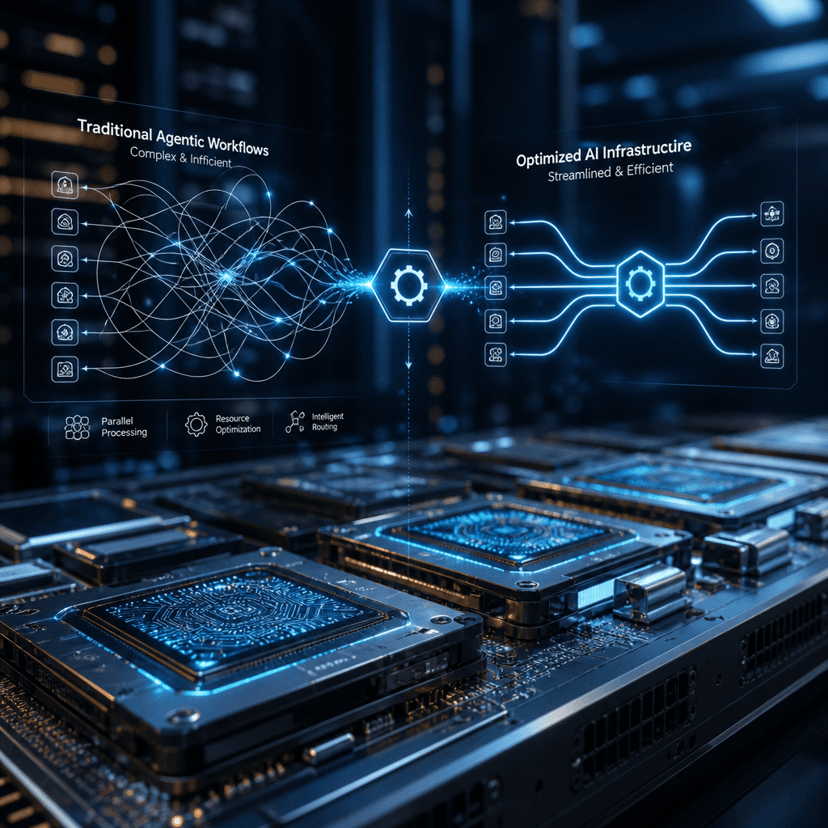
The implications are massive. Right now, AI companies burn through billions renting Nvidia's H100 and H200 GPUs, with costs that scale brutally as models grow larger and user bases expand. Custom chips promise a way out - silicon optimized for specific workloads like inference (running queries through trained models) or the massive matrix multiplications that power transformer architectures. Google proved the concept years ago with its TPU chips, which now power everything from Search to Gemini.
For Anthropic, the economics make perfect sense. The company raised $7 billion in funding earlier this year and counts Amazon as a major investor and cloud partner. But operating Claude at scale - especially the newer, more capable models - requires staggering compute resources. Building custom chips with Samsung's foundry expertise could slash inference costs by 50% or more while delivering performance tailored exactly to Claude's architecture, rather than general-purpose GPUs.
Samsung brings serious manufacturing muscle to the table. The Korean giant operates some of the world's most advanced semiconductor fabs and has been aggressively courting AI customers as it competes with TSMC for cutting-edge chip production. The partnership would give Samsung a marquee AI customer to showcase its foundry capabilities, while Anthropic gains access to manufacturing capacity without the years-long wait times plaguing TSMC's order books.
The real story here is how fast the landscape is shifting. Just two years ago, the entire AI industry ran on Nvidia chips with no viable alternatives. Now we're seeing Microsoft develop its Maia chips, Amazon rolling out Trainium and Inferentia processors, and Meta building custom silicon for its data centers. The common thread? No one wants to be completely dependent on a single supplier when chips are the fundamental constraint on AI development.
OpenAI's Broadcom partnership last week sent shockwaves through the industry. The deal reportedly targets chips specifically optimized for inference workloads - the computationally expensive process of actually running ChatGPT queries. Anthropic following suit within days suggests these discussions have been underway for months, with companies timing announcements as part of broader strategic shifts.
Nvidia isn't sitting still. The company's H200 chips are shipping now, with the next-gen Blackwell architecture ramping production. But Nvidia's dominance stems from its CUDA software ecosystem and years of optimization for AI workloads. Custom chips from Anthropic, OpenAI, and others threaten to commoditize the hardware layer - especially for inference, where specialized silicon can deliver better performance per watt and per dollar.
The Samsung partnership also hints at Anthropic's long-term ambitions. Building custom chips isn't a quick fix - it requires multi-year commitments and deep technical expertise. The fact that Anthropic is pursuing this path suggests the company expects to be training and deploying models at truly massive scale for years to come. It's a bet that the AI boom isn't a bubble, but a fundamental platform shift requiring dedicated infrastructure.
What remains unclear is the timeline. Chip development typically takes 18-24 months from design to production, assuming no major hiccups. Anthropic would need to finalize specifications, work through multiple design iterations, and then wait for Samsung's fabs to manufacture the chips. That means any custom silicon likely won't hit production until late 2027 at the earliest - an eternity in the fast-moving AI world.
But the strategic signal matters as much as the hardware. By pursuing custom chips, Anthropic is declaring it plans to compete at the infrastructure level, not just the model layer. That puts the company on a collision course with cloud giants like Amazon, Microsoft, and Google, all of which are building vertically integrated AI stacks from silicon to software.
The Anthropic-Samsung talks represent more than just another chip partnership - they're evidence of a fundamental restructuring in AI economics. As model development costs soar and inference demands explode, controlling the silicon layer has become existential. Whether Anthropic can successfully navigate chip development while continuing to advance Claude remains to be seen, but the company clearly believes it has no choice but to try. The AI arms race just expanded from algorithms to atoms, and the companies that can master both stand to dominate the decade ahead.