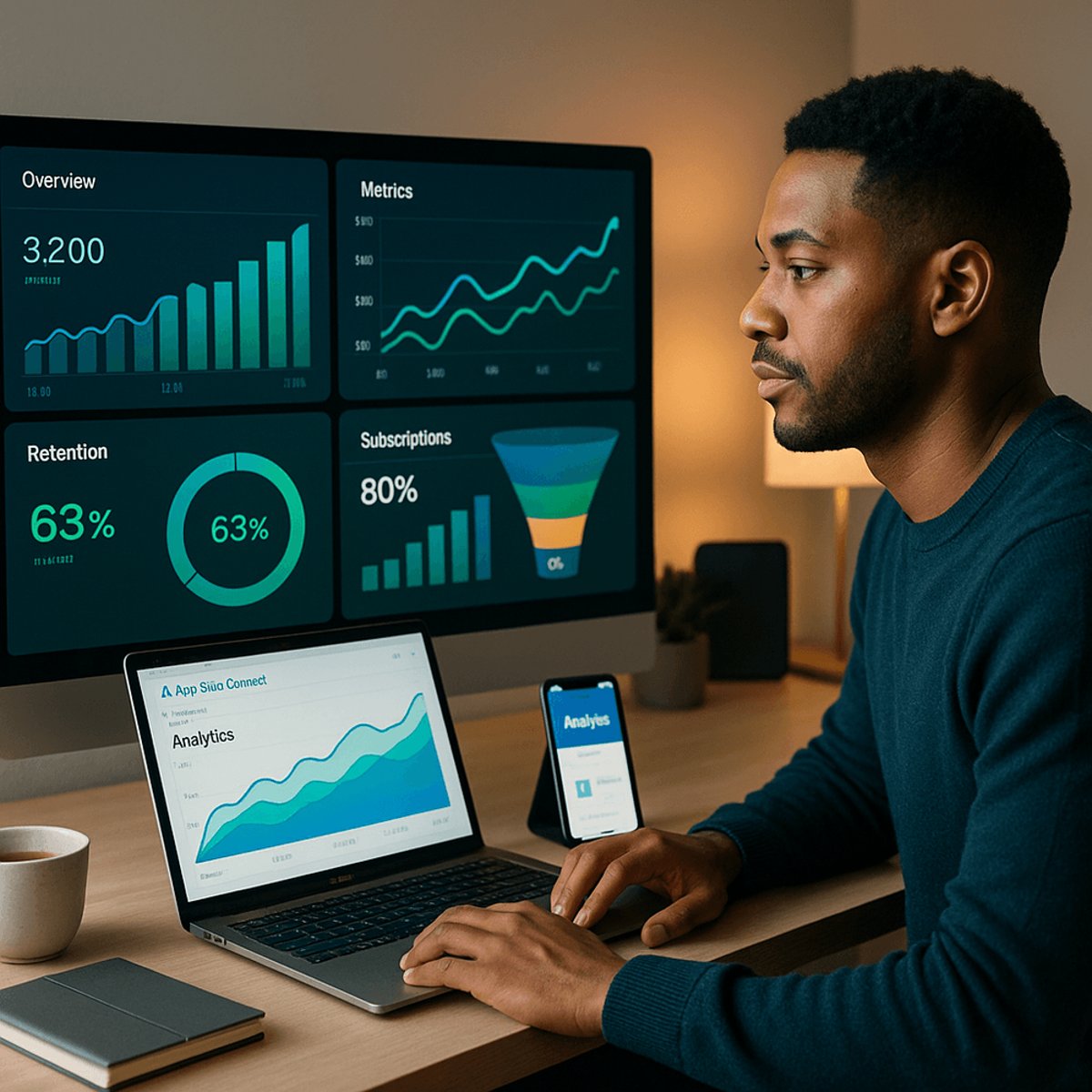
Apple is giving app developers a major analytics upgrade. The company just rolled out over 100 new metrics in App Store Connect, offering first-party insights into everything from subscription churn to in-app purchase patterns. It's a move that signals Apple's push to keep developers invested in its ecosystem as AI-native apps reshape what's possible on iOS. The timing isn't accidental - as the app economy evolves, developers need better data to compete, and Apple needs them to stay engaged with its platform.
Apple just handed its developer community something they've been requesting for years: real visibility into what's actually happening with their apps. The company's App Store Connect platform now includes more than 100 new metrics, fundamentally expanding what developers can track about monetization, subscription performance, and how users interact with their products.
The update represents one of the most significant expansions of Apple's developer analytics toolkit in recent memory. According to TechCrunch, the new metrics dive deep into subscription dynamics, in-app purchase patterns, and user lifecycle data that was previously either unavailable or required expensive third-party analytics services to approximate.
For developers who've felt flying blind on Apple's platform, this is a substantial shift. Where they once had to rely on limited data points and external analytics tools to understand their business performance, they now get first-party insights directly from the source. That matters because Apple's data is authoritative - it's what actually happened on the platform, not an extrapolation or sample.
The timing aligns with broader changes in how apps are built and monetized. As AI capabilities get embedded directly into iOS applications, developers are creating more sophisticated subscription tiers and feature sets. Understanding which AI-powered features drive retention versus which cause users to churn becomes critical business intelligence. Apple's expanded metrics give developers the granular data they need to make those calls.
What's particularly interesting is how this positions Apple against the backdrop of increasing regulatory scrutiny around app stores. By providing developers with better tools and more transparent data, Apple strengthens its argument that the App Store creates value for its developer community, not just for itself. It's harder to claim the platform is exploitative when it's actively investing in developer success metrics.
The subscription metrics alone could reshape how developers approach their pricing strategies. With detailed churn analysis, cohort retention data, and conversion funnel visibility, teams can now run the kind of sophisticated experiments that were previously only feasible for companies with massive analytics budgets. A solo developer or small team can now see exactly where subscribers drop off and optimize accordingly.
This also reflects Apple's recognition that its developer ecosystem is under pressure. Cross-platform frameworks and progressive web apps keep getting better, and developers constantly evaluate whether building native iOS apps is worth the effort and the 30% commission. Better analytics tools are one way Apple keeps that equation favorable - if developers can make more money because they understand their users better, the platform fee stings less.
The expansion comes as Apple's Services division, which includes App Store revenue, continues to be a growth engine for the company. Keeping developers engaged and helping them succeed directly impacts Apple's bottom line. More successful apps mean more subscriptions, more in-app purchases, and ultimately more commission revenue flowing to Cupertino.
For the broader app economy, this could accelerate the trend toward data-driven development. When every developer has access to institutional-grade analytics, the baseline quality of apps should improve. Features that users don't engage with get cut faster. Pricing experiments become more scientific. The apps that succeed will increasingly be those that iterate based on evidence rather than intuition.
What developers do with this data in the AI era will be fascinating to watch. As apps incorporate more machine learning features and personalized experiences, understanding which users engage with which features becomes essential to training better models and delivering more value. Apple's giving them the instrumentation to do exactly that, all while keeping the data within its ecosystem rather than forcing reliance on Google Analytics or similar external tools.
Apple's analytics expansion is less about altruism and more about ecosystem defense. By giving developers the data infrastructure they need to build better businesses, Apple makes its platform stickier at a moment when alternatives are multiplying. The real test will be whether these metrics translate into meaningfully better apps for users - and whether developers view this as a genuine partnership tool or just better window dressing on a relationship that still heavily favors Cupertino. Either way, expect app development on iOS to get more sophisticated and data-driven from here on out.