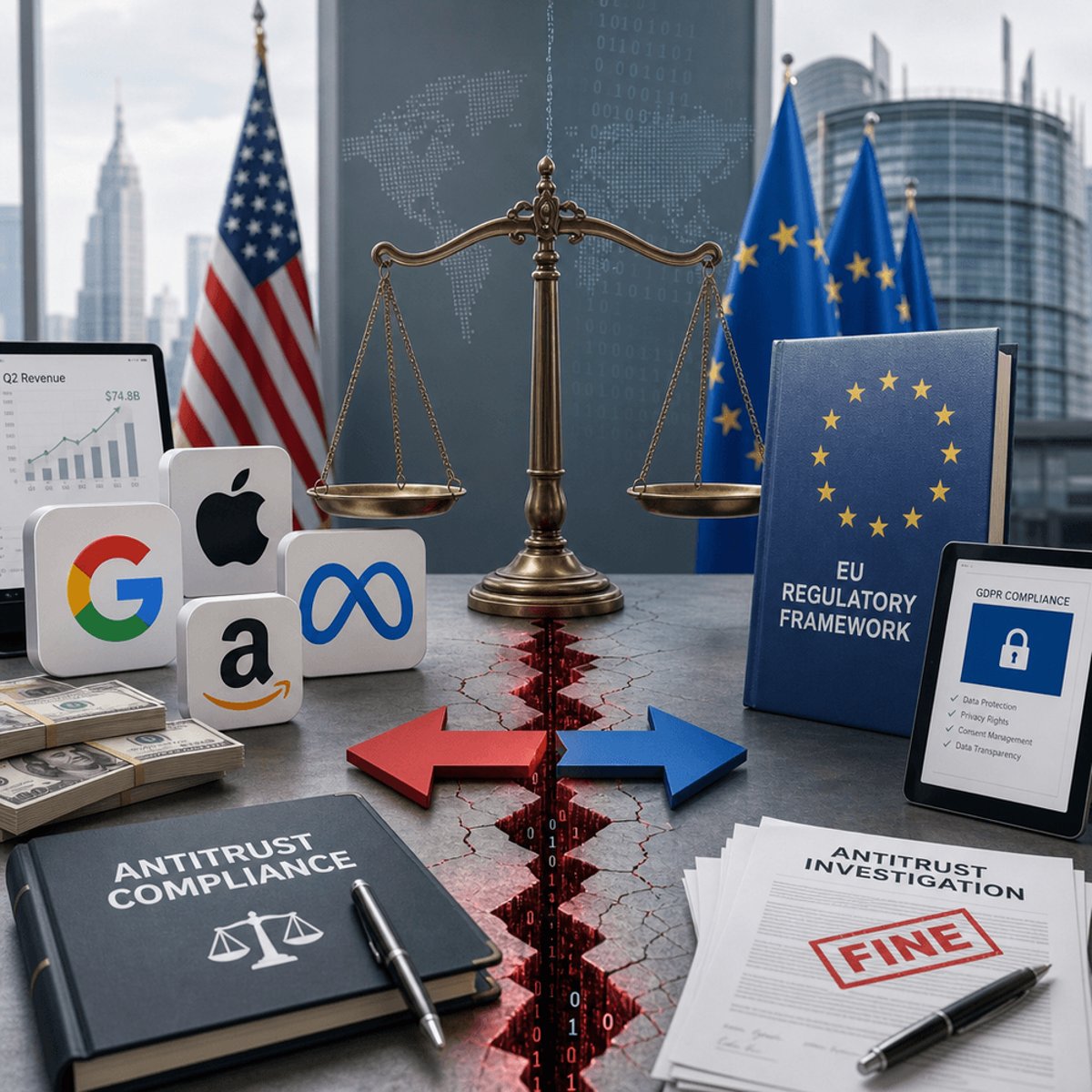
President Trump just escalated tensions between Washington and Brussels over tech regulation, demanding a full investigation into European Union fines levied against America's biggest tech companies. In a statement that sends shockwaves through transatlantic relations, Trump called for penalties against Google, Apple, Meta, and Amazon to be "entirely reversed," setting up what could become a major trade dispute between the world's largest economic blocs.
The White House just threw down a gauntlet that could reshape how global tech regulation works. President Trump's call to investigate and reverse EU penalties against America's tech giants marks the most aggressive US pushback yet against European efforts to rein in Silicon Valley's power.
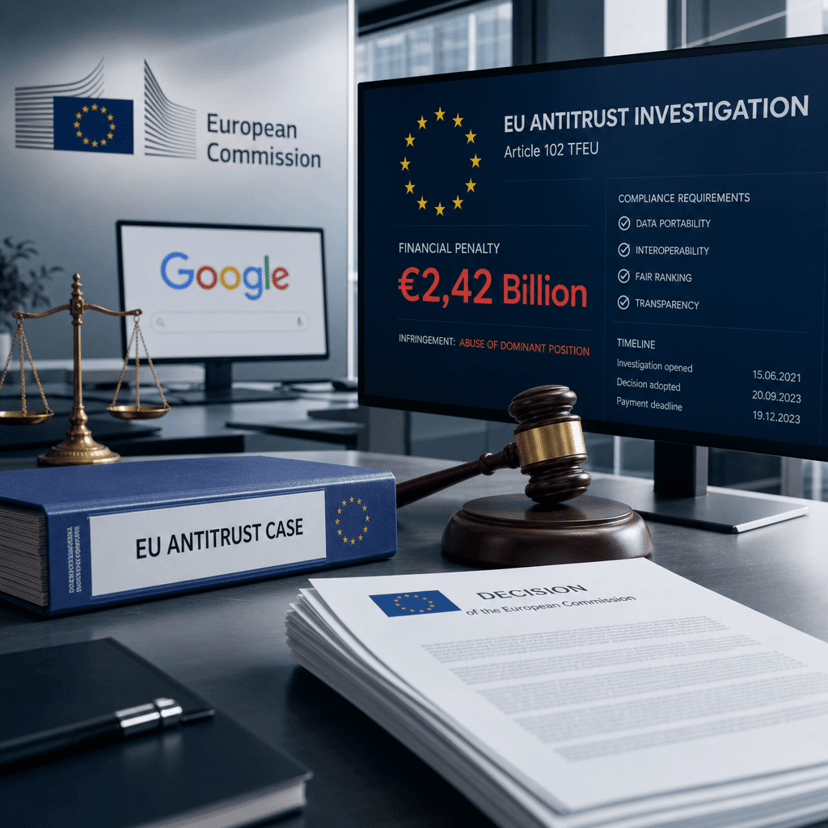
The statement targets fines against Google, Apple, Meta, and Amazon - companies that have collectively faced billions in penalties from EU regulators over the past several years. The European Commission has been particularly aggressive in pursuing antitrust cases, with Google alone receiving multiple multi-billion dollar fines for search dominance, Android app bundling, and advertising practices.
For Apple, the EU's battles have centered on App Store policies and the company's tax arrangements in Ireland. The iPhone maker faced a €13 billion tax bill, though that was later overturned on appeal. More recently, Brussels has taken aim at Apple's restrictions on third-party payment systems and app distribution under the new Digital Markets Act.
Meta has absorbed repeated privacy violation penalties under Europe's GDPR framework, with regulators scrutinizing everything from data transfers to targeted advertising practices. The social media giant's operations in Europe have become a regulatory minefield, with each new feature facing intense scrutiny from EU privacy watchdogs.
Amazon hasn't escaped either, facing antitrust investigations into how it uses seller data from its marketplace to compete with third-party merchants. The EU's concerns center on whether the e-commerce giant leverages its platform position to gain unfair advantages over smaller competitors.
Trump's demand for investigations represents more than just presidential rhetoric - it signals potential US government action to protect American tech interests abroad. The move could trigger retaliatory measures, trade negotiations, or diplomatic pressure campaigns aimed at Brussels. Some analysts worry this could spark a broader trade conflict extending beyond just tech companies.
The timing is particularly notable as the EU continues to implement its Digital Markets Act and Digital Services Act, sweeping regulatory frameworks that impose strict rules on how large tech platforms operate. These laws require companies to allow competing services, share data with rivals, and face hefty penalties for violations - exactly the kind of regulatory approach that appears to have prompted Trump's response.
For Silicon Valley, the president's statement provides political cover and potential government backing in their ongoing battles with European regulators. Tech companies have long argued that EU fines are protectionist measures designed to handicap American competitors while European alternatives struggle to gain traction. Brussels has consistently rejected this characterization, insisting its actions are about consumer protection and fair competition.
But the practical impact remains uncertain. The EU operates independently on regulatory matters, and American political pressure has historically had limited effect on European Commission decisions. Past attempts by US officials to influence EU tech policy have largely failed to change Brussels' approach.
The clash highlights a fundamental divide in how the US and EU approach tech regulation. America has traditionally taken a lighter touch, allowing companies to innovate rapidly with fewer restrictions. Europe prioritizes consumer protection, privacy, and competition concerns, often resulting in stricter rules that Silicon Valley views as innovation-killing.
For the companies caught in the middle, this creates a complex operating environment. They must navigate conflicting regulatory requirements while managing political pressure from both sides of the Atlantic. The reversal Trump demands seems legally and politically unlikely, but his statement adds another layer of uncertainty to already complicated transatlantic tech relations.
Trump's demand to reverse EU tech fines escalates what was already a simmering regulatory conflict into a full diplomatic confrontation. While the practical chances of Brussels backing down seem minimal, the statement signals that American tech companies now have explicit White House support in their European battles. This won't be the last chapter in the US-EU tech regulation saga - it's just getting started. Watch for potential US trade actions, EU defiance, and tech companies caught navigating increasingly hostile regulatory crossfire on both sides of the Atlantic.