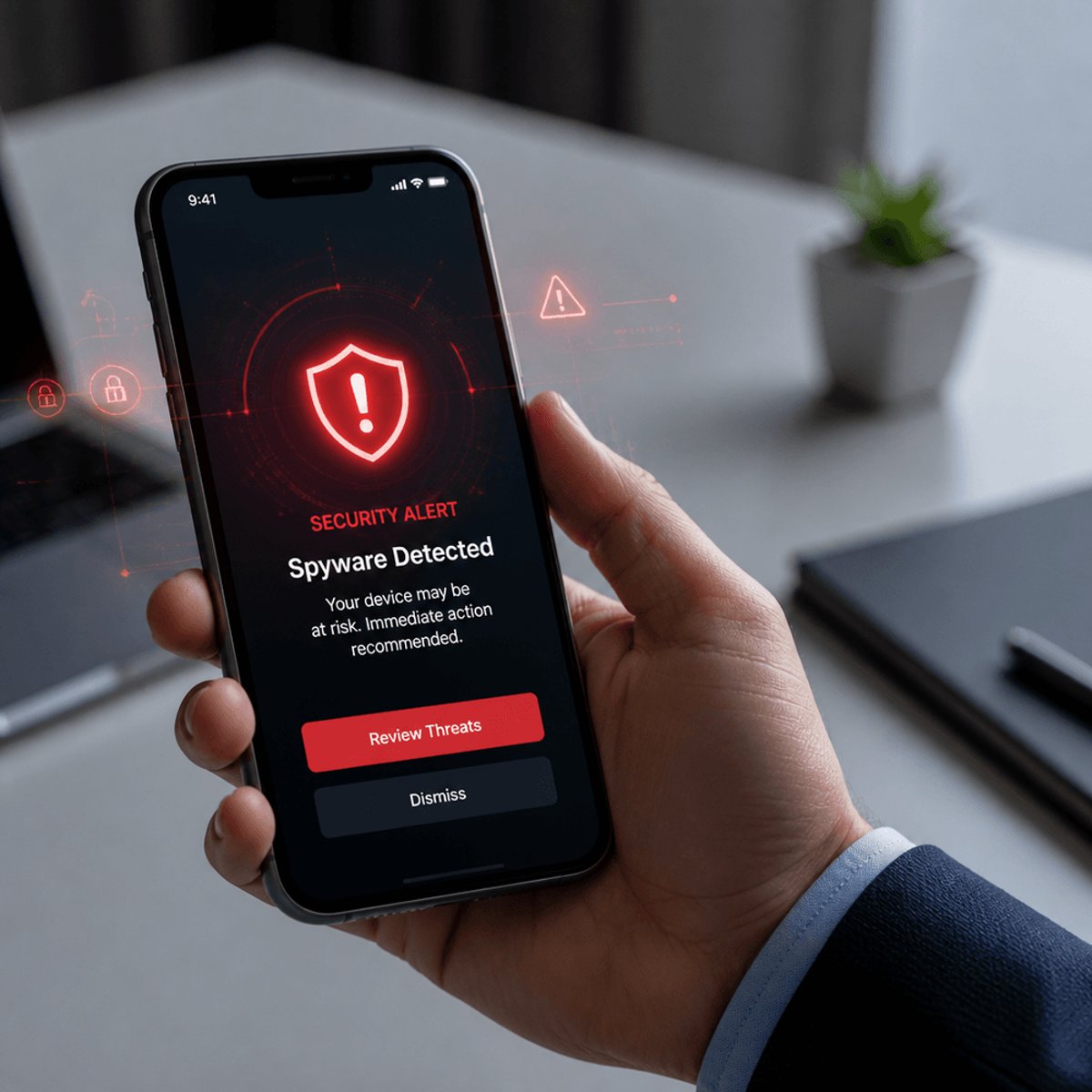
Apple just sent spyware threat notifications to an unusually high number of users, setting off alarm bells among cybersecurity investigators who track mercenary surveillance campaigns. Experts who specialize in detecting sophisticated attacks say the scale of this alert wave is unprecedented, suggesting either a broad new targeting campaign or a significant shift in how spyware operators are deploying their tools against iPhone users.
Apple users around the world received an unwelcome surprise recently - threat notifications warning them their devices may have been targeted by mercenary spyware. But what's raising eyebrows among cybersecurity experts isn't just that the alerts went out, it's how many people got them.
Investigators who specialize in tracking commercial spyware campaigns say the number of users who received the recent alerts is unusually high, potentially signaling a major escalation in surveillance targeting. "This is unprecedented in terms of scale," researchers familiar with the notifications told TechCrunch. The alerts typically go to journalists, human rights defenders, and political dissidents - but the recent wave appears to cast a much wider net.
Apple has been sending these threat notifications since 2021, when the company overhauled its approach to warning users about state-sponsored attacks. The notifications specifically alert users when Apple detects they're being targeted by "mercenary spyware" - a careful term the company uses to describe commercial surveillance tools sold to governments and private actors. These aren't your garden-variety phishing attempts - they're sophisticated, expensive tools designed to break into devices without any user interaction.
Cybersecurity researchers at organizations like Citizen Lab at the University of Toronto and digital rights group Access Now have been documenting these campaigns for years. They've tracked how tools from vendors like NSO Group, Cytrox, and Intellexa have been used to target civil society members across dozens of countries. But the recent spike in Apple's alerts suggests something's changed in how these tools are being deployed.
The timing is particularly notable. Commercial spyware vendors have faced mounting pressure over the past few years, with NSO Group being sanctioned by the U.S. government and multiple countries launching investigations into spyware abuse. Despite this scrutiny, the industry appears to be expanding its operations rather than contracting. The high volume of recent alerts could indicate that spyware operators are casting a wider net, possibly targeting individuals who previously wouldn't have been considered high-value enough to justify the expense.
What makes mercenary spyware particularly dangerous is its sophistication. Unlike traditional malware that requires users to click a malicious link or download an infected file, modern commercial spyware often exploits zero-day vulnerabilities - previously unknown security flaws that even Apple doesn't know about until they're discovered in the wild. These "zero-click" exploits can compromise an iPhone without the owner doing anything at all, simply by sending a specially crafted message or file.
Apple has been remarkably aggressive in fighting back against spyware vendors. The company sued NSO Group in 2021 and has continuously updated iOS with security patches specifically designed to close the vulnerabilities these tools exploit. The threat notification system itself represents a significant commitment - Apple is essentially telling users "we detected something sophisticated targeting you" even when the company can't always prove a device was successfully compromised.
Security researchers are now working to identify which specific spyware tools triggered the recent alerts and who might be behind the targeting campaign. The investigation process is painstaking - it requires analyzing network traffic, examining device logs, and sometimes conducting forensic analysis of potentially compromised phones. Organizations like Citizen Lab have built specialized tools to detect spyware infections, but the commercial surveillance industry constantly evolves its techniques to evade detection.
The broader implications are troubling for anyone concerned about digital privacy and press freedom. If spyware operators are indeed expanding their target lists, it suggests they've calculated that the benefits outweigh the risks of increased international scrutiny. It also raises questions about how many potential targets Apple might not be able to detect - the company's threat notifications are based on threat intelligence and detection methods that, by necessity, can't catch every attack.
For the users who received the alerts, the immediate question is what to do next. Apple recommends that targeted individuals enable Lockdown Mode, an extreme security setting that disables many iPhone features to reduce attack surface. The company also suggests updating to the latest iOS version and being extremely cautious about which apps and services they use. But these measures, while helpful, can significantly limit device functionality - a tough tradeoff for journalists and activists who rely on their phones for their work.
The unprecedented scale of Apple's recent spyware alerts marks a troubling new chapter in the commercial surveillance arms race. While the company's willingness to warn users demonstrates a commitment to transparency that's rare in the tech industry, the sheer volume of notifications suggests spyware operators are becoming more aggressive, not less. As investigators work to unpack who's behind this targeting wave, the incident serves as a stark reminder that sophisticated digital surveillance tools - once reserved for intelligence agencies - are now being deployed at scale against civil society. For iPhone users, particularly those in journalism, activism, or advocacy work, the message is clear: you're increasingly in someone's crosshairs, and the tools being used against you are getting harder to detect and defend against.