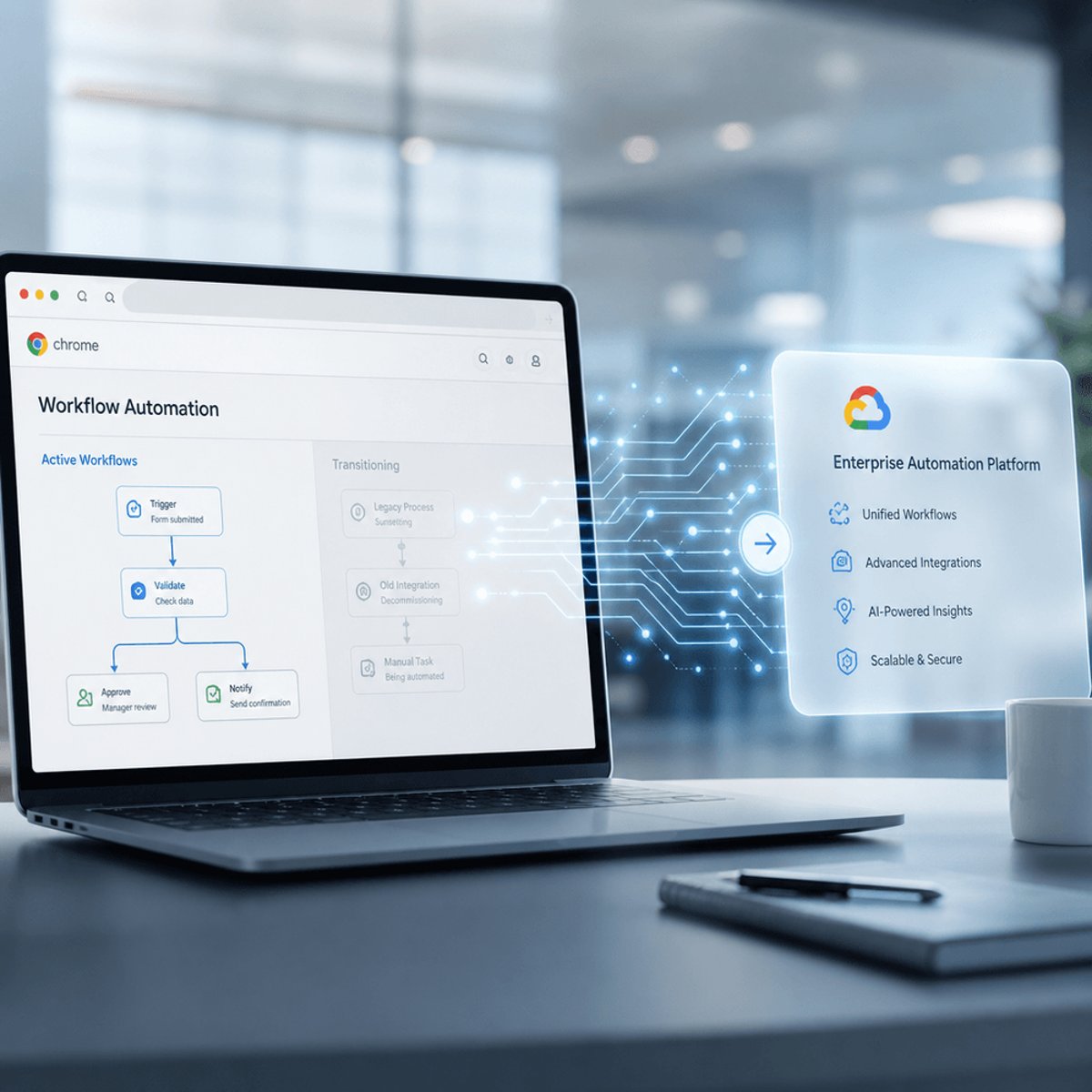
Another AI automation startup bites the dust. Relay, a workflow automation platform that helped businesses streamline repetitive tasks, is shutting down operations next month after its CEO and key staff accepted positions on Google's Chrome team. The quiet acqui-hire marks the latest consolidation in an increasingly crowded automation market where giants like Google are absorbing promising talent rather than watching them compete.
Relay, a startup that promised to make business workflow automation accessible through AI, is calling it quits. The company will shut down operations next month, but its story isn't ending in the typical startup graveyard. Instead, CEO and select team members are headed to Google, where they'll work on Chrome, according to a TechCrunch report.
The shutdown comes at a peculiar moment for the automation sector. While AI has sparked a gold rush of productivity tools, the market's also getting ruthlessly competitive. Relay built its business helping companies automate repetitive workflows without requiring deep technical knowledge - connecting apps, triggering actions, and routing data between systems. It's the same promise dozens of other startups are making, from established players like Zapier to newer AI-native tools.
What makes this move interesting is where Relay's team is landing. Chrome isn't just a browser anymore - it's becoming Google's platform for web-based productivity, especially as the company pushes deeper into enterprise with Workspace. The addition of automation expertise suggests Google might be cooking up tighter workflow integrations directly in the browser, potentially leveraging Gemini AI to compete with Microsoft's Copilot-everywhere strategy.
For Relay's existing customers, the news is less exciting. They've got until next month to extract their workflows and migrate to alternatives. It's a familiar pain point in the startup world - betting on a nimble young platform only to scramble when it gets absorbed or shuttered. The company hasn't detailed transition support, leaving businesses to figure out replacement solutions on compressed timelines.
The acqui-hire pattern itself tells a story about where AI talent is flowing. Rather than slug it out in a crowded market or raise another round at compressed valuations, promising teams are increasingly taking the Google or Microsoft exit. These big tech acquirers get experienced builders who've already navigated the messy realities of enterprise AI, while founders get resources and distribution they couldn't dream of independently.
Timing matters here too. We've seen a wave of AI startups struggle to differentiate as foundation models commoditize capabilities that once seemed proprietary. If your core value is "AI-powered automation," but OpenAI, Google, and Microsoft are all baking similar features into their platforms, the path to independent scale gets awfully narrow. Better to join a team with billions in resources and distribution to hundreds of millions of users.
For Google specifically, this fits a broader pattern of strategic talent acquisitions in AI. The company's been on a hiring spree, both poaching researchers and absorbing entire startup teams. Chrome's evolution from simple browser to productivity platform needs exactly this kind of workflow expertise, especially as Google tries to make Workspace a true Microsoft 365 alternative.
The automation market isn't slowing down - if anything, AI is accelerating demand for tools that connect systems and eliminate manual work. But the winners are increasingly looking like the companies with existing distribution, deep pockets, and the ability to bundle automation into broader platforms. Standalone point solutions face a brutal calculus: raise more money to compete with giants, sell now while there's value in the team, or risk becoming irrelevant.
Relay chose door number two. Whether that's savvy or surrender depends on what the team builds next at Google. If they ship workflow features that become essential to millions of Chrome users, the acqui-hire looks brilliant. If they disappear into the org chart, it's just another startup that couldn't crack the scale problem.
What's clear is that the automation space is consolidating faster than many expected. The easy money era that funded hundreds of similar startups is over. Now it's about who can deliver real value at scale, and increasingly, that means having Google, Microsoft, or another tech giant behind you.
Relay's shutdown and absorption into Google's Chrome team captures the current state of AI startup land perfectly. Great ideas and solid execution aren't enough when you're competing with platform giants that can bundle your features for free. For customers, it's a reminder that betting on early-stage tools carries migration risk. For founders, it's a signal that the acqui-hire exit is becoming standard in crowded AI categories. And for the rest of us, it means watching to see if this talent injection actually makes Chrome a more powerful productivity hub - or if Relay's automation vision just vanishes into Google's sprawling org chart. Either way, expect more of these quiet consolidations as AI's winner-take-most dynamics play out.