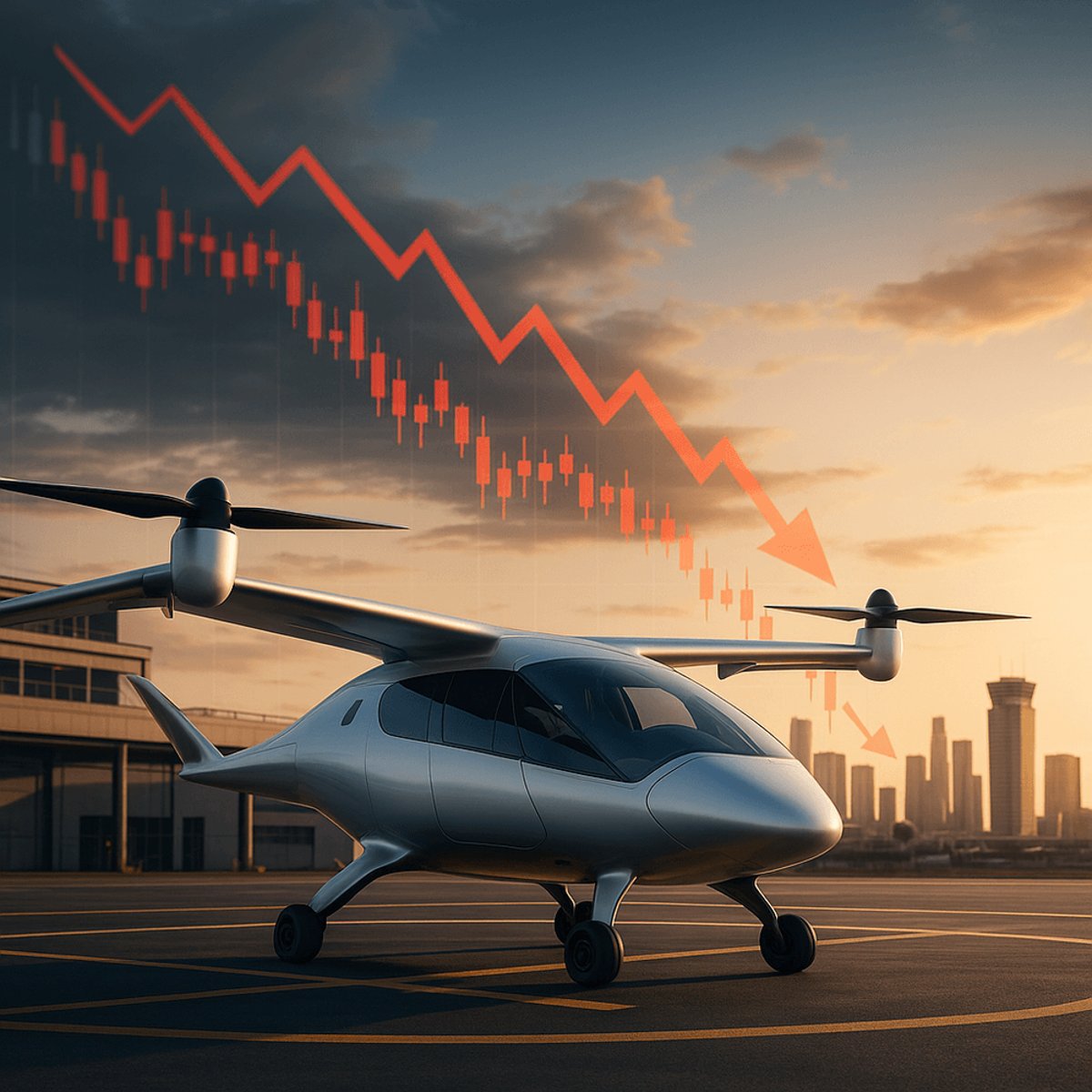
Archer Aviation just showed investors why even good earnings can't save you from brutal share dilution. The air taxi maker's stock plummeted 8% Thursday despite beating third-quarter loss estimates, as a massive $650 million stock offering to fund its LA airport acquisition sent shareholders running for the exits.
Archer Aviation delivered a textbook example of why dilution trumps fundamentals every single time. The company's shares cratered 8% Thursday after announcing an 81.25 million share offering worth $650 million, completely overshadowing a better-than-expected quarterly loss that should have been cause for celebration.
The numbers tell the story of a startup caught between progress and capital hunger. Archer posted a Q3 net loss of $129.9 million, beating FactSet's $178.6 million estimate by a healthy margin. But investors barely blinked at the operational improvement - they were too busy calculating the dilution math.
That $650 million isn't just sitting in a bank account. Archer's burning through cash to acquire Hawthorne Airport in Los Angeles for $126 million, positioning itself as the infrastructure play for urban air mobility. It's a bold move that makes perfect sense when you consider Archer landed the exclusive air taxi contract for the 2028 Olympics in LA.
But here's where the growth story gets painful for existing shareholders. Archer's weighted average shares outstanding has exploded to 660.9 million from 397.5 million just one year ago. That's a 66% increase in the share count - the kind of dilution that makes even the most patient growth investors wince.
The timing couldn't be more interesting across the electric aircraft sector. Just this week, Beta Technologies made its NYSE debut, bringing fresh validation to the eVTOL space. Meanwhile, both Archer and rival Joby Aviation are racing toward Federal Aviation Administration certification - the holy grail that will determine who actually gets to fly paying passengers.
Archer's been hitting key technical milestones that matter for certification. In September, the company's Midnight aircraft reached a record altitude of 7,000 feet, building on its longest piloted flight achievement from August. These aren't just press release wins - they're critical proof points for regulators evaluating commercial viability.
The global expansion race is already underway. Archer's betting big on the United Arab Emirates, while Joby Aviation announced a partnership with Saudi Arabia. These Middle Eastern markets offer fewer regulatory hurdles and wealthy customers willing to pay premium prices for early air taxi services.
Looking ahead, Archer's guidance shows the cash burn reality of pre-revenue operations. The company expects a Q4 adjusted EBITDA loss between $110 million and $140 million, with analysts penciling in $119.9 million at the midpoint. That's the price of building an entirely new transportation category from scratch.
The broader sector volatility tells its own story. Joby Aviation reported a wider-than-expected Q3 loss earlier this week, sending its shares down 20% over the past week. Archer's lost nearly a third of its value in the same timeframe. Yet both companies have more than doubled over the past year, reflecting the wild swings that come with betting on transformative technology still years from commercial reality.
Archer's stock reaction perfectly captures the startup investing paradox - you need capital to build the future, but every funding round dilutes the present. The company's LA airport acquisition and Olympics contract represent genuine strategic wins that could pay off massively if air taxis become mainstream. But with shares outstanding nearly doubling in a year and competitors like Beta and Joby making their own moves, investors are clearly worried about who'll survive the cash burn race to certification. The next 12 months will likely determine which eVTOL companies have the financial runway to reach commercial operations.