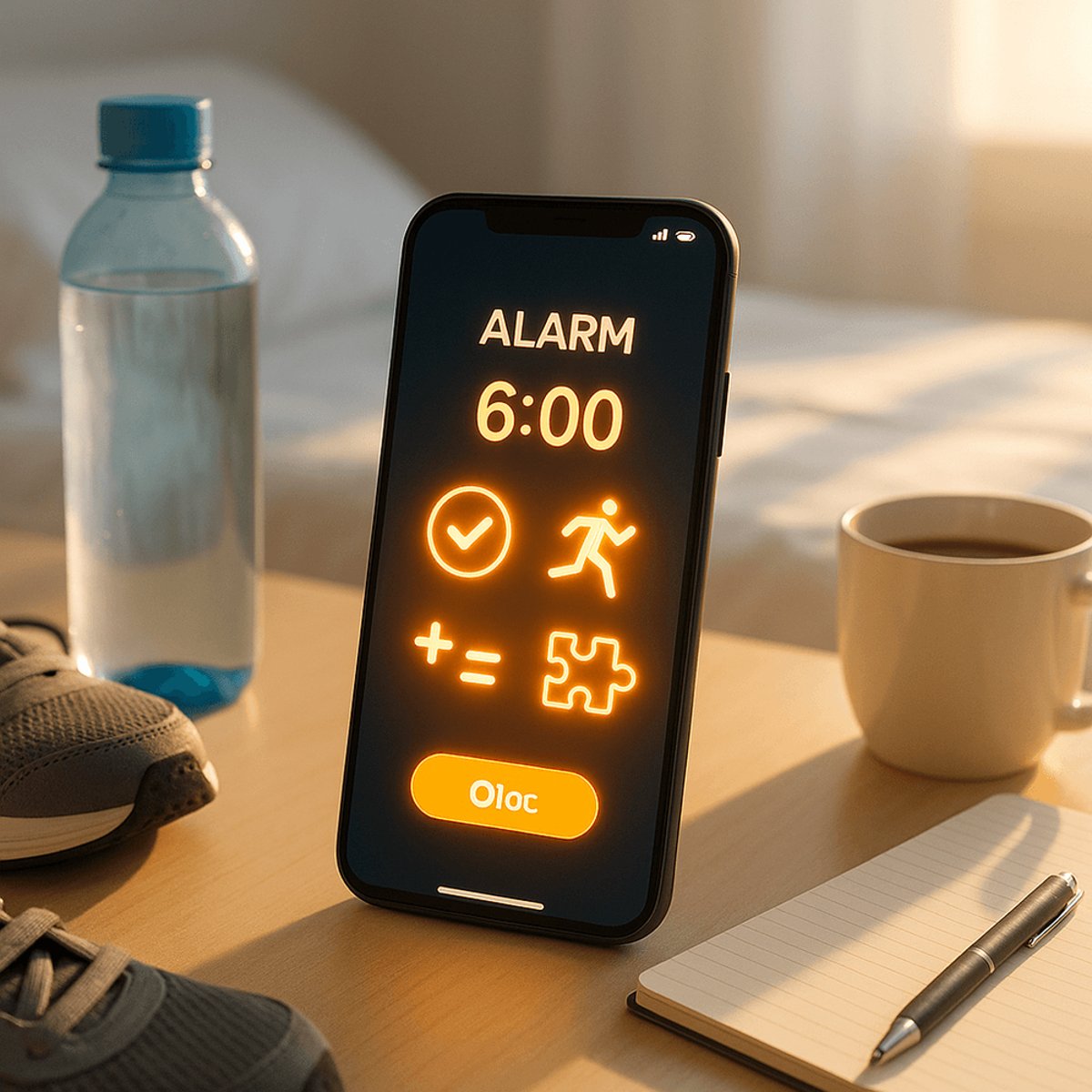
A new iOS app called Awake launched Monday with a mission: force heavy sleepers to actually wake up. Unlike traditional alarms that die with a simple tap, Awake requires users to complete interactive challenges - from push-ups to math problems - before they can silence the sound. The timing isn't coincidental: it's the first app to leverage Apple's new Alarm Kit framework in iOS 26.
The age-old battle between humans and their snooze buttons just got a lot more interesting. Awake, which launched Monday exclusively for iOS 26 users, doesn't just wake you up - it makes sure you stay that way.
The concept is simple but potentially brutal: when your alarm goes off, you can't just hit a button and roll over. Instead, you're forced into a series of interactive missions that range from rotating your iPhone to completing a set of push-ups, tackling math problems, or even working through language lessons. It's like having a personal trainer crossed with a math teacher living in your phone.
Leo Mehlig, the indie developer behind the popular planning app Structured, built Awake after being bombarded with requests from users who couldn't drag themselves out of bed. But he waited for the right moment. That came when Apple unveiled iOS 26's new Alarm Kit framework, giving developers access to full-screen alerts and deeper alarm functionality.
"I just felt like there had to be something better than a standard alarm clock for people who struggle to get up in the morning," Mehlig told TechCrunch. "So we always had [planned for it], but we basically sidelined it. And then when I saw the [Apple] keynote, I saw the Alarm Kit, I was like, 'OK, now we need to build this.'"
The timing couldn't be better for the brutal wake-up market. While competitors like Alarmy and Mathe Alarm have been torturing sleepy users for years, Awake differentiates itself with a suite of additional features that turn your morning routine into something more comprehensive.
The app's "Morning Briefing" delivers a customized information summary that users set up the night before, including weather forecasts and calendar events. There's also Block integration, which prevents access to social media immediately upon waking - because apparently scrolling through Instagram isn't the brain engagement Awake is looking for.
For the truly sleep-deprived, premium subscribers paying $1.75 per month or $19.99 annually get access to even more creative torture methods. These include getting up to turn on a light, scanning a QR code, walking a certain number of steps, or reciting a mantra. It's productivity culture meets alarm clock sadism.
Awake also includes sleep planning functionality, helping users calculate optimal bedtimes based on desired sleep duration and wake-up times. But the real innovation might be coming in future updates: Mehlig envisions a "Wake Up Check" feature that uses step counters to verify users are actually moving after completing their missions. If no movement is detected, another alarm triggers - because apparently one round of morning torture isn't enough.
The launch represents a broader trend in wellness apps that use friction as a feature rather than a bug. While most consumer technology aims to reduce barriers, Awake deliberately increases them, betting that users will pay for the privilege of making their mornings more difficult if it means actually getting out of bed.
For Apple, Awake represents an early showcase of what the new Alarm Kit framework can enable. The company has been steadily opening up more system-level functionality to third-party developers, and alarm management represents another step toward letting users customize core iOS experiences.
Awake's launch signals that the alarm clock wars are heating up, with developers getting increasingly creative about forcing users out of bed. As Apple's new framework enables more sophisticated wake-up experiences, expect to see more apps that turn your iPhone into a drill sergeant. For heavy sleepers who've tried everything else, Awake might be the solution - assuming they don't immediately delete it after the first morning of forced push-ups.