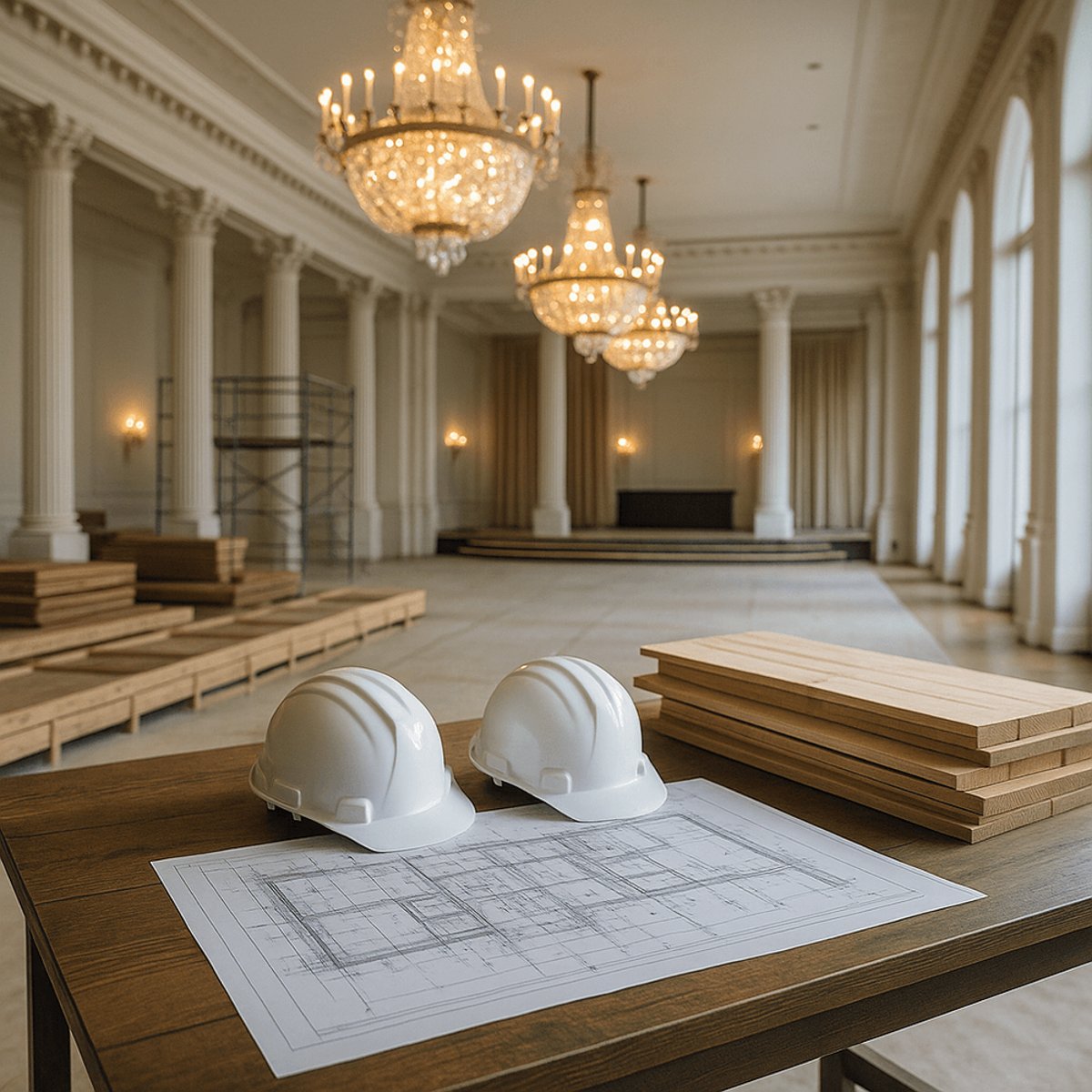
Silicon Valley's biggest names are bankrolling President Trump's $250 million White House ballroom project, marking a dramatic shift in tech's relationship with the administration. Amazon, Apple, Google, Meta, and Microsoft are among the donors funding the 90,000-square-foot addition that can host 1,000 guests - a stark contrast to the industry's resistance during Trump's first term.
The demolition crews working on the White House East Wing this week represent more than just construction - they're tearing down the old walls between Silicon Valley and Trump's Washington. What's rising in its place is a 90,000-square-foot ballroom that tells the story of big tech's complete political transformation.
Amazon, Apple, Google, Meta, and Microsoft are all cutting checks for Trump's $250 million private project, according to donor lists released by the White House on Thursday. The ballroom will accommodate 1,000 guests, making it one of the largest event spaces in government.
But it's Google's contribution that reveals the most about this new dynamic. At least $20 million of the search giant's donation comes directly from a lawsuit settlement over YouTube's suspension of Trump's account following the January 6, 2021 riots. The company hasn't disclosed whether that represents their full contribution to the ballroom fund.
This marks a stunning reversal from 2016, when much of Silicon Valley initially resisted Trump's first presidency. Meta didn't donate to Trump's first inauguration fund but contributed $1 million to his second. Amazon jumped from $58,000 to $1 million between inaugurations.
The shift reflects calculated business strategy more than political preference. Most of these tech giants are currently facing antitrust litigation that could reshape their entire business models. Trump's administration has taken a markedly softer approach to antitrust enforcement compared to the aggressive stance under former FTC Chair Lina Khan during Biden's presidency.
Trump's AI action plan, unveiled in July, offers another compelling reason for tech's newfound cooperation. The plan promises to cut regulatory red tape and direct government funds toward data center construction - exactly what AI companies need to scale their operations.
The donor list reads like a who's who of American corporate power, extending beyond tech to include defense contractors like Palantir and Lockheed Martin, telecom providers like Comcast and T-Mobile, and crypto companies including Coinbase, Ripple, and Tether America. The Winklevoss twins also contributed to the project.
While taxpayers aren't funding the ballroom construction, the private donations raise questions about access and influence. The 1,000-person capacity suggests this won't be just another government meeting room - it's designed for major fundraising events and corporate gatherings that could generate significant political capital.
The timing is particularly notable, coming during a government shutdown that has left federal workers without pay while private donors fund luxury additions to the White House. Construction continues despite the broader federal funding crisis, highlighting the growing role of private money in government operations.
This corporate courtship of Trump represents a pragmatic pivot by an industry that once prided itself on disrupting traditional power structures. Now these same companies are writing checks to literally build new spaces where that power can be exercised. The ballroom project symbolizes Silicon Valley's full integration into Washington's influence economy.
Silicon Valley's bankrolling of Trump's White House ballroom marks the completion of big tech's political transformation - from disruptor to establishment player. With antitrust cases looming and AI regulations on the horizon, these donations represent calculated investments in political access rather than ideological alignment. The $250 million ballroom will become a physical monument to corporate influence in Washington, where the companies that once promised to change the world are now paying to preserve their place within it.