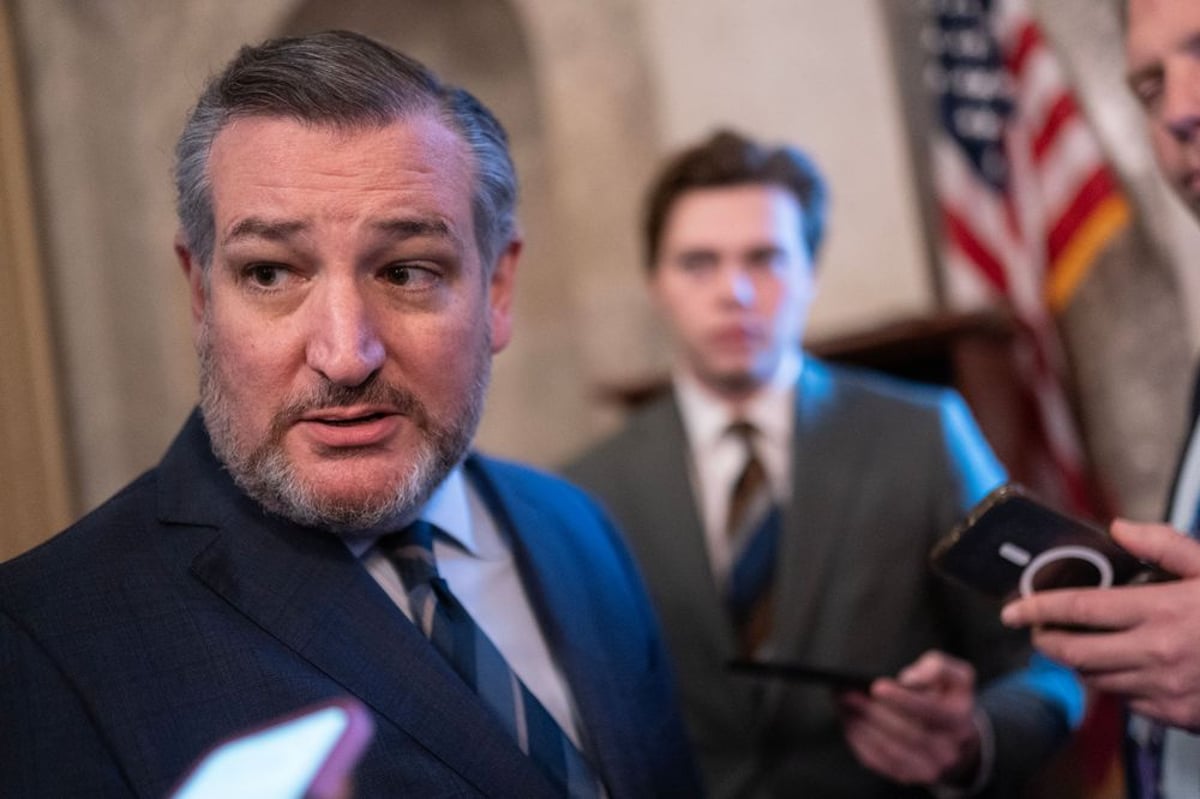
Senate Commerce Committee Chair Ted Cruz is capitalizing on the Jimmy Kimmel suspension controversy to push through new anti-censorship legislation. The Texas Republican plans to introduce a bill in the coming weeks that would make it easier for Americans to sue the government for monetary damages when they believe they've been censored, marking a rare moment of potential bipartisan agreement on free speech protections.
The Jimmy Kimmel suspension saga just handed Ted Cruz an unexpected gift - and he's not wasting it. The Senate Commerce Committee Chair is leveraging liberal outrage over FCC threats to build bipartisan support for legislation that would fundamentally change how Americans can fight back against government censorship.
Cruz plans to introduce the bill within weeks, he told The Wall Street Journal in an exclusive interview. The legislation would create new legal pathways for people who believe they've been censored by government agencies, making it significantly easier to seek monetary damages through the courts.
The timing isn't coincidental. Last month, FCC Chair Brendan Carr made what Cruz called 'right out of Goodfellas' comments on a podcast, telling TV networks they could take 'the easy way or the hard way' to get Jimmy Kimmel off the air after the late-night host joked about Charlie Kirk's killer. Disney initially pulled Kimmel's show before reinstating it, but the damage to Carr's credibility was done.
'It might feel good right now to threaten Jimmy Kimmel, but when it is used to silence every conservative in America, we will regret it,' Cruz warned in his criticism that made headlines. The comment put Cruz in the unusual position of defending a liberal comedian - and created an opening he's now exploiting.
The proposed legislation includes careful guardrails. Government investigations would be exempt from the new procedures, and the bill would carve out genuinely unprotected speech like nonconsensual intimate imagery. But for most speech disputes between citizens and federal agencies, the legal playing field would shift dramatically in favor of individuals seeking redress.
'Perhaps that poses an opportunity for us to work together in a bipartisan way,' Cruz told the Journal after hearing Democratic colleagues praise his stance against Carr. It's a rare moment of potential unity in an otherwise polarized Congress, driven by shared concern over government overreach on speech issues.
But Cruz's broader agenda might complicate that bipartisan moment. Late last month, he released a detailed report accusing the Biden administration of turning the Cybersecurity and Infrastructure Security Agency into 'an agent of censorship pressuring Big Tech to police speech.' This week, the Commerce Committee hosted an event where Cruz claimed the administration had pressured social media platforms to silence skeptics of COVID policies and mail-in voting.
The Supreme Court already weighed in on these allegations last year, reversing a lower court decision that had found the Biden administration unconstitutionally coerced platforms. The justices wrote there was no 'concrete link' between administration communications and companies' content decisions.
Cruz plans to use upcoming Commerce Committee hearings to keep the pressure on, with Carr expected to testify about government censorship practices. The hearings will likely serve as both a platform for the new legislation and a continuation of Cruz's broader investigation into what he sees as systemic speech suppression.
Despite defending Kimmel's right to stay on air, Cruz couldn't resist a personal jab. He told the Journal he'd be open to appearing on Kimmel's show to discuss the bill, but added that the late-night host 'isn't funny' and gloated that 'my podcast was kicking Kimmel's ass every week' before the suspension.
The legislation faces an uncertain path forward. While the Kimmel incident created genuine bipartisan concern about FCC overreach, Cruz's partisan framing of broader censorship issues could alienate the Democratic support he needs. The bill's success may depend on whether he can keep the focus on procedural protections rather than partisan grievances about past content moderation decisions.
Cruz's anti-censorship bill represents a fascinating political moment where liberal outrage over conservative overreach could produce lasting free speech protections. Whether that bipartisan opportunity survives Cruz's broader partisan agenda remains to be seen, but the legislation could reshape how Americans challenge government speech restrictions if it gains traction. The real test will be whether lawmakers can focus on procedural reforms rather than relitigating past content moderation battles.