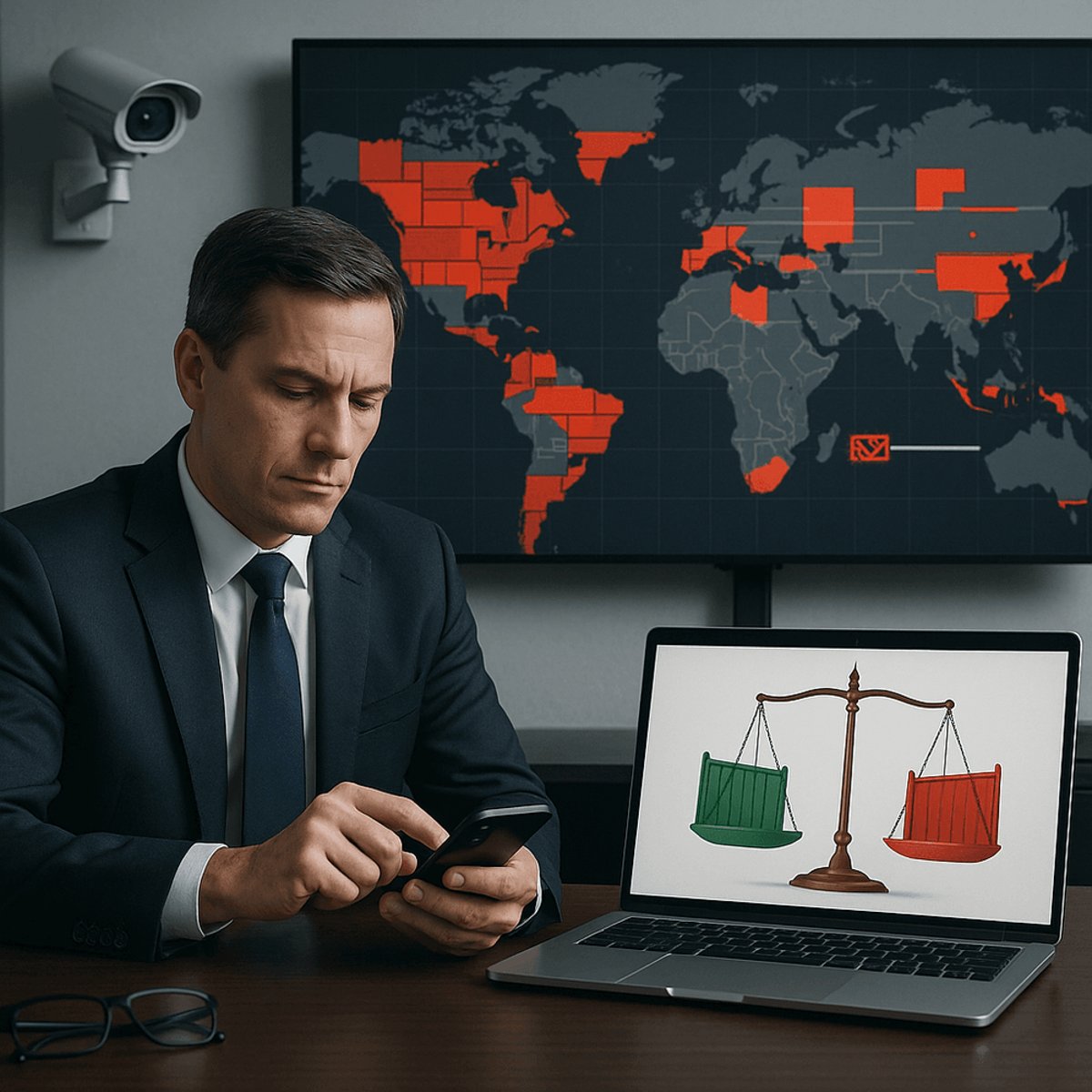
Cellebrite, the Israeli firm behind law enforcement's most powerful phone-cracking tools, just revealed a troubling double standard in how it polices government abuse of its technology. The company cut off Serbia after allegations of misuse but continues serving Jordan and Kenya despite fresh reports of surveillance overreach, raising urgent questions about the consistency of its human rights commitments and the accountability gap in the surveillance tech industry.
Cellebrite, the company that's become synonymous with breaking into locked smartphones for law enforcement, is facing hard questions about which governments it's willing to cut off when abuse allegations surface. The contrast couldn't be starker: Serbia got the axe, but Jordan and Kenya remain customers despite similar red flags.
The Israeli surveillance firm made headlines when it terminated its relationship with Serbian authorities, citing credible reports that its phone-unlocking tools were being weaponized against civil society. It was a rare public move in an industry where client lists are closely guarded secrets and human rights policies often amount to little more than boilerplate language on corporate websites.
But according to reporting by TechCrunch, that principled stance appears to have its limits. Fresh allegations from Citizen Lab, the University of Toronto research group that's exposed surveillance abuses worldwide, point to potential misuse of Cellebrite technology in both Jordan and Kenya. Yet this time, Cellebrite isn't cutting anyone off. Instead, the company says it's changed its approach to handling such situations.
The shift raises uncomfortable questions for a company that sells tools powerful enough to extract every text message, photo, and location ping from encrypted devices. If Cellebrite draws the line at Serbia but not elsewhere, what exactly triggers enforcement of its human rights commitments? And who decides which governments cross that threshold?
Cellebrite's technology sits at the center of a booming digital forensics market worth billions. Law enforcement agencies from the FBI to small-town police departments rely on its Premium and Physical Analyzer tools to crack iPhones and Android devices that suspects refuse to unlock. The company went public through a SPAC merger in 2021 and now serves customers in more than 100 countries.
That global reach brings global complications. While Cellebrite positions itself as a legitimate forensics provider helping solve crimes and find missing children, its tools don't discriminate between democratic investigations and authoritarian crackdowns. The same technology that helps prosecutors build cases against drug traffickers can just as easily target human rights defenders, opposition politicians, and independent journalists.
Citizen Lab has spent years documenting how surveillance technologies migrate from criminal investigations to political repression. The research group's latest findings on Jordan and Kenya fit a familiar pattern: forensic tools purchased for legitimate law enforcement purposes allegedly showing up in cases involving activists and critics of those governments.
Jordan's intelligence services have long faced accusations of digital surveillance targeting dissidents and journalists. Kenya's government, meanwhile, has drawn scrutiny for its treatment of civil society organizations and media outlets critical of official policies. Both countries present the kind of risk profile that would typically trigger human rights due diligence from Western technology vendors.
Yet Cellebrite appears to be taking a different approach than it did with Serbia. Instead of terminating sales, the company says it's working through the allegations using revised internal processes. The details of those processes remain opaque, and Cellebrite hasn't publicly disclosed what evidence would prompt it to cut off a government customer or how it investigates abuse claims.
The inconsistency puts Cellebrite in company with other surveillance technology vendors that struggle to balance commercial interests with human rights commitments. NSO Group, maker of the notorious Pegasus spyware, faced years of scandals before meaningful accountability arrived through sanctions and lawsuits. Facial recognition firms have similarly wrestled with where to draw ethical lines.
What makes Cellebrite different is the ubiquity of its tools in legitimate law enforcement. Unlike pure-play spyware vendors, the company serves a real investigative need and maintains that the vast majority of its customers use its technology appropriately. That makes the decision about which governments to cut off exponentially harder, with implications for ongoing criminal cases and public safety investigations.
But that complexity doesn't excuse inconsistent enforcement. If Serbia's alleged abuses warranted termination, the standard should apply equally to other countries where credible allegations surface. Without transparent criteria and consistent application, Cellebrite's human rights policy risks becoming a public relations exercise rather than a meaningful safeguard.
The broader surveillance industry is watching closely. How Cellebrite handles the Jordan and Kenya allegations could set precedent for how forensics vendors navigate the treacherous space between commercial opportunity and complicity in abuse. Investors and customers increasingly demand that technology companies take responsibility for how their tools are used, not just who writes the checks.
For now, Cellebrite appears to be betting that it can thread the needle with case-by-case evaluations rather than bright-line rules. That approach may preserve flexibility and commercial relationships, but it also opens the company to charges of selective accountability and moral inconsistency.
The Cellebrite case crystallizes a defining challenge for the surveillance technology sector: when your tools can be used for both justice and repression, consistency in enforcement becomes a moral imperative, not just a policy preference. The company's decision to cut Serbia but continue serving Jordan and Kenya despite similar allegations exposes the gap between stated principles and practical action. As forensic tools grow more powerful and more widely deployed, the industry needs clear standards and transparent enforcement, not opaque case-by-case judgments that leave observers guessing which abuses matter enough to trigger consequences. Without that accountability framework, companies risk becoming enablers of the very abuses their policies claim to prevent.