Palo Alto Networks shares plunged 7% in after-hours trading as investors questioned the company's aggressive AI transformation strategy and massive $25 billion acquisition of identity security firm CyberArk. The stock decline comes as CEO Nikesh Arora defended cybersecurity's position in an AI-dominated software landscape, marking the latest casualty in a broader selloff hitting enterprise software companies pivoting toward artificial intelligence. The move reflects growing market skepticism about whether traditional security vendors can successfully navigate the shift to AI-powered platforms without sacrificing margins.
Palo Alto Networks just gave investors a harsh lesson in how expensive the AI transformation can be. The cybersecurity giant's shares tumbled 7% after the company revealed its $25 billion bet on CyberArk, marking one of the industry's largest acquisitions as traditional security vendors scramble to stay relevant in an AI-first world.
CEO Nikesh Arora didn't mince words defending the strategy. Speaking to analysts, he pushed back against concerns that AI agents and automation will erode demand for traditional security tools. "Cybersecurity isn't going anywhere," Arora said, according to CNBC's coverage. "If anything, AI expands the attack surface we need to protect."
But Wall Street isn't buying it - at least not yet. The stock decline reflects a broader malaise hitting enterprise software companies caught between legacy business models and AI-driven futures. Microsoft, Salesforce, and other cloud infrastructure giants have all seen volatility as investors try to handicap which vendors will emerge as AI winners.
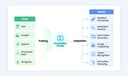
The CyberArk deal represents Palo Alto's most aggressive move in an acquisition spree that's reshaped the company's profile over recent months. By gobbling up the identity security specialist, Palo Alto is betting that converging network security, cloud protection, and identity management under one AI-powered platform will create a competitive moat. It's a massive gamble that the company can integrate disparate technologies faster than competitors can build their own AI capabilities organically.
Industry watchers point to mounting pressure from both sides of the market. Established players like Cisco and Fortinet are making their own AI bets, while pure-play AI security startups are raising massive funding rounds to attack the problem from scratch. Palo Alto is essentially trying to transform mid-flight, acquiring expertise it couldn't build fast enough internally.
The timing couldn't be trickier. Enterprise buyers are simultaneously excited about AI's potential and terrified of its security implications. Every new large language model deployment creates fresh vulnerabilities that traditional signature-based security tools can't address. That's created opportunity, but it's also enabled nimbler competitors to gain footholds with AI-native solutions.
Financial analysts are parsing whether the $25 billion price tag makes sense. At roughly 15x CyberArk's estimated revenue, the premium reflects desperation as much as strategy. Palo Alto needed identity security capabilities immediately, and CyberArk's customer base - which includes most Fortune 500 companies - provides instant scale. But integrating two massive organizations while simultaneously pivoting both toward AI-powered products is a recipe for execution risk.
Arora's defense of cybersecurity's relevance hits on a critical tension in the AI debate. Yes, AI will automate many security tasks currently handled by human analysts. But it will also create exponentially more complex environments that need protecting. The question isn't whether security remains important - it's whether legacy vendors can reinvent themselves fast enough to capture the AI-era opportunity.
Competitors are watching closely. CrowdStrike has taken a different approach, building AI capabilities internally while making smaller, tactical acquisitions. Zscaler is betting its cloud-native architecture gives it inherent advantages as customers modernize. Palo Alto's megadeal approach represents a third path: buy your way to relevance and hope integration execution makes up for the premium paid.
The stock drop also reflects concerns about near-term margin pressure. Digesting a $25 billion acquisition while investing heavily in AI R&D will hammer profitability for quarters to come. Investors who've enjoyed Palo Alto's steady cash generation are suddenly staring at a growth-at-all-costs playbook that looks uncomfortably similar to the ZIRP-era excess they've spent two years trying to forget.
What happens next depends largely on customer response. If enterprises embrace Palo Alto's vision of a unified, AI-powered security platform, the acquisition could look prescient in hindsight. If integration stumbles or customers balk at vendor lock-in, the company will have spent $25 billion to accelerate its own disruption.
Palo Alto's $25 billion CyberArk acquisition and subsequent stock plunge captures the high-stakes chess game playing out across enterprise software. Legacy vendors face an impossible choice: spend massively to acquire AI capabilities and risk margin compression, or build organically and risk irrelevance. Arora is betting that speed trumps efficiency, wagering that customers will pay premiums for integrated, AI-powered security platforms. But with the stock down 7% and analysts questioning the deal's logic, he'll need to execute flawlessly to prove the transformation was worth the price. For investors and competitors alike, this becomes the test case for whether acquisition-driven AI pivots can work at this scale.