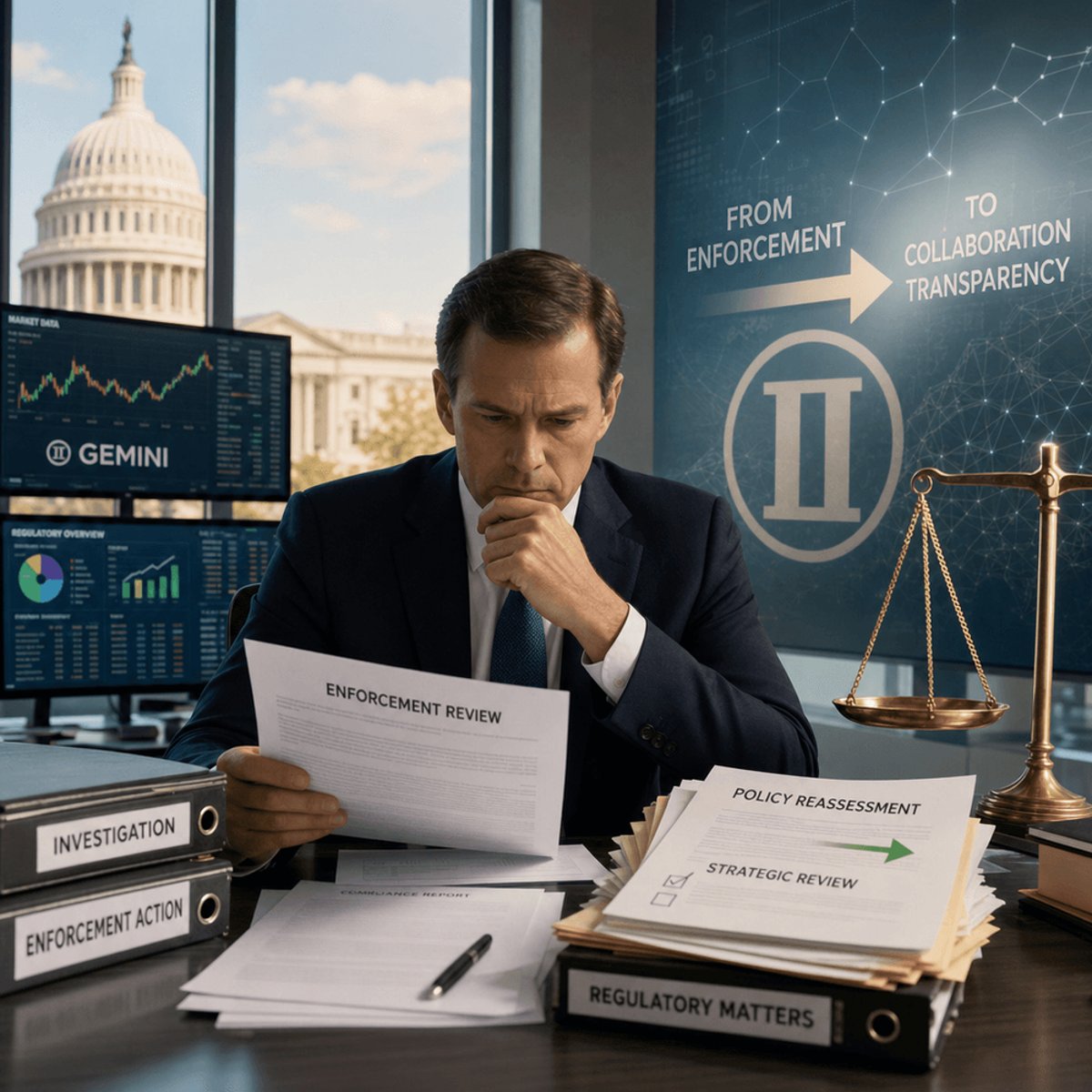
The Commodities Futures Trading Commission just threw a bombshell into crypto regulatory politics. Chair Michael Selig publicly admitted that the agency's enforcement action against the Winklevoss twins' Gemini exchange was part of a coordinated campaign against the crypto industry during the Biden administration. The rare admission marks a dramatic shift in how federal regulators talk about their enforcement priorities and could signal a major thaw in Washington's relationship with digital assets.
It's not every day a federal regulator admits their predecessor's enforcement actions were politically motivated. But that's exactly what just happened at the Commodity Futures Trading Commission.
CFTC Chair Michael Selig told reporters that the agency's enforcement action against Gemini, the cryptocurrency exchange founded by Cameron and Tyler Winklevoss, wasn't just routine regulatory oversight - it was part of a broader campaign targeting the crypto industry during President Biden's administration. The candid admission breaks with decades of regulatory tradition where agencies defend their enforcement decisions as purely merit-based.
For Gemini and the Winklevoss twins, Selig's statement vindicates years of complaints that they were being singled out despite running one of the industry's most compliance-focused operations. The exchange has long positioned itself as the adult in the room - licensed in all 50 states, registered with FinCEN, and openly courting institutional investors who demand regulatory clarity.
The timing of Selig's comments is striking. He took over as CFTC chair earlier this year after the Biden administration ended, and his willingness to break from his predecessors signals just how dramatically the regulatory winds have shifted in Washington. Where crypto executives once faced a united front of skeptical regulators, they're now finding allies willing to question whether enforcement actions crossed the line from oversight into politically motivated suppression.
This isn't just about Gemini. The crypto industry has spent the past four years navigating what many executives privately called "regulation by enforcement" - a strategy where agencies like the CFTC and SEC brought high-profile cases rather than issuing clear rules. Coinbase CEO Brian Armstrong repeatedly accused regulators of acting in bad faith. Ripple Labs spent years fighting SEC charges. Even Kraken faced enforcement actions over its staking services.
Selig's admission could open the floodgates for exchanges and crypto firms to challenge pending enforcement actions. If the CFTC chair is willing to say out loud that political considerations influenced agency decisions, defense attorneys across the industry are already preparing motions to dismiss based on selective enforcement and regulatory overreach.
The Winklevoss twins haven't been shy about their political views or their frustration with regulators. Cameron Winklevoss has been particularly vocal on social media, accusing the Biden administration of waging "war" on crypto. Tyler has focused more on building Gemini's institutional credentials, but both brothers have long argued that U.S. regulatory hostility was pushing crypto innovation offshore to more friendly jurisdictions like Singapore and the UAE.
For the broader crypto market, Selig's comments arrive at a pivotal moment. Bitcoin is trading near all-time highs, spot ETFs have brought billions in institutional capital into the space, and major banks are finally building crypto trading desks after years of sitting on the sidelines. A regulatory environment that shifts from hostility to even neutrality could accelerate that trend dramatically.
But Selig's statement also raises uncomfortable questions about regulatory independence. Federal agencies are supposed to enforce the law without regard to political winds. If CFTC chairs can openly admit that enforcement decisions were politically driven, it undermines public confidence that the next administration won't simply swing the pendulum in the opposite direction.
The crypto industry has long complained that it couldn't get clear rules from Washington - just lawsuits and enforcement actions. Now it's learning that some of those actions may have been driven more by politics than policy. That's a pyrrhic victory at best. What the industry really needs isn't sympathetic regulators who admit the last guys were politically motivated - it needs actual legislation that provides clarity regardless of who's in the White House.
For now, Gemini and other exchanges that faced enforcement actions under the previous administration can at least point to Selig's admission as evidence they weren't crazy to think they were being targeted. Whether that translates into legal victories, dropped cases, or just a more cooperative relationship with regulators going forward remains to be seen.
Selig's admission that Gemini faced politically motivated enforcement marks a watershed moment for crypto regulation in America. But the industry shouldn't celebrate too quickly - what really matters isn't which way the political winds are blowing, but whether Washington can finally deliver the clear, consistent regulatory framework that would let crypto companies build without looking over their shoulders at every administration change. For Gemini and the Winklevoss twins, vindication feels good. For the industry, the real test is whether this regulatory reset leads to actual rules instead of just friendlier enforcement.