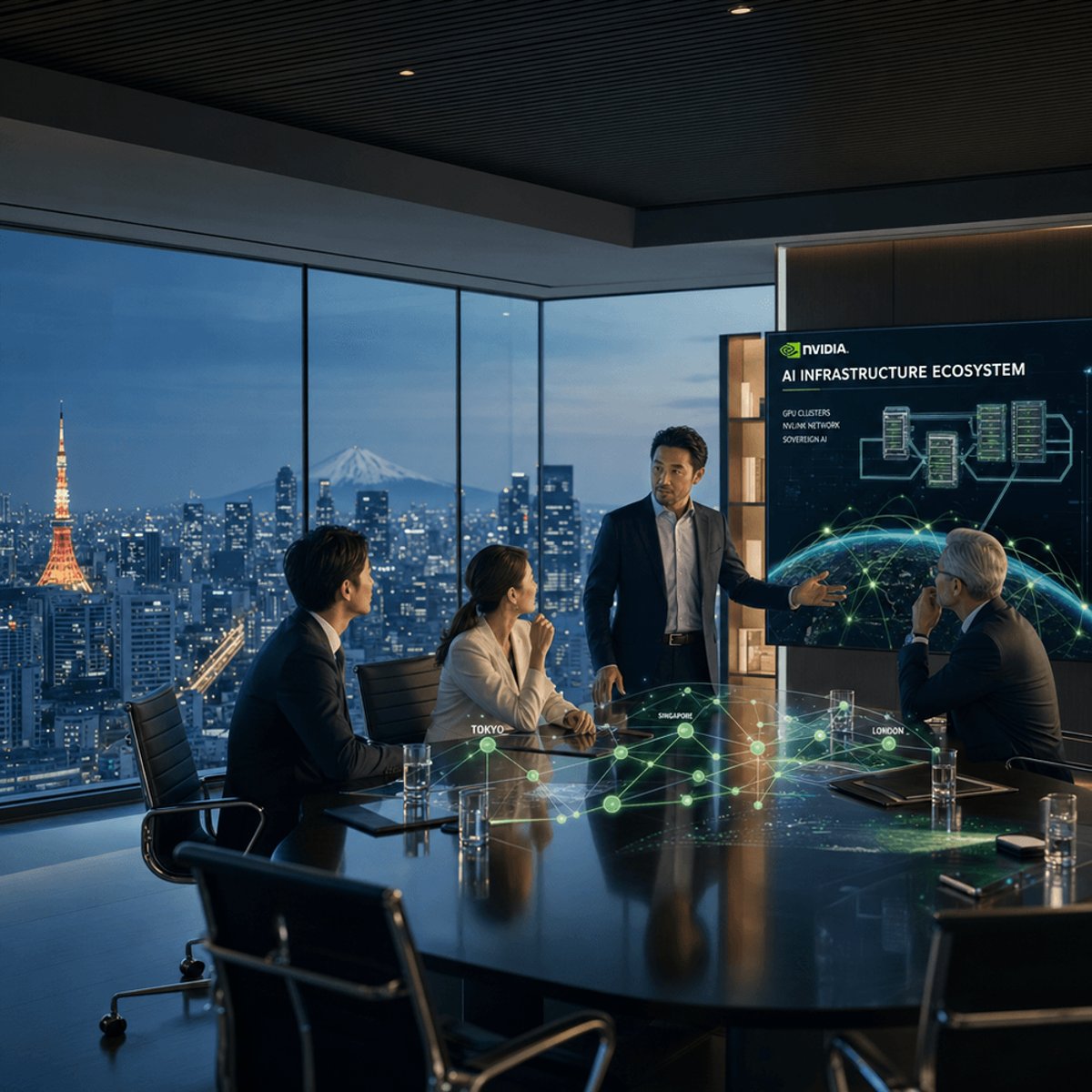
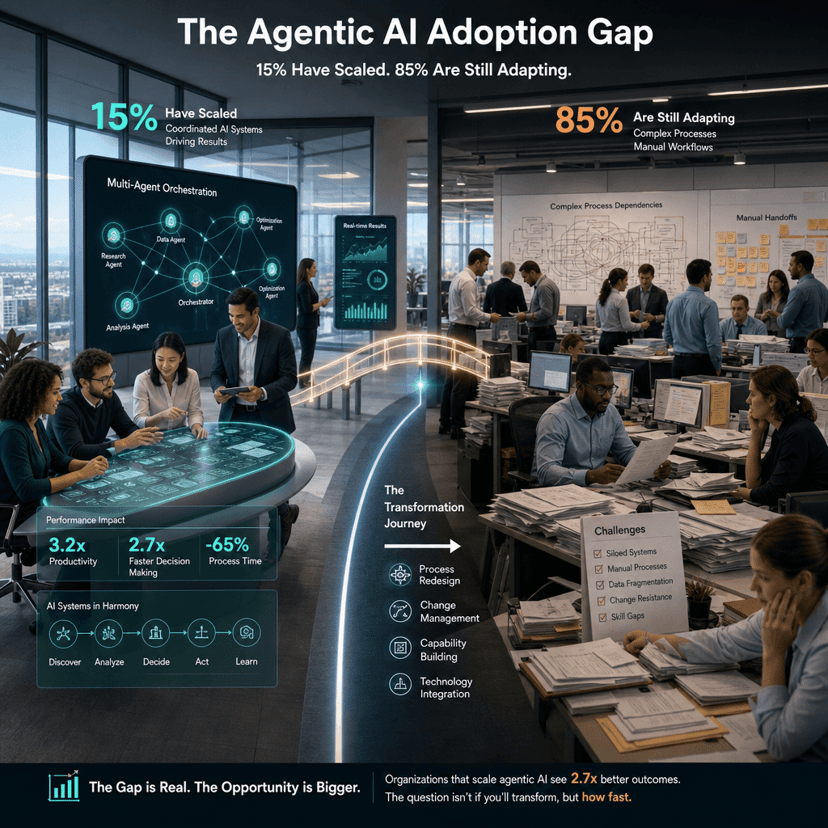
Nvidia CEO Jensen Huang just wrapped a whirlwind Tokyo tour that's reshaping Japan's AI landscape. The leather-jacket-clad chip titan left the country with a stack of partnerships spanning everything from telecom giants to automotive manufacturers, signaling Nvidia's aggressive push into Asia's second-largest economy. The deals come as Japan races to build sovereign AI infrastructure and reduce dependence on U.S. cloud providers, with Huang positioning Nvidia as the essential hardware backbone for that ambition.
Nvidia CEO Jensen Huang didn't just visit Japan - he practically rewired its AI strategy. The executive's latest Asia swing yielded partnerships that touch nearly every corner of Japan's tech industry, from legacy telecom operators to cutting-edge robotics firms. It's the kind of ecosystem play that's become Huang's signature move, and it comes at a moment when Japan is desperately trying to catch up in the AI race.
The timing isn't coincidental. Japan's government has been vocal about building what officials call "AI sovereignty" - the ability to develop and deploy artificial intelligence without relying entirely on American cloud infrastructure. That means data centers, that means chips, and that means Nvidia. Huang knows it, and he's moving fast to lock in relationships before competitors can establish footholds.
While specific deal terms remain under wraps, sources familiar with the discussions say the partnerships involve major Japanese telecom operators exploring GPU-accelerated 6G research, automotive manufacturers integrating Nvidia's Drive platform for autonomous vehicles, and at least two national research institutions committing to Nvidia-powered supercomputing clusters. One Tokyo-based AI researcher who requested anonymity said the deals represent "the biggest foreign tech investment commitment Japan's seen since the semiconductor boom of the 1980s."
The automotive angle is particularly telling. Japan's car manufacturers - Toyota, Honda, Nissan - have been slower than their American and Chinese rivals to embrace AI-driven autonomy. Nvidia's Drive Orin and Thor platforms offer a potential shortcut, letting Japanese automakers leapfrog development cycles by plugging into battle-tested hardware and software stacks. For Huang, it's a chance to cement Nvidia's position in a market where Tesla and Chinese EV makers have been making aggressive inroads.
But the real prize might be Japan's emerging AI infrastructure buildout. The country is planning a network of sovereign data centers designed to keep sensitive AI workloads on Japanese soil. That requires massive GPU deployments, and Nvidia is the only company that can deliver at the scale Japan needs. Industry analysts estimate Japan could need upwards of 100,000 H100 or next-gen Blackwell GPUs over the next three years to meet government AI targets - a potential multi-billion-dollar opportunity for Nvidia.
There's also a defensive element to Huang's Japan strategy. AMD has been making noise about its MI300 accelerators, while Chinese chipmakers are developing domestic alternatives despite U.S. export restrictions. By securing deep partnerships across Japan's tech ecosystem now, Nvidia is essentially building a moat. Once Japanese companies integrate Nvidia's CUDA software stack and train engineers on its platforms, switching costs become prohibitive.
The Japan deals mirror similar moves Nvidia has made in India, the UAE, and Singapore - part of Huang's broader strategy to establish Nvidia as the default AI infrastructure provider in markets racing to develop sovereign capabilities. It's a geopolitical chess game as much as a business strategy, with Huang betting that countries worried about AI dependence on the U.S. or China will still choose American chips over homegrown alternatives.
What's less clear is how these partnerships will affect Nvidia's already-strained supply chain. The company is still struggling to meet demand for its H100 GPUs, with lead times stretching beyond six months for large orders. Adding Japan's infrastructure needs to the mix could exacerbate shortages elsewhere, potentially frustrating U.S. and European customers who've been waiting months for hardware.
Industry watchers are also curious whether these deals include any manufacturing commitments. Japan has been trying to revive its semiconductor industry, and landing Nvidia chip production - even just packaging or testing - would be a major win for Tokyo. Sources say discussions around a potential Nvidia design center in Tokyo are ongoing, though nothing has been finalized.
For Japan, the Huang visit represents validation of its AI strategy and a signal that it can still attract top-tier tech partnerships despite decades of economic stagnation. For Nvidia, it's another market locked down in what's shaping up to be the most consequential decade in the company's history.
Jensen Huang's Japan tour is more than a sales trip - it's a preview of how the global AI infrastructure map will be redrawn over the next few years. As countries scramble to build sovereign AI capabilities, Nvidia is positioning itself as the indispensable partner, the one company that can deliver the hardware and software needed to make those ambitions real. Japan's embrace of Nvidia's ecosystem shows the strategy is working, and it's only a matter of time before we see similar announcements from other nations trying to stake their claim in the AI era. The question isn't whether Nvidia will dominate AI infrastructure globally - it's whether anyone can build a credible alternative before Huang's partnerships become too entrenched to challenge.