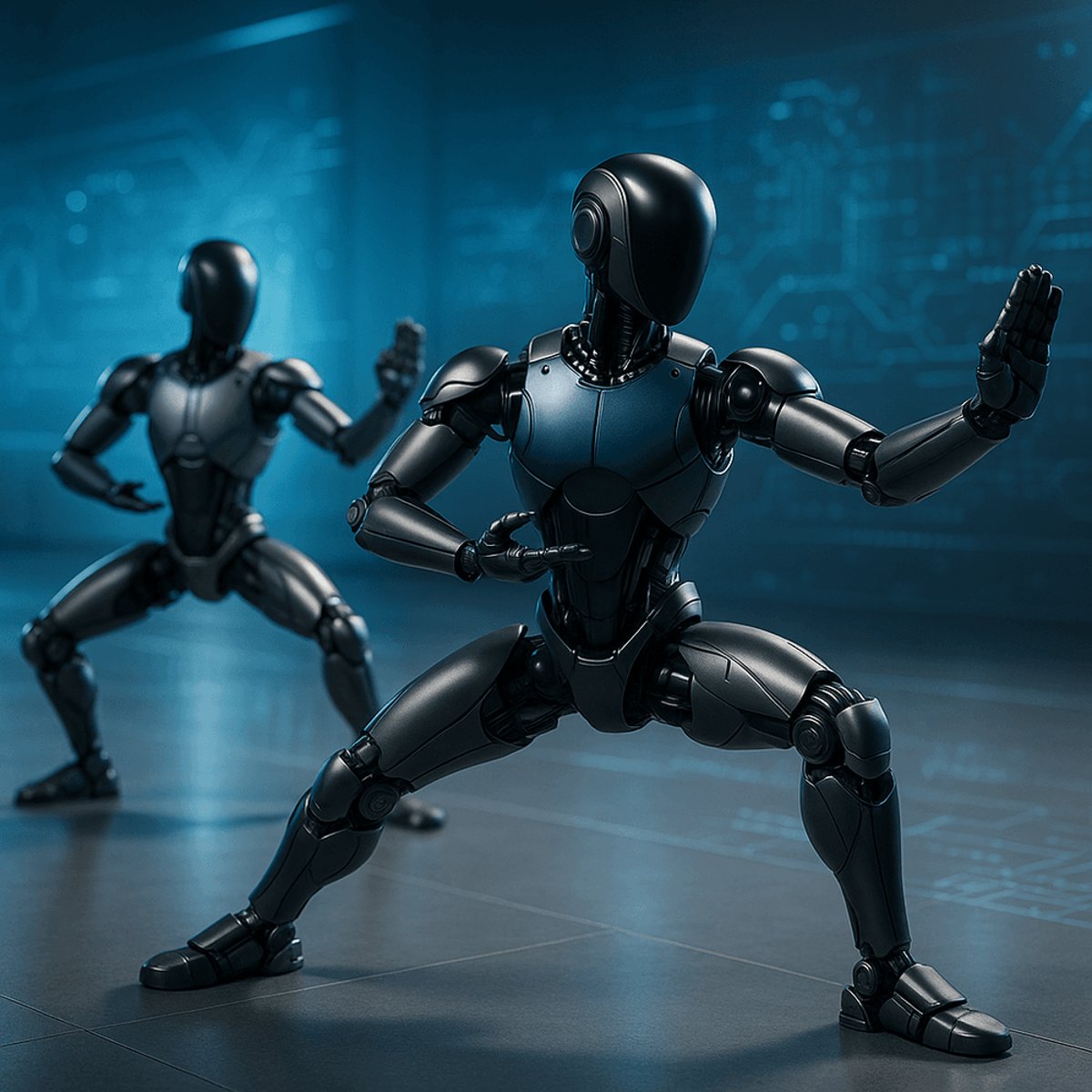
China just turned humanoid robotics from a punchline into a statement. Unitree robots performed intricate kung fu routines at the country's Spring Festival Gala, watched by over 700 million viewers, marking a dramatic acceleration in the global AI and robotics race. The performance signals China's rapid progress in humanoid development, putting pressure on Western competitors like Tesla and its Optimus program.
Unitree robots just performed the robotics equivalent of a mic drop. The Chinese company's humanoid machines executed synchronized kung fu routines during the annual Spring Festival Gala, a cultural phenomenon that draws bigger audiences than the Super Bowl. Over 700 million viewers watched the robots flip, punch, and balance with precision that would've seemed impossible just months ago.
The timing couldn't be more pointed. While Tesla continues refining its Optimus robot in relative privacy, China rolled out its humanoid achievements on the world's biggest stage. The performance represents more than technical showmanship - it's a declaration that China intends to lead the humanoid robotics revolution, and it's not waiting for Western competitors to catch up.
What makes this moment particularly striking is the speed of progress. Videos of Chinese humanoid robots stumbling and falling went viral throughout 2025, becoming fodder for skeptics questioning China's AI ambitions. Fast forward twelve months, and those same robots are executing complex martial arts sequences that require balance, coordination, and real-time motor control. The leap suggests China's robotics programs have overcome fundamental challenges in locomotion and stability faster than most analysts predicted.
Unitree has been quietly building its humanoid capabilities while better known for its quadruped robots. The company's humanoid platform appears to leverage learnings from its dog-like robots, which have competed with Boston Dynamics' Spot in the commercial market. The kung fu demonstration showcased capabilities that extend beyond factory floors into consumer-facing applications, a crucial distinction in the race for mass adoption.
The Spring Festival Gala performance wasn't just about robotics - it was about narrative control. China's government has made AI and robotics central to its economic strategy, pouring billions into research and manufacturing infrastructure. By featuring humanoid robots during the country's most-watched cultural event, Beijing sent a clear message about technological priorities and national ambition. The robots shared screen time with pop stars and traditional performers, positioning advanced AI as part of China's cultural identity.
This puts fresh pressure on Tesla and its Optimus program. Elon Musk has repeatedly promised that humanoid robots will eventually be bigger than Tesla's car business, but Optimus remains largely confined to controlled demonstrations and factory trials. China's willingness to deploy humanoid robots in high-stakes public performances suggests a different risk tolerance and potentially faster commercialization timeline. The competitive dynamics mirror the electric vehicle race, where Chinese manufacturers moved faster to market while Western companies prioritized perfection.
The technical requirements for the kung fu routine reveal significant advances. Humanoid robots must maintain dynamic balance while executing rapid movements, process visual and spatial data in real-time, and coordinate dozens of motors with millisecond precision. The fact that multiple Unitree robots performed in synchronization adds another layer of complexity, requiring robust communication protocols and shared environmental awareness. These are the same capabilities needed for useful work in warehouses, hospitals, and homes.
Industry observers note that China's robotics ecosystem benefits from integrated supply chains and government coordination that Western startups can't match. Chinese companies can iterate faster, access cheaper components, and deploy in domestic markets with fewer regulatory hurdles. The Spring Festival demonstration showed robots that looked production-ready, not research prototypes, suggesting Unitree may be closer to commercial deployment than publicly acknowledged.
The performance also highlights different approaches to AI development. While Western companies often emphasize safety and controlled rollouts, China appears more willing to showcase capabilities in unpredictable environments. The live broadcast meant millions watched in real-time, with no safety net if robots malfunctioned. That confidence suggests Chinese developers have achieved reliability thresholds that make public demonstrations viable, not just ambitious.
What happens next will define the humanoid robotics market for the next decade. China's demonstrated progress will likely accelerate investment and development timelines across the industry. Western companies face a choice: match China's pace and risk safety concerns, or maintain methodical development while potentially ceding market leadership. The kung fu robots just turned that decision from theoretical to urgent.
The kung fu robots at China's Spring Festival Gala represent more than a flashy demo - they're a inflection point in the global AI race. What looked like stumbling experiments a year ago now appears to be rapid iteration toward commercial viability. For Western robotics companies and policymakers, the message is clear: China's humanoid ambitions aren't just catching up, they're potentially pulling ahead in public deployment and consumer acceptance. The next phase of this competition won't be fought in research labs alone, but in factories, homes, and public spaces where humanoid robots either prove their utility or remain expensive curiosities. China just made a very public bet on which outcome it expects.