European climate investor 2150 just closed a €210 million second fund, doubling down on its thesis that cities hold the key to solving climate change. The Copenhagen-based firm, which now manages €500 million in assets, is betting that urban-focused climate tech startups offer both outsized returns and measurable carbon impact. With cities generating 70% of global emissions while producing 80% of GDP, co-founder Jacob Bro calls them "beautiful vampire squids" - concentrating both prosperity and pollution in ways that create ripe opportunities for climate solutions.
2150 isn't your typical climate tech investor. While most funds chase gigawatt-scale renewables or flashy carbon capture schemes, the European VC has built its entire strategy around a single insight: if you want to crack climate change, start where the emissions actually happen.
"The city is kind of like this beautiful vampire squid that sucks in all the resources," co-founder Jacob Bro told TechCrunch. "They basically aggregate all the prosperity in the world - 80% of GDP - but also 70% of emissions and all the other resources, all the waste, and all the downsides of the good life."
That thesis just attracted €210 million in fresh capital. The firm's second fund closed with backing from 34 institutional investors, including Danish sovereign fund EIFO, Church Pension Group, Novo Holdings, and German industrial giant Viessmann Generations Group. Co-founder Christian Hernandez describes them as "pretty meaty checks" - institutional money betting that urban decarbonization offers venture-scale returns.
The new fund brings 2150's total assets under management to €500 million, a significant war chest for tackling what Bro calls the "bottlenecks" in urban systems. But unlike traditional climate funds that measure success purely in carbon tons avoided, 2150 is playing a different game. "Sustainability, if done well, is just better business, right?" Bro said. "It's cheaper, faster, and more independent from geopolitics."
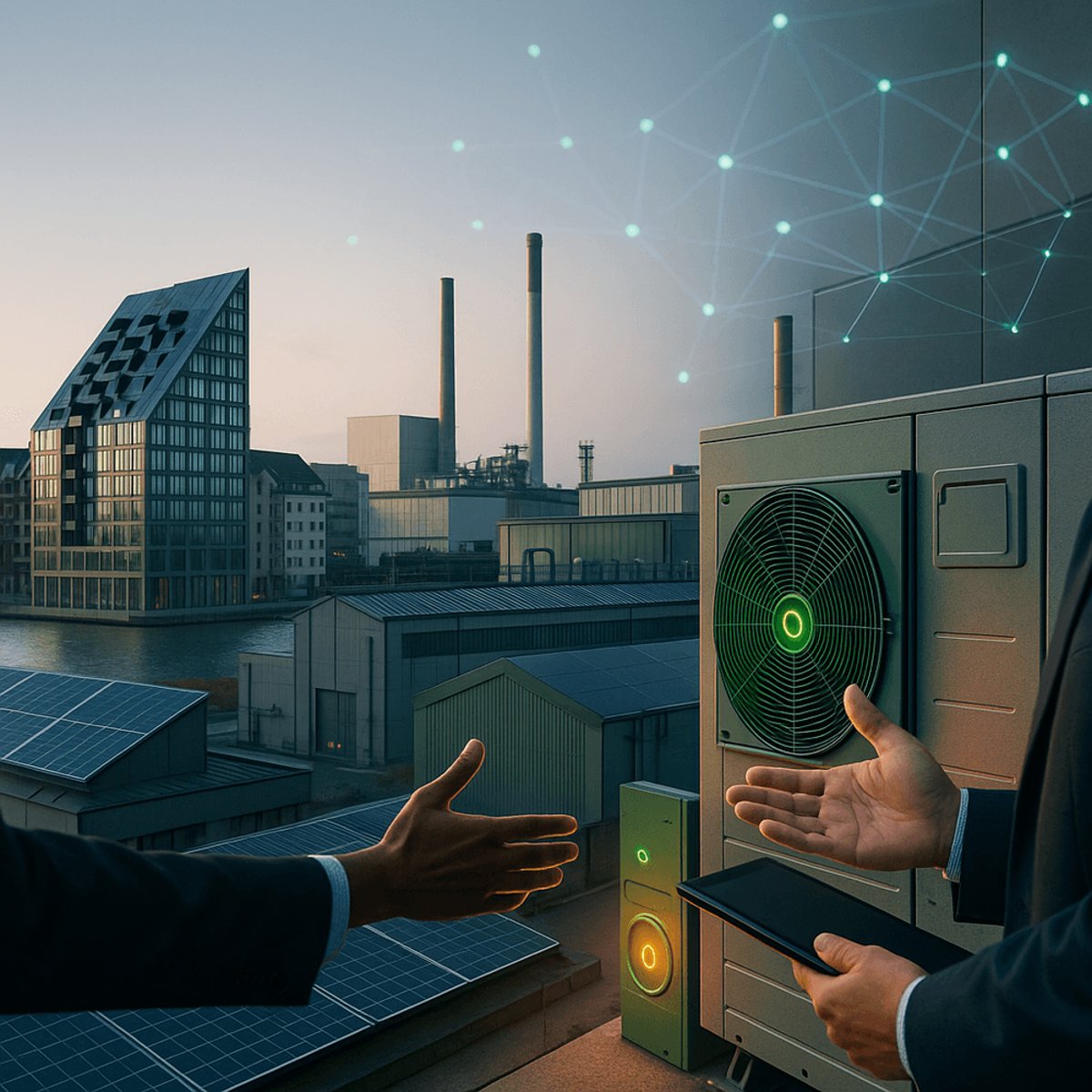
That dual mandate - climate impact meets hard economics - shapes every investment decision. The firm has already deployed capital into seven companies from the new fund, including AtmosZero, which manufactures industrial heat pumps that could replace fossil fuel boilers in factories and district heating systems. There's also GetMobil, an e-waste recycling startup that's turning urban electronics graveyards into revenue streams, and Metycle, a marketplace digitizing the chaotic scrap metal industry.
The most ambitious bet might be MissionZero, a direct air capture startup that's trying to pull CO2 straight from urban atmospheres. Three additional portfolio companies remain under wraps, but Hernandez says the fund is targeting 20 total investments, mostly at Series A stage with check sizes between €5 million and €6 million. Half the fund sits reserved for follow-on rounds.
What's striking is how 2150's urban lens reshapes traditional climate investing categories. Take data centers - usually viewed through a pure energy consumption lens. Hernandez sees a broader story. "Europe is expected to lose 100 million people between now and 2040, just people getting older," he told TechCrunch. "The Netherlands already has 50% of their population over the age of 50. So what role does industrial automation help with helping those people be productive, but also generating GDP and funding those people's pensions?"
It's an angle that connects climate tech to Europe's looming demographic crisis. As working-age populations shrink, industrial automation becomes essential for maintaining productivity while simultaneously reducing emissions. "The impact there is more societal than it is climate-related," Hernandez admits.
Bro frames it even more bluntly: "Cities are all supplied by large or small industries at the end of the day." That means decarbonizing urban centers requires reinventing everything from cement production to food logistics to construction methods. Each represents a massive addressable market where cleaner solutions can undercut incumbents on cost, not just environmental virtue.
The strategy appears to be working. According to Hernandez, 2150's portfolio companies collectively mitigated one megaton of carbon emissions in 2025 alone. "The fact that a small venture capital fund can already get to the megaton-level scale in only four years, that level of impact, along with the commercial traction, makes me feel like we're doing the right thing," he said.
That megaton milestone matters because it demonstrates climate tech can scale beyond pilot projects. While corporate venture arms and government-backed funds have poured billions into cleantech over the past decade, much of it has struggled to show both financial returns and measurable emissions reductions. 2150's approach - finding technologies that solve urban inefficiencies while happening to slash carbon - offers a potential blueprint for sustainable climate investing.
The €210 million raise also signals shifting sentiment in European venture markets. After a brutal 2023 and 2024 for climate tech fundraising, institutional limited partners are getting pickier about which thesis they'll back. The fact that 2150 attracted a Danish sovereign wealth fund, major family offices, and fund-of-funds like Carbon Equity suggests investors see cities as a defensible wedge into climate markets.
Looking ahead, the firm is particularly excited about opportunities at the intersection of AI and industrial processes. Not the energy-hungry training runs that dominate headlines, but the automation potential that could retrofit aging European factories for a carbon-constrained world. "Sustainability is just better business," Bro repeats - and with half a billion euros to deploy, 2150 is betting that thesis will carry them through the next investment cycle.
With €500 million under management and a portfolio already preventing a megaton of annual emissions, 2150 is proving that climate tech doesn't require choosing between impact and returns. By focusing on the unglamorous work of decarbonizing urban systems - factories, waste streams, industrial processes - the firm has found a wedge where cleaner technologies can win on economics alone. As Europe faces both demographic collapse and climate deadlines, that city-first approach might be exactly the strategy needed to make climate tech boring, profitable, and scalable. The real test comes next: whether 20 Series A bets can maintain that megaton-per-year momentum as portfolio companies scale from promising startups to industrial heavyweights.