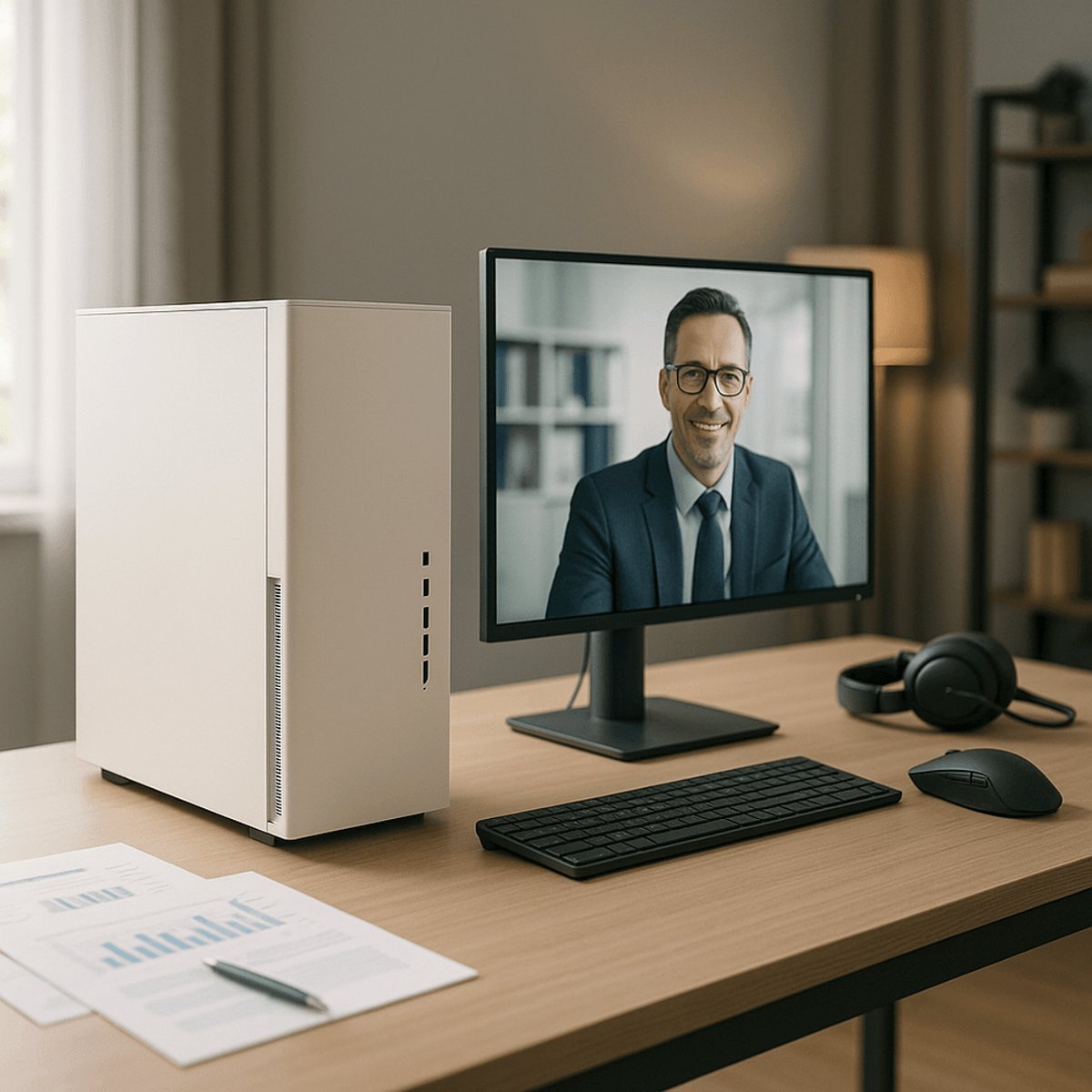
Dell just cracked the code on hybrid desktop design. The Tower Plus delivers serious gaming performance wrapped in an office-friendly package that won't scream "gamer" in your home workspace. Wired's hands-on review reveals a surprisingly thoughtful machine that bridges professional aesthetics with after-hours entertainment capabilities.
The desktop PC market's getting squeezed from all sides. Laptops keep getting more powerful while gaming rigs grow increasingly flashy, leaving a gap for professionals who want both worlds. Dell thinks it's found the sweet spot with its Tower Plus - a machine that looks at home in a Zoom call but packs enough punch for evening gaming sessions.
Wired's Luke Larsen spent time with the system and found exactly what Dell promised: a desktop that doesn't pick sides. The off-white chassis with its dual-tone silver front plate screams sophistication, not RGB excess. That perforated bottom section isn't just for show - it's functional airflow that happens to look good doing it.
The design philosophy runs deeper than surface aesthetics. While competitors like Lenovo's IdeaCentre Tower lean into traditional gaming cues, Dell stripped away the visual noise. The side panel's subtle perforations let you glimpse the GPU's glow without turning your office into a nightclub. It's restrained in all the right ways.
But Dell didn't sacrifice substance for style. Pop open that single-screw side panel and you'll find thoughtful engineering throughout. The 750-watt power supply sits in a proper metal bracket, while the graphics card uses Dell's signature latch system - just one tiny screw and a metal release to swap cards. For a prebuilt system, that's unusually upgrade-friendly.
The timing couldn't be better. Remote work has blurred the lines between professional and personal computing needs. Workers who spent years on company laptops suddenly need home setups that handle spreadsheets and Steam libraries equally well. Dell's betting there's a market for machines that look professional enough for client video calls but pack discrete graphics for post-work gaming.
This isn't Dell's first attempt at straddling markets. The company's been refining its approach to consumer desktops for years, learning from both enterprise feedback and gaming enthusiast demands. The Tower Plus represents that institutional knowledge applied to a specific gap - the professional who games but doesn't want to advertise it.
The competitive landscape makes Dell's positioning smart. While Alienware handles the extreme gaming market and OptiPlex serves pure business needs, the Tower Plus occupies middle ground that competitors largely ignore. Most prebuilt gaming PCs assume buyers want flash over function. Dell's assuming the opposite.
The broader implications extend beyond Dell's product lineup. If the Tower Plus succeeds, expect other manufacturers to chase this hybrid positioning. The remote work revolution created new computing categories - from webcam-optimized laptops to home office displays. Hybrid work-gaming desktops could be next.
Upgradeability matters more in this segment too. Business users expect longevity from desktop investments, while gamers want future graphics card compatibility. Dell's tool-free GPU swapping addresses both concerns, suggesting the company understands its target market better than most.
Dell's Tower Plus hits a market sweet spot that most manufacturers miss - the professional who games without wanting to broadcast it. By prioritizing understated design over RGB spectacle while maintaining upgrade-friendly internals, Dell created something genuinely different in the prebuilt space. It's the rare desktop that works equally well in a client presentation and a late-night gaming session.