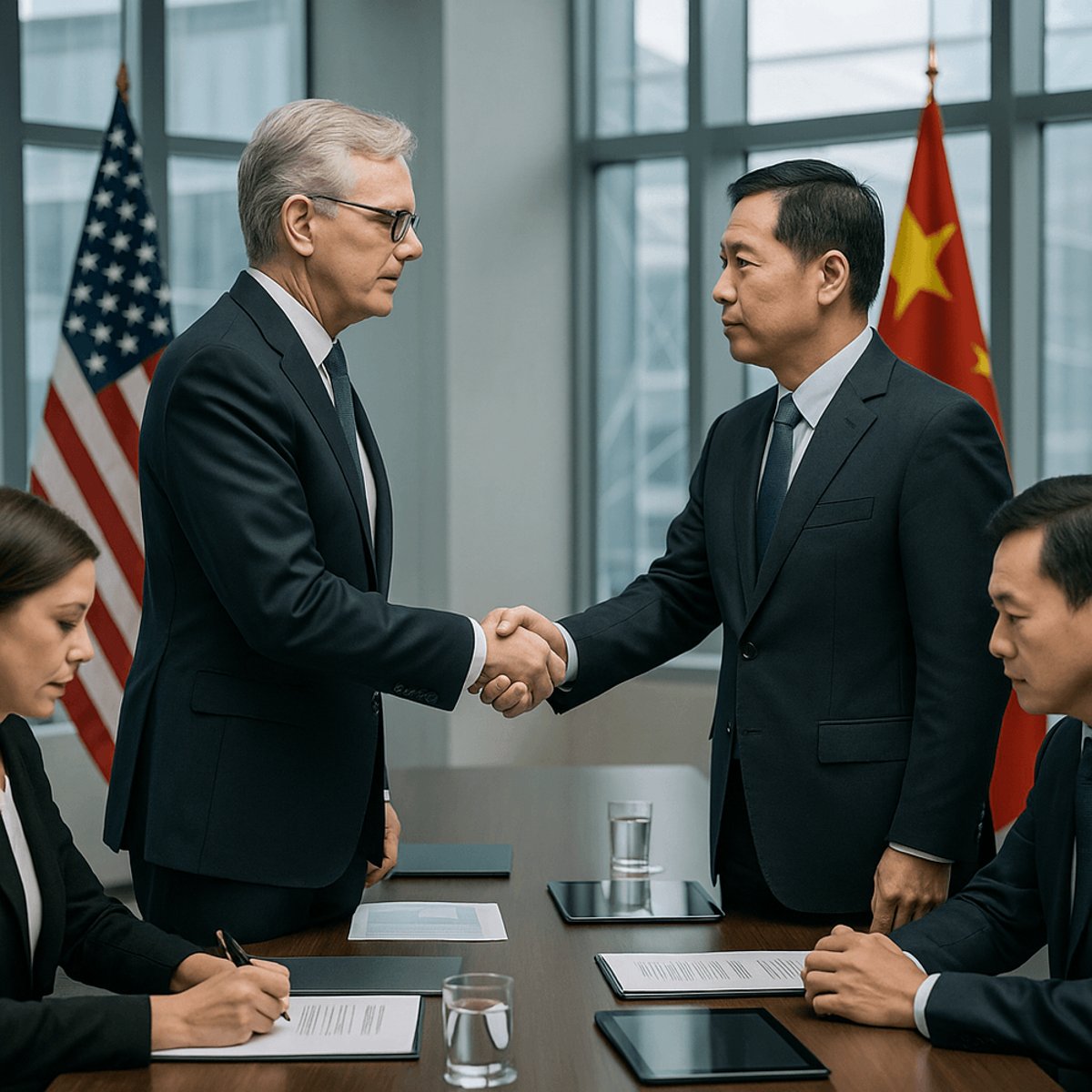
The year-long TikTok saga appears headed for resolution this Thursday as Treasury Secretary Scott Bessent confirms President Trump and Chinese President Xi Jinping will "consummate" their deal during meetings in Korea. The announcement caps months of negotiations that could reshape how Chinese-owned apps operate in America.
The United States and China are moving toward a historic resolution of the TikTok standoff, with Treasury Secretary Scott Bessent announcing Sunday that all details have been "ironed out" for a final agreement between Presidents Trump and Xi Jinping.
Speaking from Kuala Lumpur during broader US-China trade talks, Bessent told CBS' Face the Nation that the two leaders will "consummate that transaction on Thursday in Korea." The announcement marks a potential end to the regulatory uncertainty that has hung over TikTok since the Trump administration first targeted the app over national security concerns.
The deal builds on a framework agreement reached in Madrid last month, which Trump subsequently backed with an executive order in September. Under those terms, TikTok's US operations - including its powerful recommendation algorithm, source code, and content moderation systems - will transfer to a new American-controlled board of directors.
Oracle, led by Trump ally Larry Ellison, will take responsibility for the platform's security operations, while a consortium of major investors provides the financial backing. Fox Corp, Andreessen Horowitz, and Silver Lake Management have all been reported as participants in the joint venture, with Fox's involvement seemingly confirmed by Trump himself.
The timing couldn't be more critical for ByteDance, TikTok's Chinese parent company. Trump has repeatedly extended deadlines for a law requiring the company to sell TikTok or face a complete US ban. Each extension has created market uncertainty while keeping TikTok's 170 million American users in limbo about their favorite app's future.
Bessent's announcement comes amid broader diplomatic progress between the world's two largest economies. Speaking alongside Chinese trade negotiators in Malaysia, US trade representative Jamieson Greer confirmed that both countries had reached framework agreements on tariffs and other trade issues, including discussions about rare earth minerals critical to semiconductor manufacturing.
"We talked about extending the truce, we talked about rare earths, of course, we talked about all kinds of topics," Greer told reporters. The rare earth element discussion takes on additional significance given China's recent moves to tighten export controls on these materials, which are essential for producing chips and other tech hardware.
For TikTok, the deal represents a middle path between complete divestiture and outright prohibition. Rather than forcing ByteDance to sell entirely, the agreement allows the Chinese company to retain ownership while ceding operational control to American entities. This structure addresses US national security concerns about data access and algorithmic manipulation while preserving TikTok's unique social media ecosystem.
The financial implications remain substantial but undisclosed. Bessent declined to discuss specific deal terms during his CBS interview, noting only that his "remit was to get the Chinese to agree to approve the transaction" - a goal he believes was "successfully accomplished over the past two days."
Investors are watching closely as the deal could set precedents for other Chinese-owned tech companies operating in America. The arrangement with Oracle handling security operations mirrors structures already used by other apps seeking to address US regulatory concerns, but the scale of TikTok's user base makes this agreement unprecedented.
Market analysts expect the Thursday announcement to provide clarity that's been missing from TikTok's business planning for over a year. Advertising partners have maintained cautious relationships with the platform, while creator economy businesses have developed contingency plans in case of sudden service interruptions.
Thursday's expected agreement between Trump and Xi represents more than just TikTok's future - it's a test case for how Chinese and American tech companies can operate across increasingly complex geopolitical boundaries. If successful, this deal could provide a template for resolving similar disputes while preserving innovation and user access. The broader trade discussions happening simultaneously suggest both countries recognize the need for workable frameworks that balance security concerns with economic realities.