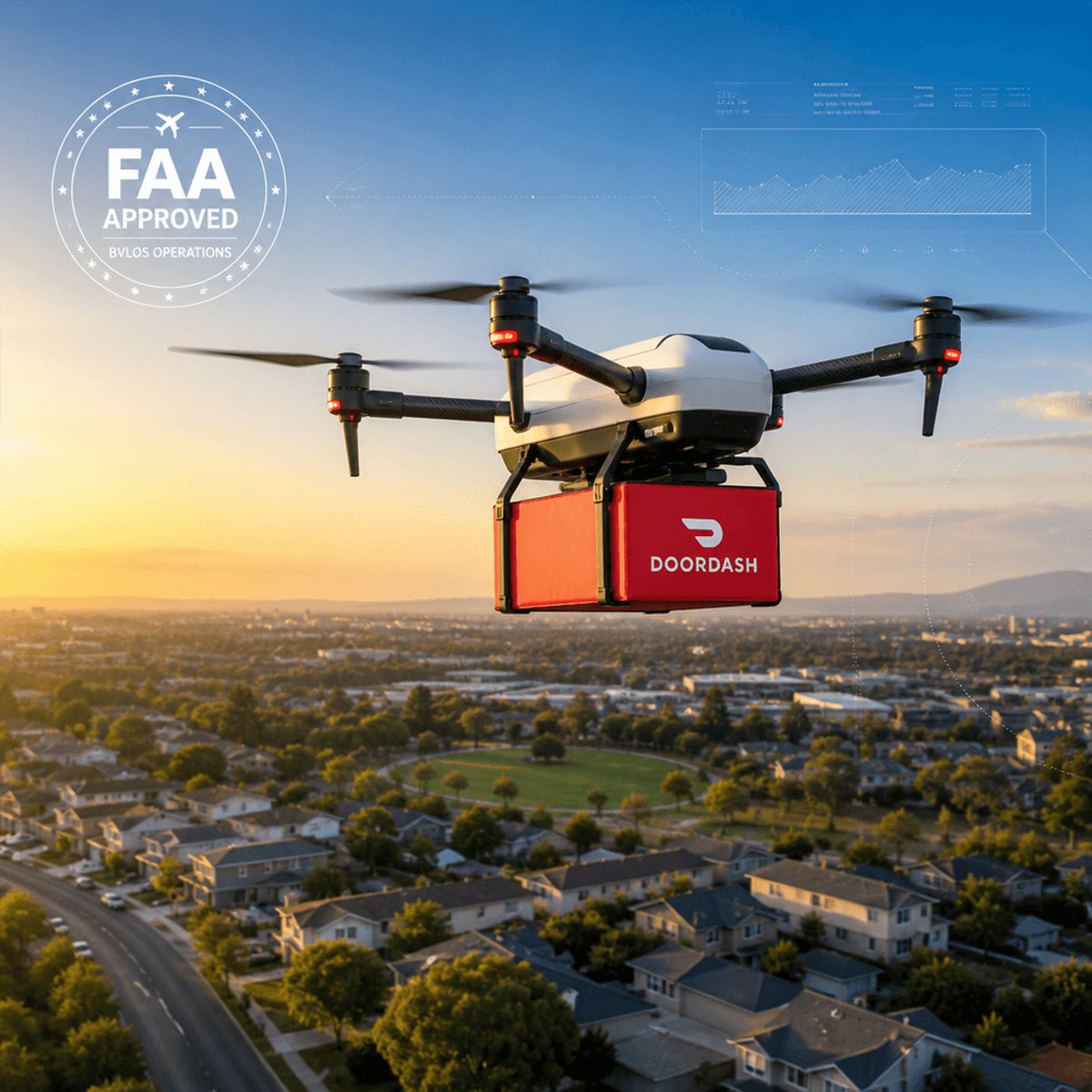
DoorDash just landed a major regulatory win that puts it head-to-head with tech giants in the race for autonomous delivery. The food delivery platform has secured FAA approval to operate its own commercial drone delivery service across the United States, marking the first time a major food delivery company has won clearance for a proprietary aerial fleet. The move signals DoorDash's ambition to control the entire delivery stack - from restaurant to doorstep - without relying on partners or ground-based couriers.
DoorDash is taking flight. The San Francisco-based delivery giant has cleared a critical regulatory hurdle that's been years in the making, securing Federal Aviation Administration approval to launch its own commercial drone delivery operation. According to TechCrunch, the authorization marks a dramatic strategic pivot for a company that's previously relied on partnerships with drone operators rather than building its own aerial fleet.
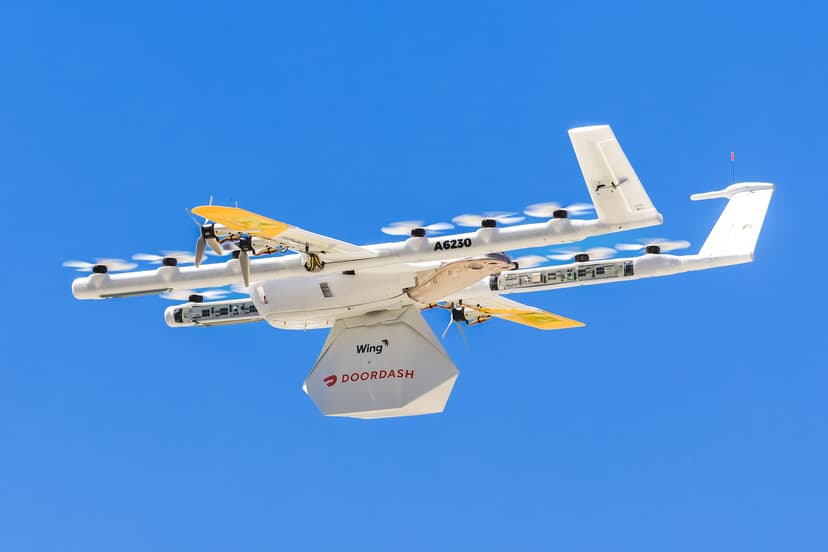
The timing couldn't be more pointed. While Amazon has been testing Prime Air since 2016 and Google's Wing has completed thousands of commercial deliveries, DoorDash's entry into owned drone operations signals the food delivery wars are going vertical - literally. The company's existing partnerships with drone providers like Alphabet's Wing and Australian startup Zipline proved the concept works. But owning the technology means controlling costs, data, and the entire customer experience from kitchen to doorstep.
The FAA approval isn't just a rubber stamp - it's a vote of confidence in DoorDash's technical capabilities and safety protocols. The agency's Part 135 Air Carrier certification, the same license required for commercial air taxi operations, demands rigorous pilot training programs, maintenance procedures, and operational oversight. DoorDash joins an exclusive club that includes Wing, Amazon, and a handful of logistics startups that have navigated the agency's notoriously complex approval process.
For DoorDash, the strategic calculus is clear. The company's core business runs on razor-thin margins, with delivery fees barely covering the cost of human couriers in many markets. Drones promise delivery costs as low as $1-2 per order for lightweight packages, compared to $5-8 for ground-based delivery, according to industry estimates. That economics could unlock profitable service in suburban and exurban markets where delivery density makes traditional courier models uneconomical.
But the real prize might be speed. Early drone delivery pilots have demonstrated 10-15 minute delivery windows for orders within a 6-mile radius - fast enough to keep hot food hot and ice cream frozen. That performance opens up new use cases beyond restaurant meals, from grocery staples to pharmacy orders to convenience store runs. DoorDash's existing merchant relationships and fulfillment infrastructure give it a head start competitors can't easily replicate.
The competitive landscape is about to get crowded. Uber Eats has been testing drone delivery in partnership with Serve Robotics for ground-based autonomous delivery, while regional players like Flytrex have carved out niches in suburban markets. Walmart has aggressively expanded drone delivery through partnerships with multiple providers. DoorDash's decision to build rather than buy signals the company believes proprietary technology will become a competitive moat.
There are still major hurdles ahead. Current FAA regulations limit most drone operations to visual line-of-sight, restricting range and scalability. Weather conditions, airspace restrictions, and community acceptance remain wild cards. And the unit economics only work if DoorDash can achieve density - enough orders in a concentrated area to keep drones in continuous operation rather than sitting idle between deliveries.
The company hasn't disclosed technical specifications for its drone fleet, initial launch markets, or rollout timeline. Industry observers expect DoorDash to start small, likely in suburban test markets where airspace is less congested and regulatory oversight more manageable. Previous drone delivery pilots have focused on college campuses, master-planned communities, and suburban shopping districts - controlled environments where variables can be minimized and customer density justified the infrastructure investment.
What's clear is that DoorDash is betting big on autonomous delivery as the future of its business model. The company's recent moves - from acquiring restaurant delivery robot maker Chowbotics components to expanding partnerships with autonomous vehicle companies - all point toward a future where human couriers handle only the most complex last-mile scenarios. Drones represent the next logical step in that evolution, particularly for standardized, lightweight orders that don't require apartment building navigation or customer interaction.
DoorDash's FAA approval represents more than just another player entering the drone delivery race - it's a fundamental reimagining of the food delivery business model. By owning the entire technology stack from order to delivery, DoorDash is positioning itself to compete on speed and cost in ways that partnership models can't match. The real test comes next: proving the unit economics work at scale, navigating the inevitable regulatory and community challenges, and executing flawlessly in a market where customer expectations are unforgiving. If DoorDash can crack the code on profitable drone delivery, it won't just change how we get dinner - it'll reshape the entire landscape of on-demand logistics. Watch for initial market announcements in the coming months as the company moves from regulatory approval to operational reality.