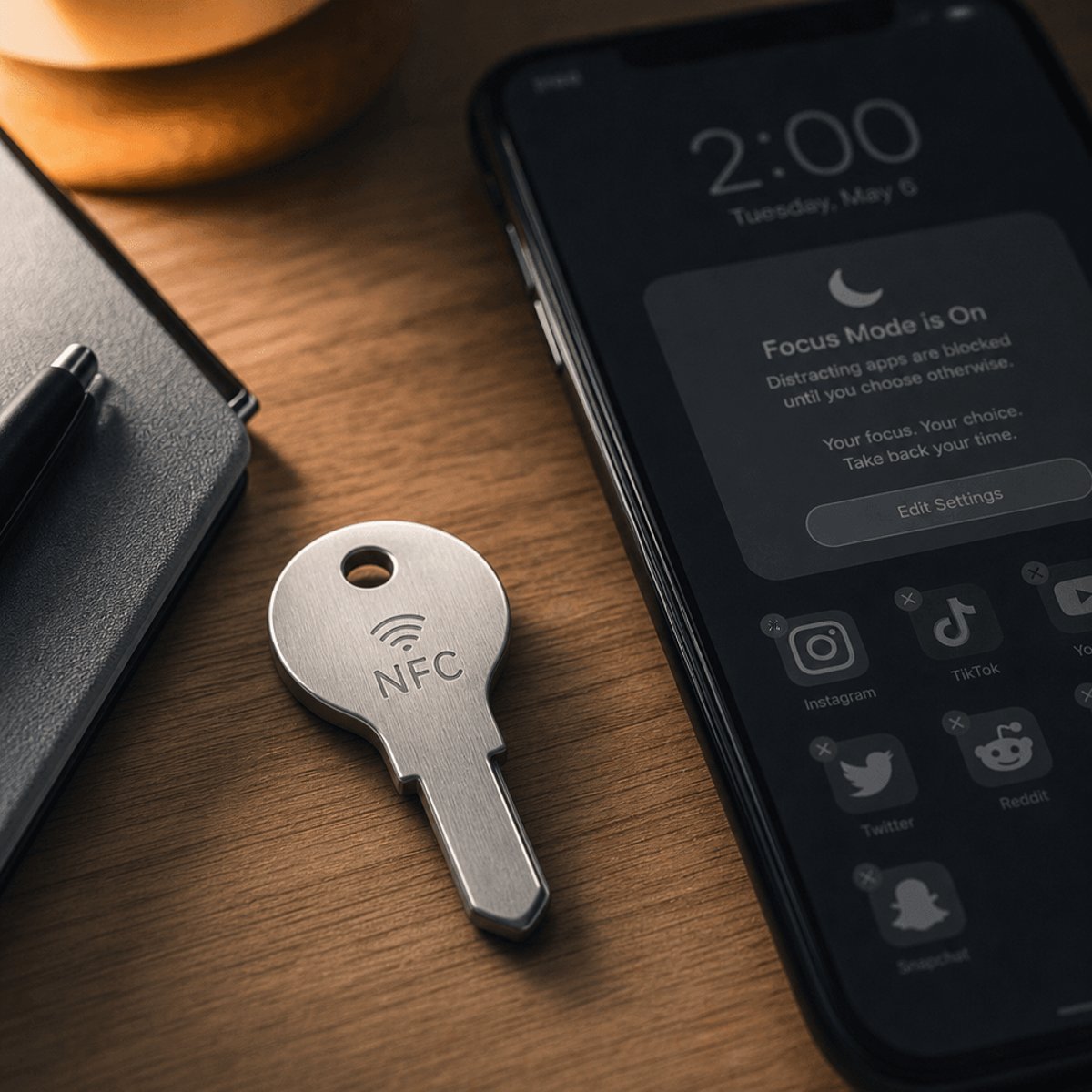
The digital detox wars just got physical. A new $9 NFC key promises to break smartphone addiction by forcing users to physically scan a hardware token before accessing their most distracting apps. The device, reviewed by TechCrunch, represents a growing trend of hardware-based digital wellness tools that acknowledge software-only solutions haven't solved our scrolling problem. At less than the cost of a lunch, it's betting that adding friction - literal, physical friction - might be the intervention chronically online users actually need.
The device arrives as digital wellness transforms from a software problem into a hardware opportunity. While Apple and Google have built Screen Time and Digital Wellbeing features into their operating systems for years, the persistent growth of average daily screen time suggests these friction-free solutions aren't working. Users facing the existential challenge of TikTok binges and endless Instagram scrolls can now simply disable limitations with a tap. This $9 key changes that equation by requiring you to get up, find a physical object, and deliberately scan it before doom-scrolling.
The technology itself is straightforward but clever. The key uses NFC (near-field communication), the same wireless standard that powers contactless payments and digital door locks. Users pair the key with their smartphone once, then designate which apps require scanning to unlock. Want to check Twitter at 2am? You'll need to physically locate and tap that key against your phone. The deliberate inconvenience is the entire point, transforming impulsive app launches into conscious decisions.
What makes this device interesting isn't the technology but the psychology. Behavioral scientists have long known that adding friction to unwanted behaviors makes them less likely to occur. It's why casinos eliminated clocks and why social media apps removed all natural stopping points. This key essentially applies that same principle in reverse, weaponizing inconvenience against algorithmic persuasion. The fact that it costs less than a movie ticket makes it an impulse purchase for anyone who's ever looked up from their phone at 1am wondering where three hours went.
The timing couldn't be better for hardware-based digital wellness tools. Gen Z and millennial users increasingly report smartphone fatigue, with Pew Research finding that 54% of Americans feel they spend too much time on their phones. Yet software solutions remain easy to circumvent because they live on the same device they're meant to control. Physical hardware introduces a separation that's harder to rationalize away - you can't just tap through a warning screen when the key is in another room.
The device also taps into broader trends around intentional technology use. The rise of dumbphones, digital minimalism movements, and even analog productivity tools like paper planners all signal growing resistance to always-on connectivity. This NFC key offers a middle path: keep your smartphone's utility while adding guardrails to its most addictive features. You can still access maps, messages, and music without friction, but Instagram and TikTok require deliberate action.
Competitive landscape considerations matter here too. The digital wellness hardware market remains fragmented, with solutions ranging from $200 smartphone lockboxes to $50 app-blocking routers. This $9 price point undercuts virtually everything while maintaining the core value proposition of physical separation. It's cheap enough for gifting, impulse buying, or experimental adoption - all crucial factors for a product category that's still proving its market fit.
The gadget works with both iOS and Android devices, leveraging the NFC capabilities built into virtually every modern smartphone. Setup reportedly takes minutes, and users can customize which apps require unlocking. The key itself is small enough for a keychain, meaning it can travel with users or be strategically placed somewhere inconvenient. That flexibility addresses different use cases: commuters might keep it in their bag to avoid phone use on the subway, while remote workers might stash it across the room to prevent work-hour scrolling.
There are obvious limitations. Users could simply unpair the key when temptation strikes, turning the whole system optional. The device also can't distinguish between productive and unproductive app use - blocking all Instagram access means you can't even check direct messages without scanning. And for users without NFC-enabled phones (increasingly rare but not extinct), it simply won't work. These constraints explain why this remains a niche product rather than a mass-market phenomenon.
But the broader signal matters more than this specific product's success. Hardware makers are realizing that digital wellness represents an underserved market willing to pay for solutions. If a $9 NFC key gains traction, expect Apple, Samsung, and accessory makers to explore similar concepts. We might see official app-blocking dongles, NFC rings that work as digital keys, or even smart home integrations that lock phones until certain tasks complete.
This $9 NFC key won't solve smartphone addiction for everyone, but it represents something more important than its specs suggest. It's evidence that the market is moving beyond software-only solutions and acknowledging that meaningful behavior change sometimes requires physical intervention. Whether this specific product succeeds matters less than the door it opens. As digital wellness evolves from feature to hardware category, expect more creative solutions that blend technology with intentional friction. For now, the key offers a cheap experiment for anyone tired of software promises that go unfulfilled. The real question isn't whether a physical key can stop you from opening Instagram - it's whether you're willing to admit you need one in the first place.