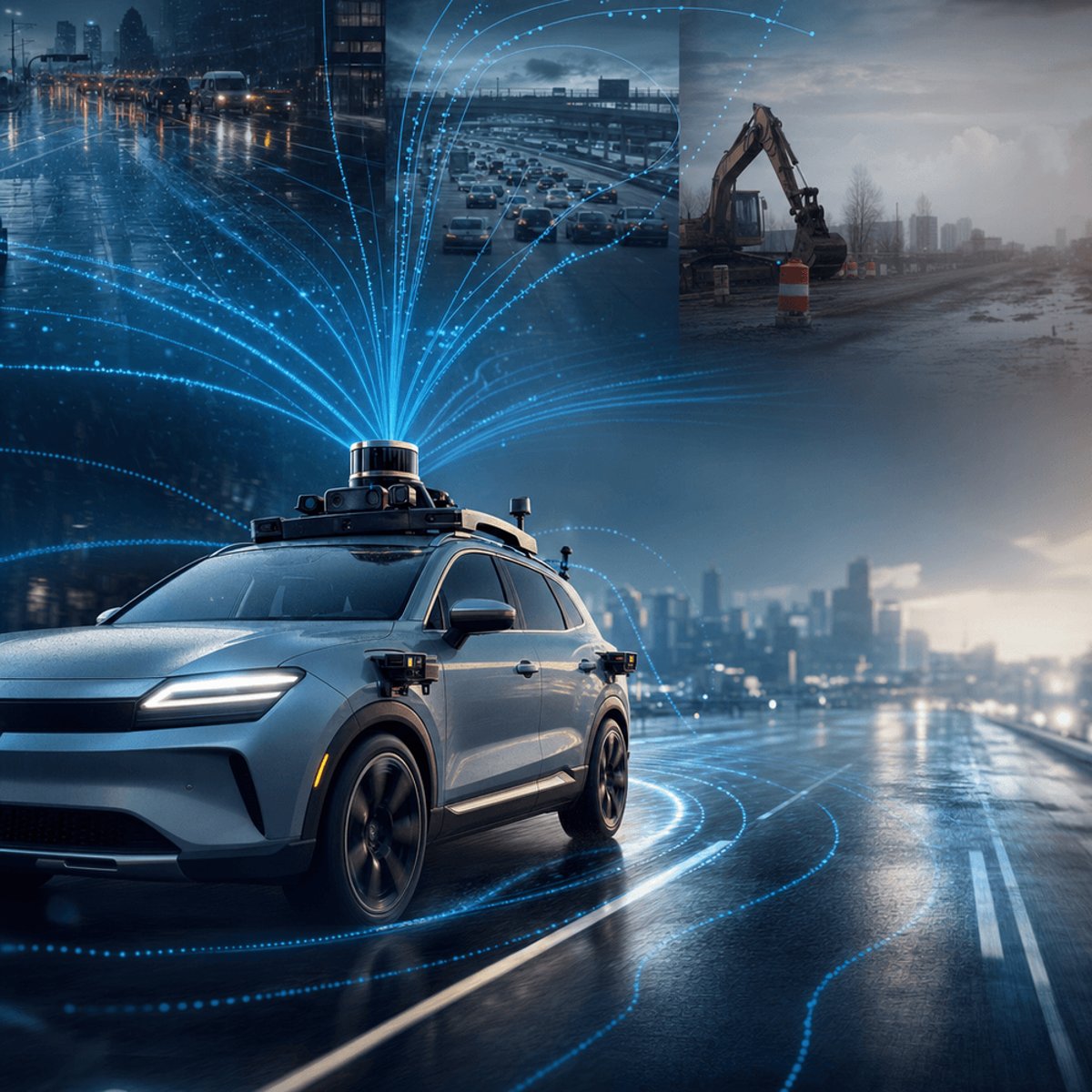
Uber is putting self-driving cars back on public roads for the first time since its fatal 2018 crash in Arizona, but with a critical twist. The company's new AV Lab project launches with a single Hyundai Ioniq 5 equipped with cameras, lidar, and radar—not to ferry passengers, but to collect data for its dozens of robotaxi partners. The move signals Uber's strategic pivot from operator to enabler in the autonomous vehicle race, letting others take the regulatory heat while it builds the infrastructure.
Uber just made a calculated return to the self-driving game, and it's playing a completely different hand than before. The company's new AV Lab project puts autonomous vehicles back on the road—fitted with the full sensor array of cameras, lidar, and radar—but these cars won't be picking up passengers. They're pure data collectors, according to The Verge.
The project starts modestly with a single Hyundai Ioniq 5, though Uber says it's not married to that particular model. But the real story here isn't the hardware—it's the strategy. After shuttering its Advanced Technologies Group in 2020 following the tragic death of Elaine Herzberg in Tempe, Arizona, Uber's been playing the long game with partnerships rather than proprietary tech.
The 2018 incident fundamentally reshaped Uber's approach to autonomy. One of its self-driving test vehicles struck and killed Herzberg as she crossed the street with her bicycle, leading to criminal charges against the safety driver and ultimately the sale of Uber's entire AV division to Aurora Innovation. The company paid the price—both legally and strategically—for pushing too hard, too fast.
Now Uber's coming back, but as an infrastructure play. The AV Lab vehicles will gather real-world driving data across diverse conditions and environments, then feed that intelligence back to the robotaxi companies already operating on Uber's platform. Partners like Waymo, Aurora, and Cruise get richer datasets to train their systems, while Uber sidesteps the regulatory minefield of actually operating autonomous passenger services.
It's a smart hedge. The autonomous vehicle market continues to evolve in fits and starts, with companies burning through billions in development costs. Waymo operates commercial robotaxis in San Francisco, Phoenix, and Los Angeles, while Cruise pulled back operations after its own pedestrian-dragging incident last year. The path to profitability remains murky for pure-play AV companies.
Uber's data collection strategy addresses a persistent problem in autonomous development: the gap between simulation and reality. Every mile driven generates valuable edge cases—unusual weather, unexpected pedestrian behavior, construction zones, aggressive drivers. This real-world data is gold for training AI systems, and Uber's now positioning itself as the supplier.
The move also strengthens Uber's negotiating position with AV partners. By collecting proprietary data on its platform's actual operating environments, Uber becomes more valuable to robotaxi companies that need those specific insights. It's ecosystem lock-in disguised as collaboration.
Starting with just one vehicle suggests Uber's testing both the technology and the political waters. Local regulations around autonomous testing vary wildly, and Uber's toxic history with self-driving tech means it'll face scrutiny. But a data collection vehicle with a human driver draws less attention than a fleet of driverless robotaxis.
The Hyundai Ioniq 5 choice is interesting too. It's become a popular platform for AV development—Motional uses the same vehicle for its robotaxi service. Standardizing on proven platforms reduces integration complexity and lets Uber focus on sensor placement and data pipelines rather than vehicle engineering.
What Uber's really building here is a moat. As robotaxi services scale on its platform, the company that controls the data infrastructure controls the relationship. Partners need Uber's rider demand, and increasingly they'll need its data too. It's the classic platform play: make yourself indispensable without taking the operational risk.
The timing aligns with broader industry consolidation. After years of hype and massive capital raises, the AV sector is sorting into winners and survivors. Companies with clear paths to revenue are pulling ahead, while others shut down or get acquired. Uber's betting it can be the AWS of autonomous vehicles—the infrastructure layer everyone needs but nobody wants to build themselves.
Uber's AV Lab represents a masterclass in strategic repositioning. By focusing on data collection rather than robotaxi operations, the company gets back into autonomous development without repeating past mistakes. It strengthens partnerships with AV operators who need real-world data, builds valuable infrastructure assets, and avoids the regulatory scrutiny that comes with putting driverless cars on public roads. Whether this approach scales beyond a single test vehicle remains to be seen, but the logic is sound: let others take the heat while you build the pipes. In the race to autonomous mobility, Uber's decided it'd rather own the track than drive the cars.