Zack Eakin wants to do for composite materials what Amazon did for everything else. The former Anduril engineer just closed a $42 million Series A for Layup Parts, a marketplace aiming to transform how manufacturers source carbon fiber and advanced composite components. With stints at both Palmer Luckey's defense tech unicorn and Elon Musk's ventures under his belt, Eakin's betting his motorsports-honed expertise can crack one of manufacturing's thorniest supply chain problems.
Layup Parts just landed $42 million to reinvent how the world buys carbon fiber components. The Series A round, led by Founders Fund, signals growing investor appetite for startups tackling industrial supply chain inefficiencies, particularly in sectors like aerospace and defense where composites are mission-critical.
Co-founder Zack Eakin comes to the problem with an unusual pedigree. After cutting his teeth in motorsports engineering, where shaving grams off race car components can mean the difference between winning and losing, he moved through the ranks at Anduril Industries, Palmer Luckey's defense technology company that's been reshaping military procurement. He also logged time at both Tesla and SpaceX, where Elon Musk's operations gave him a front-row seat to high-volume manufacturing challenges.
The composite materials market is enormous but stuck in the past. Worth over $30 billion annually according to industry analysts at Grand View Research, the sector still operates largely through manual request-for-quote processes that can stretch weeks or months. Engineers email technical drawings to suppliers, wait for custom quotes, then negotiate terms, one transaction at a time. For companies building everything from drone airframes to satellite components, this friction adds up to serious delays and cost overruns.
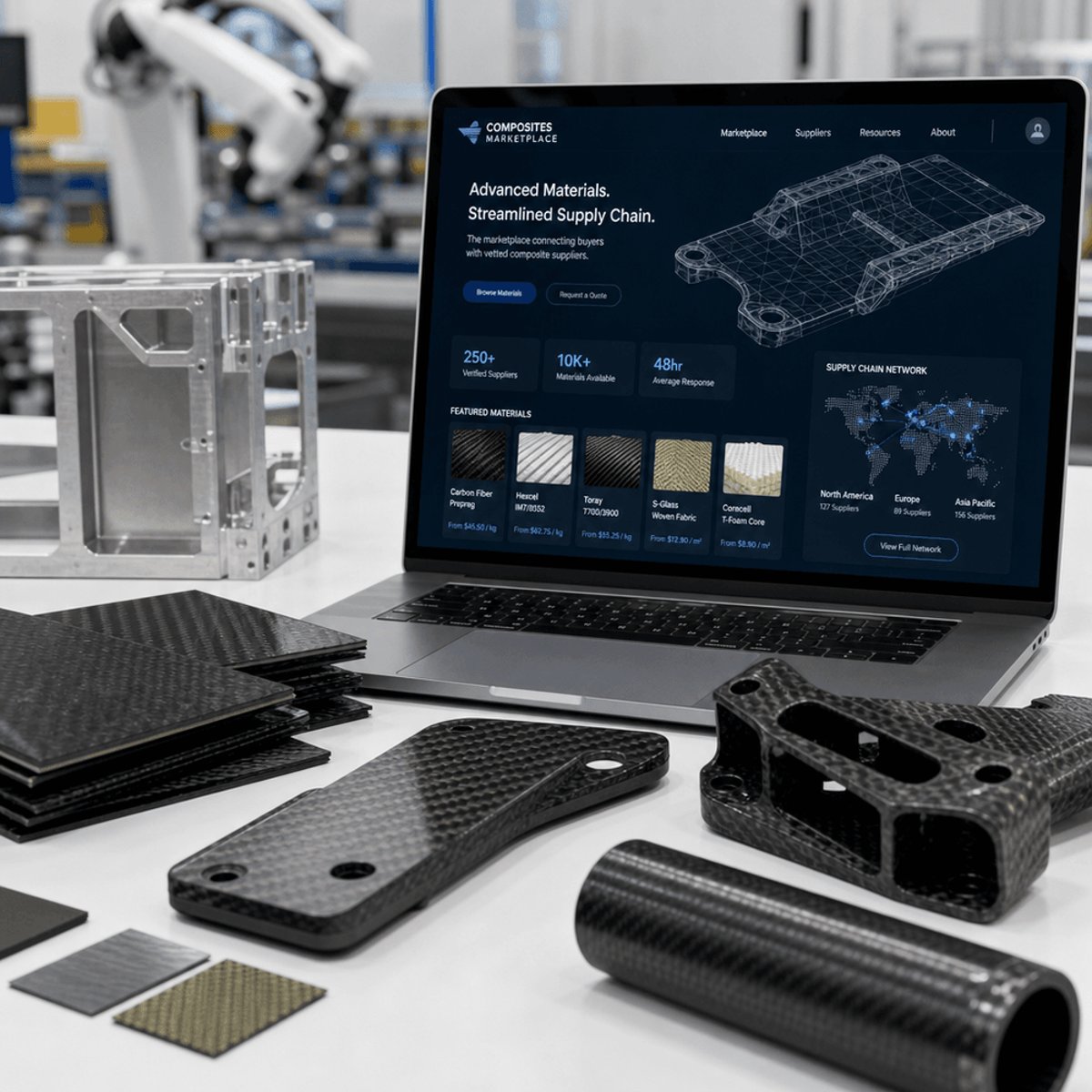
Layup Parts is building what Eakin describes as an "Amazon for composites" - an online marketplace where buyers can upload CAD files, instantly compare quotes from vetted manufacturers, and place orders with transparent pricing and lead times. The platform connects customers with a network of composite fabrication shops capable of producing parts using materials like carbon fiber, fiberglass, and aramid composites through processes including hand layup, resin transfer molding, and automated fiber placement.
The timing aligns with broader manufacturing trends. As companies from Amazon to legacy aerospace contractors race to incorporate more advanced materials into products - lighter components mean better fuel efficiency for aircraft, longer range for electric vehicles, and improved performance for defense systems - the supply chain hasn't kept pace. Traditional composite suppliers often require high minimum order quantities and long lead times that conflict with the rapid prototyping cycles now standard in tech-forward industries.
According to TechCrunch's reporting, the funding will accelerate Layup Parts' expansion of its supplier network and development of manufacturing automation tools. The startup's approach mirrors successful B2B marketplaces like Xometry in metal fabrication and PCBWay in circuit boards, which have proven that fragmented manufacturing sectors are ripe for digital transformation.
Founders Fund's backing carries particular weight here. The firm, co-founded by Peter Thiel, has a track record of betting on defense-adjacent startups including Anduril itself, as well as aerospace companies like Relativity Space. The connection suggests Layup Parts may be positioning itself to serve government contractors and defense primes, where composite demand is surging thanks to programs requiring unmanned aerial systems, hypersonic vehicles, and next-generation satellites.
The competitive landscape includes traditional composite suppliers like Toray and Hexcel, which dominate raw material production, but few have built consumer-friendly digital interfaces. Startups like Arris Composites have tackled automated manufacturing processes, while Layup Parts is attacking the distribution and procurement bottleneck. The bet is that whoever controls the customer relationship and simplifies ordering will capture value even without owning factories.
Eakin's motorsports background proves relevant in unexpected ways. Racing teams prototype and iterate on composite components at breakneck speed, testing parts in extreme conditions and rebuilding based on real-world performance data. That discipline - rapid iteration, performance validation, supply chain agility - maps directly onto what aerospace and defense customers now demand but rarely get from traditional suppliers.
The $42 million war chest also positions Layup Parts to invest in quality assurance infrastructure, a critical trust factor when components might end up in aircraft or military hardware. Buyers need confidence that marketplace-sourced parts meet specifications and certifications, requiring robust testing protocols and supplier vetting that goes beyond typical e-commerce platforms.
Layup Parts represents a straightforward thesis: manufacturing supply chains built for the 20th century can't serve 21st-century product development cycles. If Eakin can deliver on the promise of compressing composite sourcing from months to days while maintaining quality standards, there's a clear path to becoming infrastructure for the next generation of hardware companies. The real test will be whether a digital marketplace can earn trust in an industry where part failures carry catastrophic consequences, and whether enough composite shops will embrace platform economics over traditional customer relationships. With Founders Fund's backing and a founder who's navigated both bleeding-edge defense tech and high-stakes motorsports, the startup has the resources and credibility to find out.