A cybersecurity startup founded by a former Palantir engineer just closed a $40 million funding round with backing from some of tech's biggest names. Outtake, which uses autonomous AI agents to detect and eliminate cyberthreats, landed investments from Microsoft CEO Satya Nadella, Palo Alto Networks CEO Nikesh Arora, and billionaire investor Bill Ackman. The 35-person company has quietly built an impressive customer roster including OpenAI, AppLovin, and Ackman's Pershing Square since launching in 2023.
Outtake founder Alex Dhillon knows the enterprise security game inside out. After nearly five years building AI platforms at Palantir, he left to tackle what he saw as a growing crisis - the explosion of AI-powered cyberthreats that traditional security tools can't keep pace with. Now his former boss at Palantir, tech chief Shyam Sankar, is backing his bet, along with a who's-who of tech executives and investors.
The company announced Wednesday it closed a $40 million funding round led by venture firm Iconiq, with participation from CRV, S32, and a roster of angel investors that reads like a tech industry all-star team. Microsoft CEO Satya Nadella, Palo Alto Networks CEO Nikesh Arora, Anduril co-founder Trae Stephens, and billionaire hedge fund manager Bill Ackman all put money into the round, according to CNBC's report.
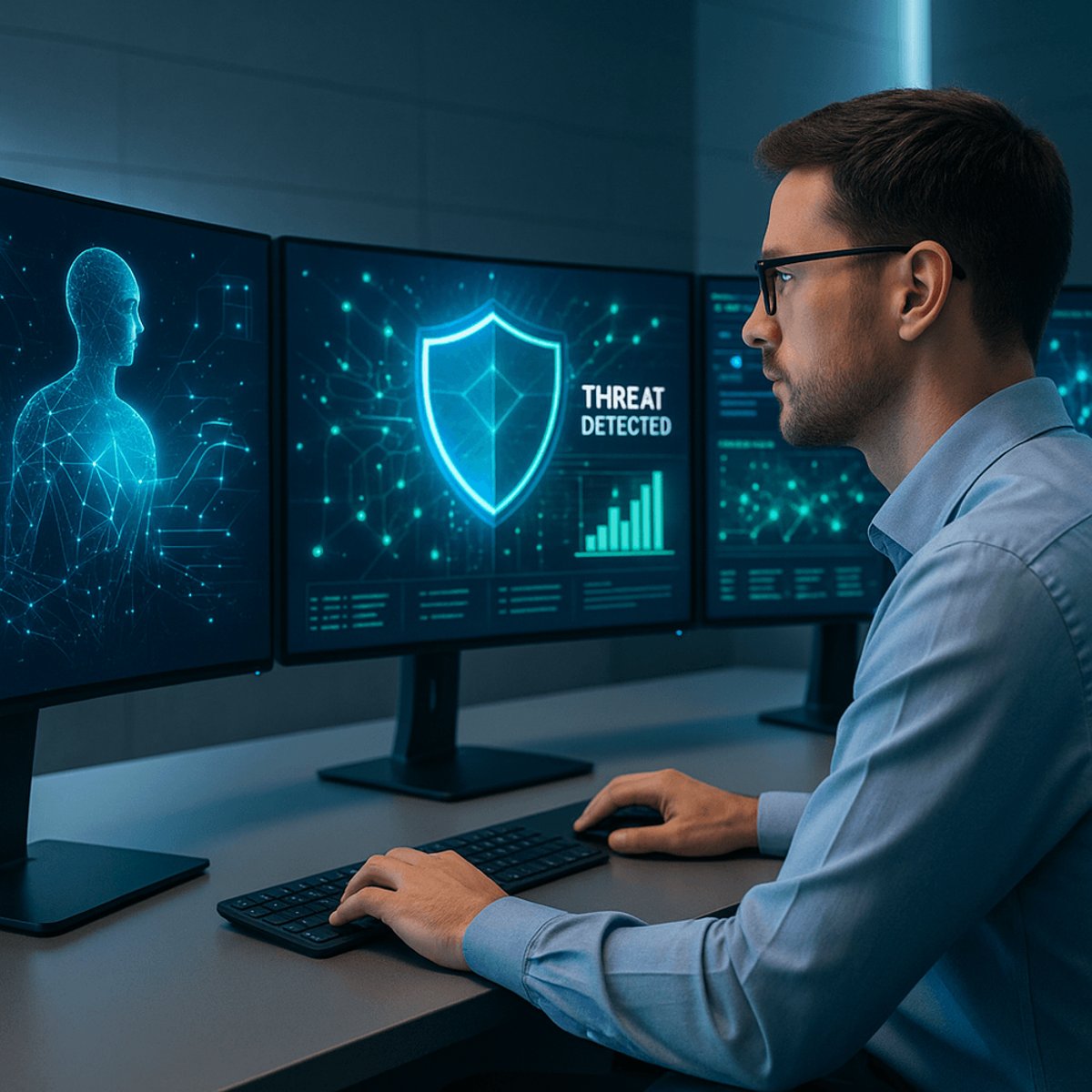
What's drawing this level of interest? Outtake's approach to cybersecurity centers on autonomous AI agents that actively hunt for and eliminate threats like phishing attacks, rather than waiting for humans to spot them. The technology handles everything from email verification to scanning potential attacks across a company's digital infrastructure. "We're headed towards this world of always-on security," Dhillon told CNBC. "You need agent tech solutions like Outtake, defending your neighborhood."
The customer list suggests the approach is working. OpenAI, Bill Ackman's Pershing Square, mobile gaming giant AppLovin, federal agencies, and luxury retail brands are all using Outtake's platform. Dhillon didn't disclose the company's valuation, but the growth metrics tell a compelling story - annual recurring revenue increased about sixfold year over year, while enterprise customers grew more than tenfold.
Outtake's systems scanned 20 million potential cyberattacks last year, a figure that underscores just how relentless the threat landscape has become. And it's getting worse. Dhillon argues that AI itself has dramatically raised both the sophistication and pace of cyberthreats, creating what he calls the need for a "trust layer for the Internet."
Iconiq general partner Murali Joshi, who's joining Outtake's board as part of the deal, pointed to the company's product differentiation and customer feedback as key factors in the firm's decision to lead the round. "What they've built, from a product perspective, is so fundamentally differentiated relative to everything else that's been on the market," Joshi told CNBC.
The timing is particularly striking given the broader conversations happening around AI safety and security. As companies race to deploy AI systems, they're simultaneously creating new attack surfaces for bad actors to exploit. Outtake's bet is that you need AI to fight AI - autonomous agents that can match the speed and sophistication of AI-powered attacks.
Dhillon plans to use the fresh capital to expand the company's go-to-market operations, including beefing up engineering and product teams. At just 35 people, Outtake is still a relatively small operation, but that customer roster and growth trajectory suggest the company is hitting a nerve in the market.
The funding represents a significant step up from Outtake's previous raises. The company pulled in $16.5 million in a Series A round led by CRV last April, and $3.5 million in seed funding before that. All told, Outtake has now raised $60 million since launching three years ago.
The involvement of executives like Nadella and Arora is particularly notable. Both run companies at the forefront of enterprise security - Microsoft through its massive Azure cloud business and security products, and Palo Alto Networks as one of the biggest pure-play cybersecurity firms. Their personal investments suggest they see Outtake's AI-agent approach as complementary to, rather than competitive with, existing enterprise security stacks.
Dhillon's pitch resonates with a growing sense of urgency in the security community. "We need agents manning the walls, because we're getting hammered every day," he said. "That's, frankly, what's both thrilling and frightening about our space, and in that lie opportunity."
For now, Outtake remains focused on proving out its technology with marquee customers and scaling its operations. But with this level of funding and this caliber of investor backing, the company has positioned itself as a serious player in the race to secure the AI-powered future of enterprise computing.
Outtake's $40 million raise signals a broader shift in how companies think about cybersecurity in an AI-first world. With threats becoming more sophisticated and automated, the old playbook of human-monitored defenses isn't cutting it anymore. The involvement of heavyweights like Nadella, Arora, and Ackman - both as investors and customers - validates the urgent need for autonomous security solutions. As AI continues to reshape every corner of enterprise software, the companies that can successfully deploy AI agents to defend against AI-powered attacks will likely capture outsized value. For Dhillon and Outtake, the challenge now is scaling fast enough to meet demand while staying ahead of an ever-evolving threat landscape.