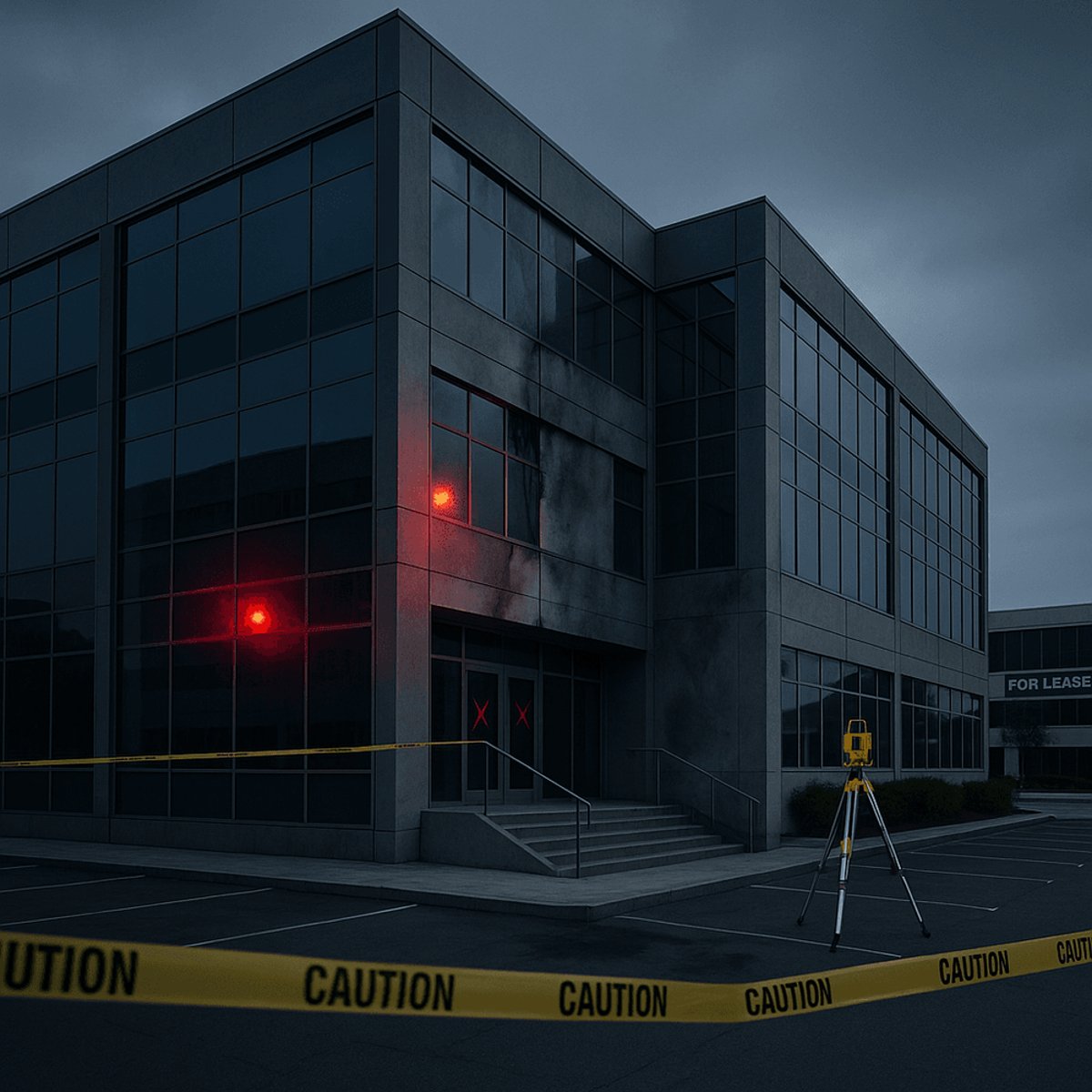
A Faraday Future electric SUV caught fire and exploded at the startup's Los Angeles headquarters early Sunday, blowing out a wall and forcing the city to red-tag the building as uninhabitable. The incident comes just as the embattled EV company's lease expires and its landlord actively seeks new tenants.
The explosion that rocked Faraday Future's Los Angeles headquarters early Sunday morning reads like a metaphor for the company's entire trajectory - spectacular, destructive, and perfectly timed to make everything worse. A display FF91 SUV caught fire in the startup's office space at 4:37 a.m., triggering an explosion powerful enough to bulge out a wall and force the Los Angeles Fire Department into a 40-minute battle to contain the flames.
"We are aware of a fire at our facility yesterday, there were no injuries to FF staff, and no evacuation was required," John Schilling, Faraday Future's communications director, told TechCrunch in what might be the most understated damage control statement of the year. The specific cause remains under investigation, though fire department investigators found no human factors involved.
The timing couldn't be worse for a company that's been living on borrowed time - literally. Faraday Future sold this headquarters back in 2019 to generate desperately needed cash, then leased it back from new owner Rexford Industrial. That arrangement went south when the startup fell behind on rent, prompting Rexford to sue for eviction in February 2024. The two sides settled in April, but that lease was set to expire at the end of this month.
Now the building where the fire occurred has been red-tagged by LA's Department of Building and Safety, meaning it needs structural work before anyone can occupy it again. Meanwhile, commercial real estate giant CBRE is already advertising the entire property as available for lease, including both the main building and the now-damaged structure.
This latest crisis caps off what's been a brutal stretch for the once-hyped EV startup. Faraday Future first unveiled its ultra-luxury FF91 SUV back in 2017, promising industry-leading range and premium features that would justify its six-figure price tag. But financial troubles kept pushing back production until 2023, when the company finally started building a handful of vehicles.
Since then, delivery numbers have been anemic - just over a dozen FF91s have made it to customers, mostly celebrities and high-net-worth individuals. Even those sales have been questioned by employee whistleblowers who've accused the company of misrepresenting its delivery figures in what appears to be an ongoing pattern of overpromising.
The regulatory pressure is mounting too. Earlier this year, the Securities and Exchange Commission sent "Wells Notices" to Faraday Future and founder Jia Yueting, signaling that enforcement action is likely coming after a three-year investigation. These notices typically mean the SEC has found evidence of securities violations and is preparing to file charges.
Desperate for revenue, Faraday Future has been pivoting away from its luxury SUV strategy. The company is now promoting a more affordable electric van that appears to be imported from China, while also trying to launch some kind of crypto-focused business venture. It's the kind of scattered approach that screams "throwing everything at the wall to see what sticks."
The fire investigation continues, but the symbolism is hard to ignore. An electric vehicle that was supposed to represent the future of luxury transportation caught fire and exploded in a building the company can't afford to keep. For a startup that's burned through hundreds of millions in investor cash while delivering barely any vehicles, it's almost too perfect a metaphor.
What happens next depends largely on whether Faraday Future can secure new headquarters space and continue operations. With the SEC breathing down their necks, a crypto pivot that sounds increasingly desperate, and now a literal fire to deal with, the company's options are narrowing fast.
The explosion at Faraday Future's headquarters serves as a stark reminder of how quickly things can go wrong when a company is already on the brink. With their lease expiring, the SEC circling, and now a building they can't even occupy, Faraday Future faces an increasingly narrow path to survival. The company's pivot to cheaper vehicles and crypto ventures feels more like desperation than strategy, and this latest incident only reinforces the sense that time is running out for one of the EV industry's most troubled players.