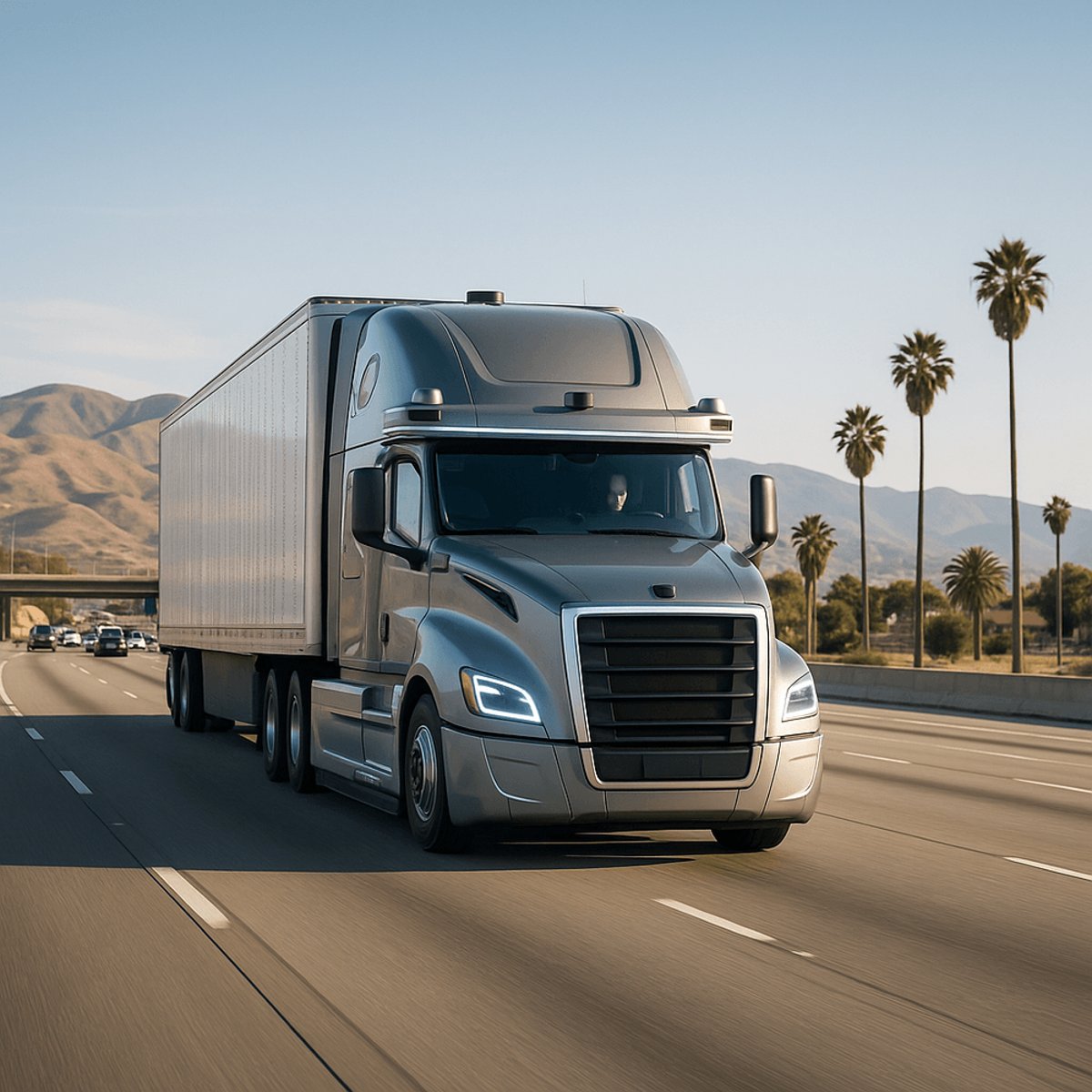
California regulators just opened the door for self-driving trucks to hit public highways. The state's Department of Motor Vehicles released revised rules Wednesday that would end the ban on testing autonomous vehicles over 10,000 pounds, potentially unlocking billions in freight automation by 2026.
California just cracked open the door to a freight revolution. The California Department of Motor Vehicles released revised regulations Wednesday that would finally allow companies to test and deploy self-driving trucks on public highways, ending a years-long ban that's forced the industry to innovate elsewhere.
The proposed changes launched a 15-day comment period ending December 18, marking the culmination of a regulatory battle that's been brewing since robotaxis started cruising San Francisco streets while massive autonomous trucks remained sidelined.
Right now, California's rules create a bizarre split screen. Companies like Waymo operate fleets of driverless cars throughout the Bay Area and parts of Los Angeles, but any autonomous vehicle weighing over 10,000 pounds is banned from public road testing. That's left California-based companies like Aurora Innovation and Kodiak AI testing their freight haulers on Texas highways instead of the commerce-heavy Interstate corridors they ultimately want to serve.
"The California DMV's latest draft regulations show real progress toward creating a regulatory framework for driverless trucks in the state and unlocking coast-to-coast autonomous operations," Daniel Goff, vice president of external affairs at Kodiak AI, told TechCrunch. The company sees 2026 as the target for bringing autonomous trucks to California freeways.
But labor unions aren't backing down. The Teamsters, which represents hundreds of thousands of truck drivers, remain firmly opposed to the technology. "Our position remains the same, we are opposed to the deployment and testing of this technology on our roads," Shane Gusman, legislative director for Teamsters California, told TechCrunch. "The changes that are made don't change our position."
The union is simultaneously pushing for passage of AB 33, legislation currently on the state Senate floor that would require human safety operators in all heavy-duty autonomous trucks. It's setting up a classic regulatory showdown between innovation and job protection.
Under the proposed rules, self-driving truck companies would face a phased permitting process mirroring current robotaxi regulations. They'd start with human safety operators behind the wheel, then graduate to driverless testing permits, and finally deployment authorization. The catch? Companies need to rack up 500,000 autonomous test miles first, with 100,000 of those specifically in California's intended operational areas.
The regulations also tackle a quirky enforcement gap that's emerged as robotaxis proliferate. New language appears designed to give police clear authority to issue traffic tickets to driverless vehicles - an issue that's gained attention as Waymo has expanded across California cities.
For freight companies, the stakes couldn't be higher. Autonomous trucks promise to address the persistent driver shortage plaguing the logistics industry while potentially cutting shipping costs. But they've been testing primarily in states like Texas and Arizona while California - home to the nation's busiest ports and countless tech companies developing the underlying AI systems - remained off-limits.
The timing reflects years of careful regulatory development. The DMV first floated lifting the ban in 2024, releasing initial draft changes that drew hundreds of public comments. Wednesday's revised proposal incorporates that feedback, suggesting regulators are serious about moving forward despite union opposition.
California's move to lift its self-driving truck ban represents a critical inflection point for the autonomous freight industry. While the 15-day comment period and ongoing political battles suggest the final rules are still months away, the regulatory framework signals that the nation's largest economy is preparing to embrace freight automation. For companies that have spent years testing elsewhere, it's a chance to finally demonstrate their technology where it matters most - on the commerce-heavy corridors that connect America's largest ports to the rest of the country.