A fatal crash in Texas involving a Tesla equipped with Full Self-Driving (Supervised) is setting up what could become a landmark legal battle over autonomous vehicle liability. The case, which centers on whether Tesla's advanced driver assistance system played a role in a woman's death, arrives at a critical moment for the automotive industry as regulators and lawmakers grapple with how to assign responsibility when AI systems are behind the wheel. Legal experts say the outcome could reshape how automakers market and deploy semi-autonomous features.
Tesla is facing mounting legal pressure after a fatal crash in Texas has put the company's Full Self-Driving (Supervised) technology under the microscope. The incident, which resulted in a woman's death, is raising fundamental questions about liability when advanced driver assistance systems are active - questions that could reverberate across the entire automotive industry.
The case lands at a particularly sensitive moment for Tesla. The company has been aggressively marketing its FSD capabilities, with CEO Elon Musk repeatedly claiming the technology makes driving safer than human control alone. But federal safety regulators have been investigating multiple crashes involving Tesla's Autopilot and FSD systems, and this Texas case could provide the legal framework that determines how much responsibility automakers bear when their AI systems fail.
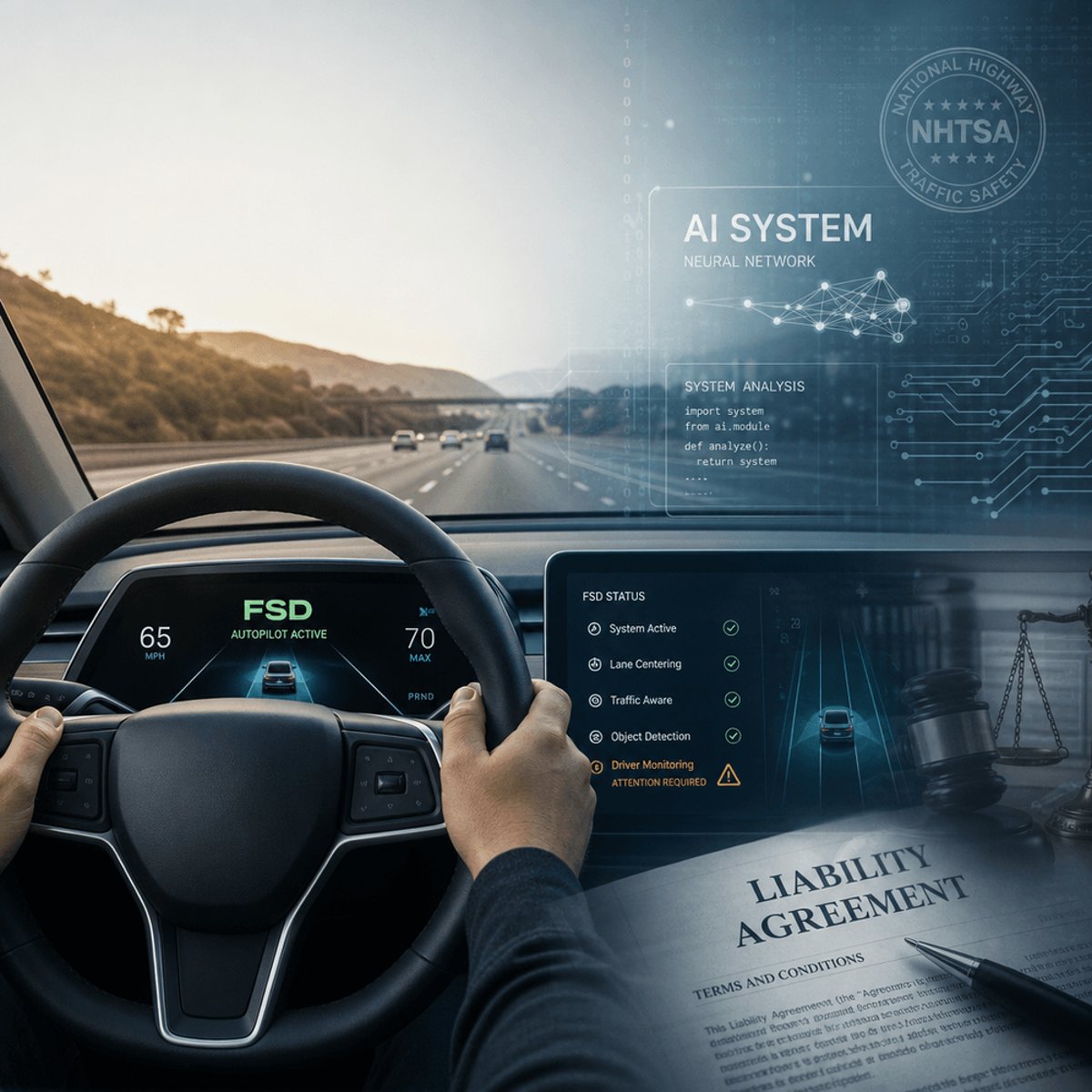
According to details emerging from the investigation reported by Wired, attorneys are working to establish whether Full Self-Driving was engaged at the time of the crash and, crucially, whether the system's behavior contributed to the fatal outcome. The "Supervised" designation has always been Tesla's legal shield - the company maintains drivers must keep their hands on the wheel and remain attentive at all times. But plaintiffs' attorneys argue this messaging contradicts how Tesla markets the feature, which carries a name that implies full autonomy.
"The gap between what Full Self-Driving promises and what it actually delivers is at the heart of this case," one legal expert familiar with autonomous vehicle litigation told reporters. The technology, despite its name, requires constant human supervision and can make errors in complex driving scenarios. When those errors prove fatal, determining who's liable - the inattentive human or the flawed AI - becomes a legal puzzle with no clear precedent.
The National Highway Traffic Safety Administration has been circling Tesla for years over its driver assistance features. The agency opened a formal investigation into Autopilot in 2021 after a series of crashes involving emergency vehicles, and that probe has since expanded to cover hundreds of incidents. In December 2022, NHTSA forced Tesla to recall more than two million vehicles to update Autopilot's driver monitoring systems after the agency found the safeguards were insufficient to prevent misuse.
But recalls and investigations are one thing. A wrongful death lawsuit with extensive discovery could expose internal Tesla communications about FSD's limitations, testing data, and marketing strategies. Legal experts expect plaintiffs' attorneys to subpoena everything from engineering reports to executive emails, potentially revealing what Tesla knew about its system's capabilities and when.
The Texas case also arrives as autonomous vehicle regulation enters a new phase. While companies like Waymo and Cruise operate fully driverless robotaxis in limited areas, Tesla's approach has been different - deploying semi-autonomous features to millions of consumer vehicles while maintaining that humans remain responsible. This strategy has allowed the company to gather vast amounts of real-world data, but it's also created a patchwork of legal liability questions that courts are only beginning to untangle.
Some legal scholars argue the case could force a reckoning with how automakers name and market driver assistance features. "Calling something Full Self-Driving while requiring full human attention creates an inherent contradiction that confuses consumers," said one transportation safety advocate. Several other automakers have faced similar criticism - General Motors was pressured to rename its "Super Cruise" feature to make clear it's not fully autonomous.
For Tesla, the financial stakes extend beyond this single case. The company has sold FSD as a $15,000 add-on option (or $199 monthly subscription), generating significant revenue while promising the feature will eventually enable full autonomy. If courts determine Tesla oversold the technology's capabilities or failed to adequately warn drivers about its limitations, the company could face a wave of similar lawsuits.
Meanwhile, the regulatory landscape continues shifting. The Department of Transportation recently proposed new rules for autonomous vehicle testing and deployment, and several states are considering legislation that would clarify liability standards for crashes involving driver assistance systems. The Texas case will likely inform those policy debates, providing real-world evidence of what happens when the technology fails.
What makes this case particularly significant is its timing. Autonomous driving technology has reached an inflection point - advanced enough to handle many driving tasks, but not reliable enough to remove humans from the equation entirely. As more automakers deploy similar features, courts need frameworks for assigning responsibility when accidents occur. The legal theories tested in Texas could establish precedents that shape liability standards for years to come.
The Texas crash represents more than a single tragedy - it's a test case that will help define liability boundaries as vehicles become increasingly autonomous. How courts weigh human responsibility against algorithmic decision-making will shape not just Tesla's future, but the entire trajectory of self-driving technology. As automakers race to deploy AI-powered driving systems, this legal battle will determine whether the promise of safer roads through automation can coexist with clear accountability when those systems fail. For families affected by autonomous vehicle crashes, the outcome could mean the difference between justice and legal limbo.