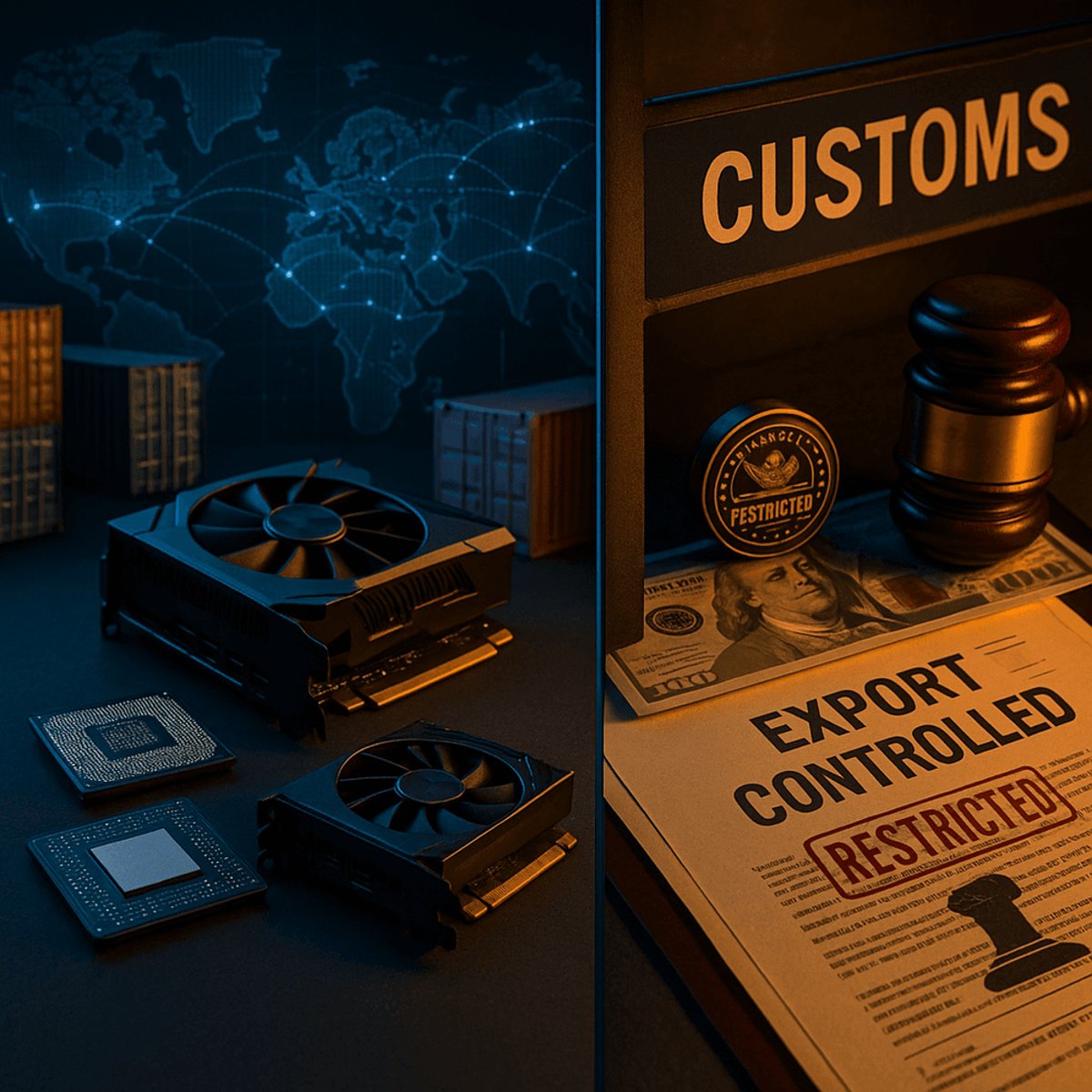
U.S. authorities just dismantled another major smuggling operation that funneled over $160 million worth of restricted Nvidia AI chips to China. The bust, part of "Operation Gatekeeper," caught four individuals red-handed falsifying shipping documents to evade export controls on H100 and H200 GPUs - highlighting how China's hunger for AI computing power continues driving elaborate schemes to circumvent Washington's tech sanctions.
The cat-and-mouse game between U.S. export controls and Chinese AI ambitions just hit another inflection point. Federal prosecutors announced Tuesday they've cracked open what they're calling one of the most sophisticated chip smuggling operations yet - a $160 million network that moved restricted Nvidia GPUs through a web of fake companies, mislabeled shipments, and Chinese funding.
The timing couldn't be more charged. Just as President-elect Trump floated allowing legal H200 chip sales to China (with Washington taking a 25% cut), authorities unveiled "Operation Gatekeeper" - exposing how smugglers have been moving these exact chips through backdoor channels for over a year.
At the center sits Alan Hao Hsu, a 43-year-old Texas businessman whose company Hao Global LLC had been quietly exporting restricted H100 and H200 GPUs since October 2024. According to newly unsealed court documents, Hsu's operation wasn't some small-time hustler - investigators traced over $50 million flowing from China to fund the scheme.
The sophistication is striking. Prosecutors allege Hsu and his network falsified shipping manifests, misclassified GPUs as generic computer parts, and routed shipments through intermediary countries to mask their true Chinese destinations. Workers in U.S. warehouses would physically relabel boxes, creating fake paper trails that made restricted AI chips look like everyday electronics.
"Even sales of older generation products on the secondary market are subject to strict scrutiny," an Nvidia spokesperson told CNBC. The company emphasized it's working with authorities to prevent secondary market smuggling, though the statement hints at how difficult policing becomes once chips enter the resale ecosystem.
Two other alleged conspirators paint an international picture. Fanyue Gong, who owns a New York tech firm, allegedly used straw purchasers to acquire GPUs by lying about end customers. Meanwhile, Benlin Yuan - CEO of a U.S. subsidiary for a Beijing-headquartered company - reportedly recruited inspectors in Hong Kong to help conceal shipment destinations and coached them on cover stories when customs officials asked questions.
The H100 and H200 models at the heart of this case represent an interesting inflection point in U.S.-China tech policy. While not Nvidia's most cutting-edge chips, they're still powerful enough to require special export licenses and could significantly boost China's AI capabilities. These are the exact models Trump suggested allowing through legal channels - making this bust a preview of the enforcement challenges ahead.
Prosecutors are throwing the book at the smugglers. Yuan faces up to 20 years for violating the Export Control Reform Act, while Gong could get 10 years for conspiracy to smuggle. Hsu, who already pleaded guilty in October, awaits sentencing on February 18 with a potential decade behind bars.
The Commerce Department's Bureau of Industry and Security led the investigation, part of a broader crackdown on unauthorized chip exports. This marks the latest in a series of similar busts targeting Nvidia smuggling networks, suggesting these operations have become more common as China's AI sector hungers for advanced computing power.
What makes this case particularly significant is the scale and timing. $160 million in trafficked chips represents serious computing power - enough to train large AI models or power significant data center operations. The fact that Chinese entities were actively funding these purchases through shell companies shows how determined Beijing remains to access restricted technology, regardless of U.S. sanctions.
The political backdrop adds another layer of complexity. Trump's suggestion of allowing legal H200 sales with profit-sharing could theoretically reduce demand for smuggled chips. But it also raises questions about whether legitimate channels can satisfy China's massive appetite for AI computing power, or if black market operations will continue regardless.
This bust reveals the cat-and-mouse reality of AI geopolitics - where sophisticated smuggling networks emerge faster than regulators can stop them. While Trump's proposal for legal H200 sales might reduce black market demand, the scale of this operation shows China's AI sector won't wait for policy changes. As Washington tightens export controls, expect more elaborate schemes and higher stakes in the underground chip economy that's reshaping global AI competition.