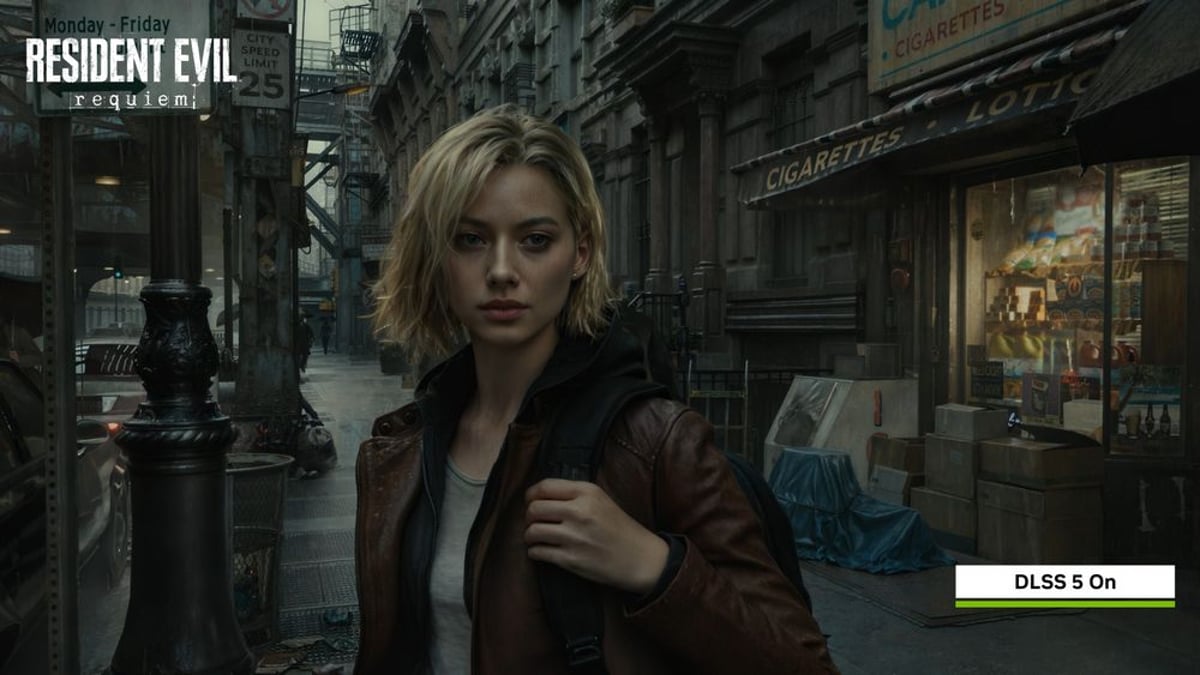
Nvidia just triggered a gaming community firestorm with DLSS 5, its latest AI-powered graphics technology that 'upgrades' video game character faces. What the chip giant positioned as a visual enhancement has backfired spectacularly, with gamers accusing the company of imposing unwanted AI filters on beloved characters. Now CEO Jensen Huang is doubling down, telling Tom's Hardware that critics are 'completely wrong' - a response that's only fueling the controversy.
Nvidia walked into a PR nightmare of its own making. The company's DLSS 5 technology launch this week was supposed to showcase cutting-edge real-time lighting capabilities, but instead became a flashpoint for gamer frustration with AI-generated content. By focusing its marketing on how the tech can 'upgrade' the faces of existing video game characters, Nvidia inadvertently told millions of players that their favorite games look bad - and need AI to fix them.
The backlash was swift and brutal across gaming forums and social media. Players objected not just to the concept of AI-altered character designs, but to what they perceived as Nvidia's dismissive attitude toward artistic intent and creative vision. When The Verge covered the story, writer Sean Hollister captured the sentiment perfectly: 'Regardless of how it works, the tech presents as an AI filter that tries to optimize everyone.'
What makes this particularly striking is the timing. Nvidia dominates the GPU market with roughly 80% share in discrete graphics cards, and its gaming division has historically been a cornerstone of the company's identity. But as Nvidia's enterprise AI business has exploded - generating tens of billions in data center revenue - the gaming side seems increasingly treated as an afterthought, or worse, a testing ground for AI features that enterprise customers might eventually want.
CEO Jensen Huang's response to the controversy demonstrates how wide the gap has grown. Rather than acknowledging gamers' concerns about unwanted alterations to artistic vision, Huang told Tom's Hardware that critics are 'completely wrong' about DLSS 5. It's a remarkably tone-deaf stance from an executive who built his company's reputation partly on understanding what gamers wanted.
The technical capabilities of DLSS 5 aren't really in question. Nvidia's AI-powered upscaling technology has been genuinely impressive since DLSS 2.0 launched, delivering performance improvements that let gamers play at higher resolutions and frame rates. But there's a crucial difference between using AI to reconstruct pixels and using it to redesign character faces. The former enhances what developers created; the latter replaces it.
This distinction matters enormously to gaming communities who've grown increasingly wary of AI-generated content being passed off as human creativity. The controversy echoes broader debates about AI art generators and concerns about authenticity in creative works. When Nvidia markets DLSS 5 as 'retconning characters' faces' - as The Verge put it - they're touching a nerve that goes beyond graphics technology.
The misstep is particularly glaring because Nvidia could have positioned DLSS 5 differently. If the company had focused on enabling future games to achieve visual fidelity that would otherwise be impossible, gamers would likely have embraced it. Instead, by demonstrating the tech on existing beloved titles like Resident Evil and suggesting those games need enhancement, Nvidia implied there's something wrong with what developers and artists already created.
For a company that's become synonymous with AI leadership - with its data center GPUs powering everything from OpenAI's models to enterprise machine learning workloads - this gaming controversy might seem like a minor PR problem. But it signals something more significant: Nvidia may be losing touch with the community that helped build its brand. Gamers aren't enterprise customers who'll accept whatever features come bundled with the latest hardware. They're passionate enthusiasts who notice when they're being told their preferences don't matter.
The competitive implications are worth watching too. AMD and Intel are both investing heavily in their GPU offerings, and while neither matches Nvidia's raw performance or AI capabilities yet, they're paying close attention to moments like this. If gamers start feeling like Nvidia doesn't respect their input, that opens doors for competitors to position themselves as the 'gamers first' alternative.
What happens next will reveal whether Nvidia views this as a communications problem or a strategic miscalculation. The company could pivot, making face enhancement an opt-in feature and refocusing DLSS 5 marketing on performance and future possibilities. Or Huang could stick to his 'gamers are wrong' stance, betting that technical superiority will win out regardless of community sentiment. Given the CEO's comments to Tom's Hardware, it looks like Nvidia is choosing the latter path - at least for now.
Nvidia's DLSS 5 controversy is more than a product launch stumble - it's a symptom of a company that's grown so dominant in enterprise AI that it may have forgotten how to listen to the gaming community that built its reputation. Whether Huang's dismissal of gamer concerns proves prescient or short-sighted will depend on whether technical superiority can overcome cultural disconnect. For now, the company seems to be betting that gamers will eventually accept whatever AI features come with the most powerful GPUs. But that assumption ignores a key lesson from tech history: enthusiast communities have long memories, and they don't forget when they feel disrespected.