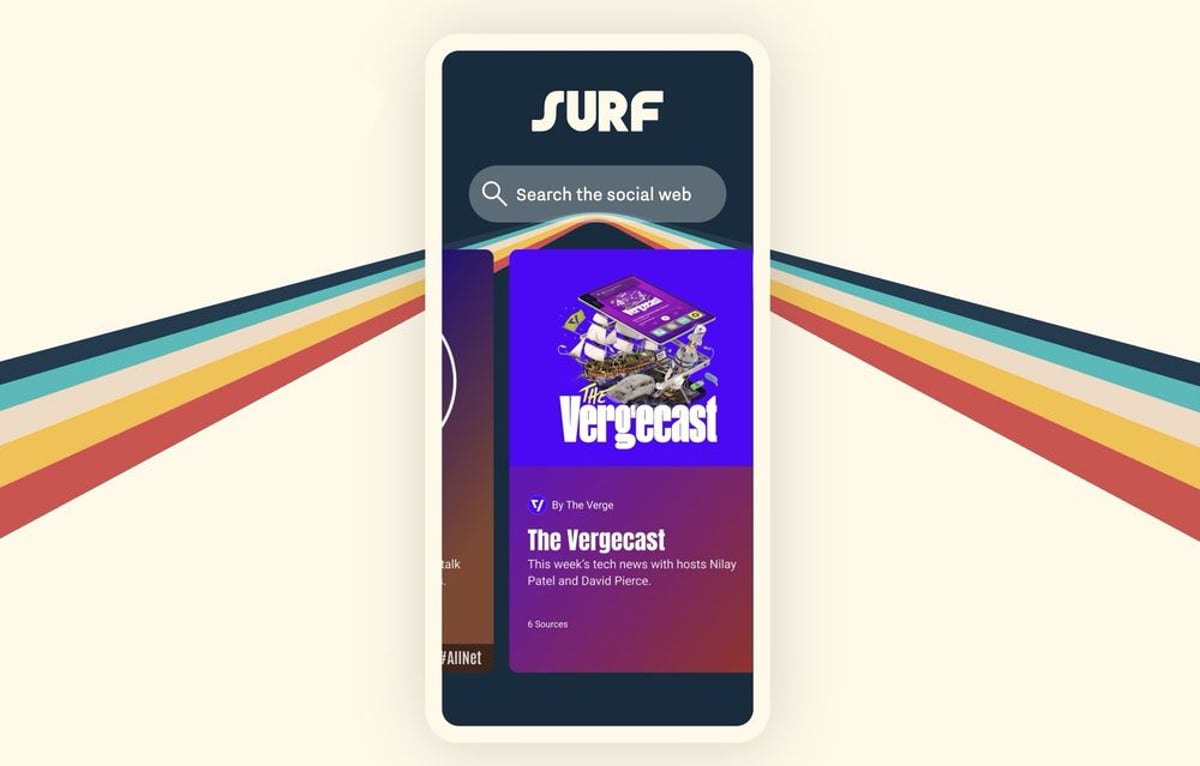
Flipboard is making its boldest bet yet on the open web. The company just launched Surf, a new app that's equal parts fediverse client, RSS feed reader, and content curation tool. After more than a year in beta, Surf officially goes live Thursday, promising to unify scattered social networks like Bluesky and Mastodon with traditional web content. It's Flipboard's answer to a fragmented internet - and a test of whether users still care about the open social web.
Flipboard is taking a swing at solving one of the internet's messiest problems - too many feeds, too many apps, too much fragmentation. The company's new app Surf, which exits beta and launches officially Thursday, wants to become your one-stop browser for everything from Mastodon posts to YouTube videos to that obscure blog you forgot you loved.
Surf is tricky to categorize because it's deliberately trying to break categories. At its core, it's a fediverse client that lets you browse decentralized social networks like Bluesky and Mastodon without juggling multiple apps. But it's also a traditional feed reader in the spirit of the late, lamented Google Reader - you can subscribe to virtually any website, podcast, or YouTube channel via RSS. And then there's the Flipboard DNA: tools for curating and sharing collections of content, which Flipboard calls 'magazines.'
'Everything is feeds' is Surf's operating philosophy, according to reporting by The Verge's David Pierce. That might sound reductive, but it's actually a throwback to an earlier internet era when feeds - not algorithms - determined what you saw online. Flipboard is betting that enough people are exhausted by algorithmic timelines and walled gardens to embrace a more open, user-controlled approach.
The timing is deliberate. The fediverse has been gaining momentum as users flee centralized platforms, but the experience remains fragmented and technical. You need different apps for Mastodon, Bluesky, Threads, and whatever comes next. Surf wants to collapse that complexity into a single interface. It's positioning itself as infrastructure for what Flipboard calls the 'open social web' - a vision where your content and connections aren't locked inside any single company's ecosystem.
For now, Surf launches as a web app, with mobile versions still in development. That's an unusual choice in a mobile-first world, but it fits Flipboard's approach. The web version works across devices and doesn't require app store approval, letting Flipboard iterate faster. The company first teased Surf in late 2024, and spent the following months refining it with beta testers who wanted more control over their online reading.
Under the hood, Surf uses ActivityPub and other open protocols to connect with fediverse platforms. That means posts you publish through Surf can appear on Mastodon, Bluesky, or anywhere else that speaks the same language. It's true interoperability - the kind the big social platforms have spent years avoiding. For podcasts and YouTube channels, Surf taps into RSS feeds that most users don't even know exist.
The broader context matters here. Meta has been experimenting with fediverse integration through Threads, while Twitter (now X) has become increasingly hostile to outside developers. Google killed Google Reader back in 2013, leaving a hole that dozens of apps have tried to fill. Flipboard itself has been pivoting toward the fediverse for years, and Surf represents the culmination of that strategy.
The risk is that Surf might be too many things at once. Feed readers appeal to a certain kind of power user. Fediverse enthusiasts tend to be technically savvy and ideologically motivated. Casual social media users just want their content to show up. Whether Surf can appeal to all three groups - or any of them at scale - remains the open question.
But there's something compelling about the attempt. As the social media landscape splinters into competing protocols and platforms, tools that unify rather than divide start to look valuable. Surf isn't trying to be another social network. It's trying to be the browser for all of them, plus everything else you read online. That's either visionary or quixotic, depending on whether users actually want that level of control back.
Flipboard has been around since 2010, surviving waves of social media disruption by staying focused on content curation rather than content creation. Surf extends that philosophy into the fediverse era. The app is free to use, and Flipboard hasn't announced monetization plans yet - another signal that this is a long-term strategic bet rather than a quick revenue play.
Flipboard's Surf is a bet that the internet's future looks more like its past - open protocols, user control, and feeds you choose rather than algorithms that choose for you. Whether that vision resonates beyond the fediverse faithful will determine if Surf becomes essential infrastructure or a curiosity for early adopters. Either way, it's one of the more interesting experiments in rebuilding social media from open parts rather than proprietary platforms. As the major tech companies continue walling off their ecosystems, Surf offers a counter-narrative: maybe the solution isn't picking the right platform, but building tools that work across all of them.