Google just gave the world its first real look at Aluminium OS - and it wasn't on purpose. A bug report accidentally published to the company's Issue Tracker yesterday included screen recordings from an HP Chromebook running the highly anticipated Android-ChromeOS hybrid. The leak confirms Google's plan to merge its two desktop platforms into a single OS, with footage showing a distinctive mashup interface that borrows the best (and most familiar) elements from both systems.
Google has been working on Aluminium OS behind closed doors for months, but someone inside the company just let the cat out of the bag. A routine bug report uploaded to Google's public Issue Tracker yesterday included something far more interesting than a Chrome Incognito tab glitch - two full screen recordings of the unreleased operating system in action.
9to5Google caught the leak before Google could scrub it from public view. The report has since been restricted, but not before the tech publication downloaded the videos and confirmed key details. The bug tracker explicitly mentioned an ALOS software version - the confirmed abbreviation for Aluminium OS - and listed the device as an HP Elite Dragonfly 13.5 Chromebook. That's a clear sign Google's using existing ChromeOS hardware to test what comes next.
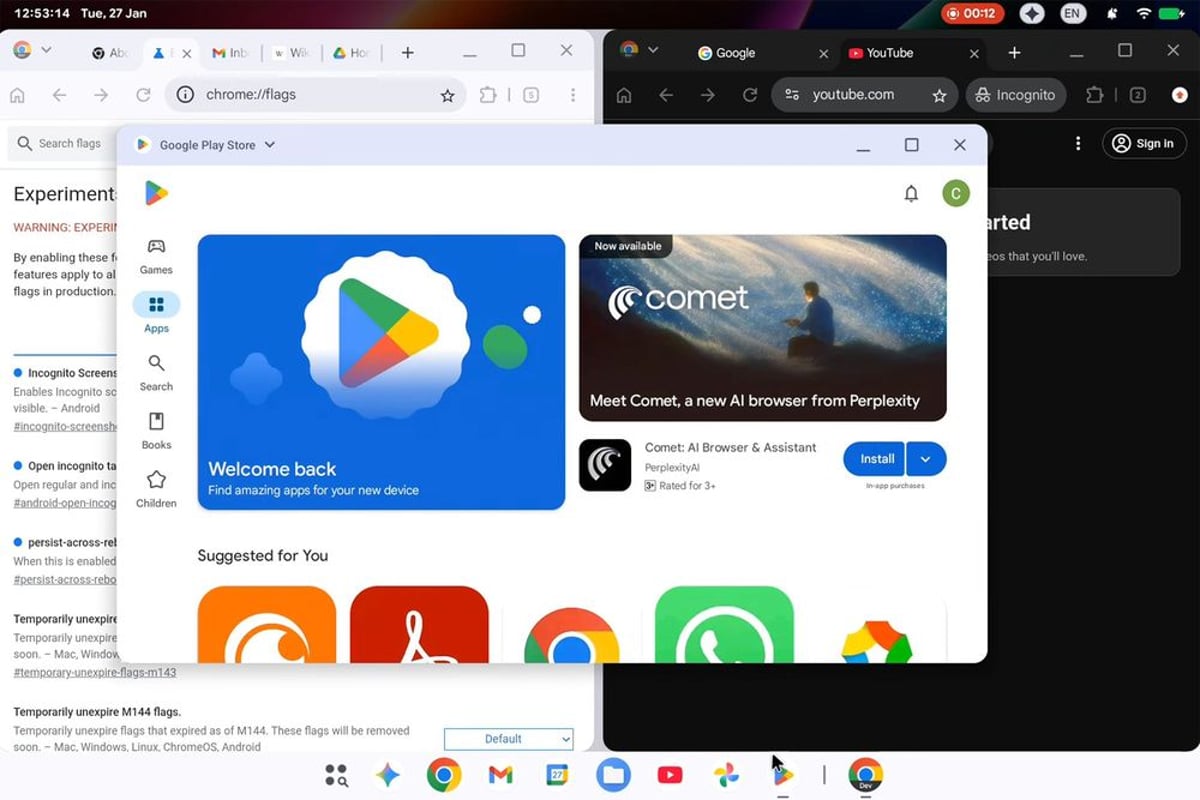
The footage itself tells the story of a platform stuck between two worlds, but in the best way possible. The videos show Android 16 running with a build number matching the ALOS designation, confirming this isn't just a modified version of either parent OS. Instead, it's exactly what Google promised - a genuine fusion.
The interface borrows ChromeOS's taskbar layout but relocates the start button to the center, mimicking Android's design philosophy. A status bar sits at the top of the screen displaying familiar Android icons for battery, Wi-Fi, and system settings - a departure from ChromeOS's more minimalist approach. Users get a glimpse of the Play Store, suggesting full Android app compatibility will be a cornerstone feature, along with split-screen multitasking that appears smooth and responsive.
Google's been telegraphing this move for a while now. Android head Sameer Samat told The Verge last year that the company would share more about its PC ambitions in 2026. The accidental leak accelerates that timeline, giving competitors like Microsoft and Apple an early look at what Google's cooking up.
The strategic logic is sound. ChromeOS carved out a respectable niche in education and budget laptops, but it never seriously threatened Windows or macOS in the broader PC market. Android, meanwhile, dominates mobile with over 70% global market share but has repeatedly failed to make inroads on desktop. Aluminium OS attempts to solve both problems by combining ChromeOS's desktop-friendly interface with Android's massive app ecosystem.
The leaked footage came from an HP device, which isn't surprising. HP has been one of Google's closest Chromebook partners, and the Elite Dragonfly line represents the premium end of that relationship. If Aluminium OS launches on high-end hardware first, it signals Google's intent to compete in the professional and consumer markets, not just education.
But questions remain. The videos show a system that looks functional but hardly polished. There's no indication of how developers will adapt Android apps for desktop workflows, or how Google plans to handle the transition for existing ChromeOS users. The company's also staying silent on hardware requirements - will older Chromebooks get upgraded, or is this a fresh start?
The leak also raises competitive concerns. Microsoft has spent years refining Windows 11 for touch and traditional inputs, while Apple seamlessly merged iOS and macOS app ecosystems with Apple Silicon. Google's late to this particular party, and Aluminium OS needs to be exceptional on day one to convince users to switch.
What's clear from the footage is that Google's not just slapping Android onto a laptop and calling it done. The interface tweaks, the preserved ChromeOS taskbar elements, the Android status bar - these are deliberate design choices meant to make desktop users feel at home while unlocking mobile app functionality. Whether that balance works in practice remains to be seen.
Google's accidental leak just handed the tech world its first substantive preview of Aluminium OS, and the early signs point to a platform that could genuinely shake up the PC market - if Google can stick the landing. The hybrid interface looks coherent rather than cobbled together, suggesting months of thoughtful design work. But the real test won't come from leaked bug reports or controlled demos. It'll come when developers start building for it, when users try running their favorite Android apps on a desktop, and when Google has to convince people there's a reason to choose Aluminium over Windows or macOS. The leak may have been unintentional, but the pressure's now on Google to deliver something worth the hype.