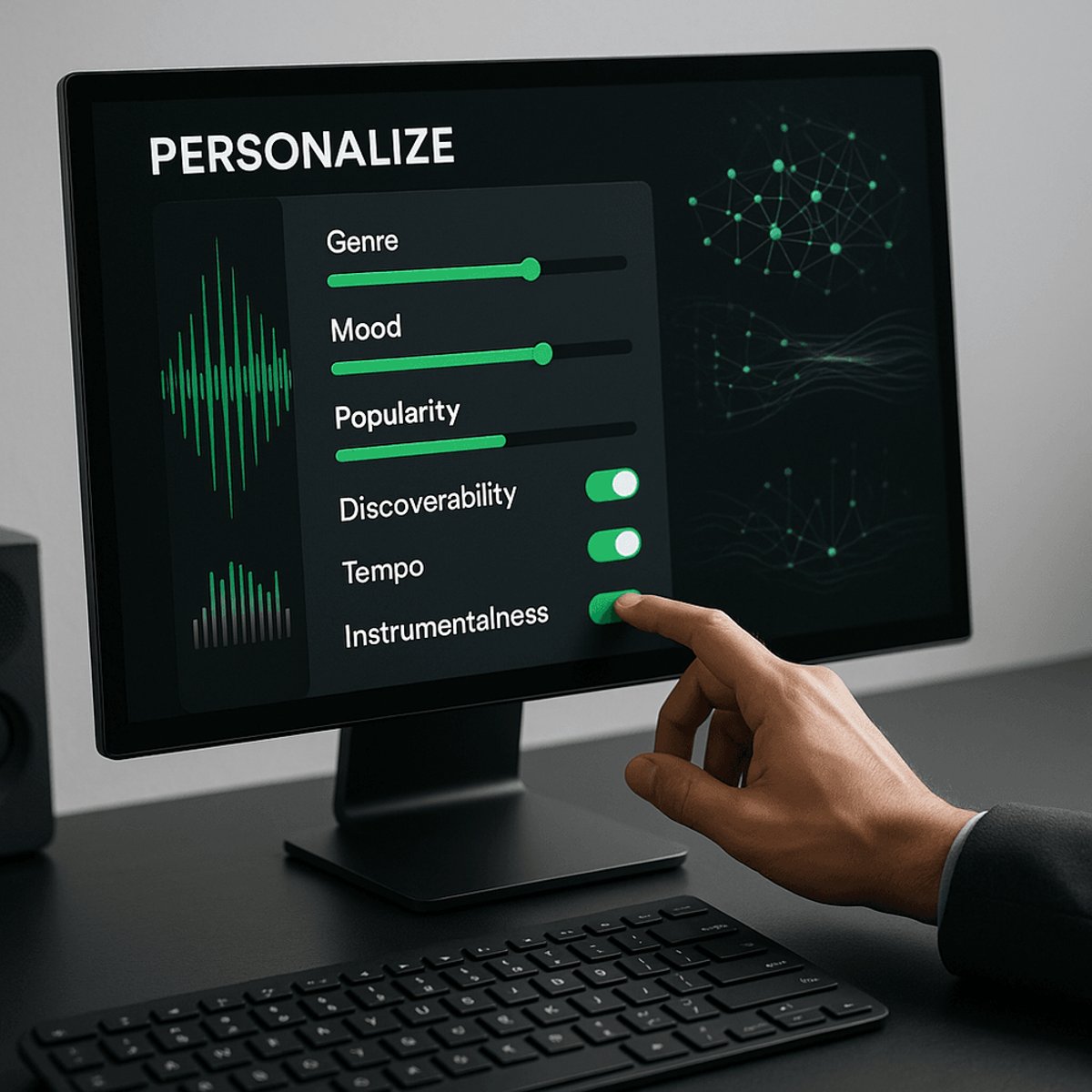
Spotify is handing users the steering wheel to its recommendation engine. The streaming giant just unveiled a Taste Profile editor that lets subscribers directly shape what shows up in Discover Weekly, Daily Mix, and even year-end Wrapped summaries. Announced at SXSW, the move addresses years of user complaints about algorithmic rabbit holes and marks a shift toward transparent, user-controlled personalization in music streaming.
Spotify just made a bold bet that users want more control over their algorithmic destiny. The company unveiled its Taste Profile editor at SXSW, giving subscribers direct access to the preference data that shapes their entire listening experience.
The feature lets users manually adjust genre preferences, artist weights, and mood inclinations that feed into Spotify's recommendation engine. According to TechCrunch, edits immediately ripple through personalized playlists like Discover Weekly, Daily Mix, Release Radar, and even the year-end Wrapped feature that typically sparks social media frenzies each December.
It's a significant departure from the black-box approach most streaming platforms take. Where Apple Music and YouTube Music rely entirely on passive listening data, Spotify's letting users explicitly tell the algorithm what they want more or less of. Think of it as a manual override for when your guilty pleasure workout playlist starts polluting your indie rock recommendations.
The timing isn't accidental. Spotify's been wrestling with algorithmic criticism for years. Users regularly complain about getting stuck in recommendation loops, where one guilty pleasure listen to a song spawns weeks of similar tracks. Others grumble that Wrapped summaries overweight random binges, making their musical year look skewed. The Taste Profile editor directly addresses both pain points.
Under the hood, Spotify's recommendation system uses collaborative filtering and neural networks to predict what you'll enjoy based on billions of listening sessions. But machine learning models can't distinguish between a one-time curiosity click and a genuine new interest. That's where manual editing comes in - users can essentially tell the algorithm "ignore that" or "more like this" without the system having to infer intent from behavior alone.
The move also positions Spotify strategically against competitors. Apple Music has emphasized human curation over algorithmic discovery, while YouTube Music leans heavily into its parent company's recommendation expertise. Spotify's hybrid approach - sophisticated AI plus user control - carves out a middle ground that could prove sticky for subscribers who want the best of both worlds.
There's a business angle here too. Spotify's been under pressure to improve engagement metrics as subscriber growth slows in mature markets. Better recommendations mean more listening hours, which translates to stronger retention and more leverage in label negotiations. If users feel like the platform truly "gets" their taste because they helped train it, they're less likely to churn to rivals.
The feature also hints at where music streaming is headed. As recommendation engines become table stakes, differentiation shifts to transparency and control. Users increasingly want to understand why they're seeing certain content - whether that's a TikTok video, Instagram ad, or Spotify playlist. Giving them the tools to directly shape those outcomes could become the new competitive battleground.
For now, Spotify hasn't detailed exactly how granular the editing will be. Can users weight specific subgenres? Adjust for time of day? Block certain moods entirely? Those details will determine whether this is a genuine power-user tool or just algorithmic window dressing. Early reactions from the SXSW crowd suggest excitement, but the real test comes when millions of subscribers get their hands on it.
The rollout timeline remains unclear, though Spotify typically previews features at major conferences months before wide release. Expect a phased launch, likely starting with premium subscribers in select markets before expanding globally.
Spotify's Taste Profile editor represents a meaningful shift in how streaming platforms think about personalization. By letting users directly shape their algorithmic experience, the company's acknowledging that even the smartest recommendation engine can't perfectly infer intent from behavior alone. Whether this becomes a power-user feature or mainstream tool depends on execution, but it sets a new bar for algorithmic transparency in music streaming. If it works, expect Apple Music and YouTube Music to follow suit within months.