Google is breaking ground on a Minnesota data center that'll run entirely on new solar, wind, and battery storage - a sharp departure from the industry's usual playbook of tapping existing grids. The move signals how hyperscalers are rethinking infrastructure as AI workloads explode and communities push back on energy costs. Google's head of data center energy told CNBC the strategy ensures "we aren't putting additional costs on other ratepayers" when the facility comes online.
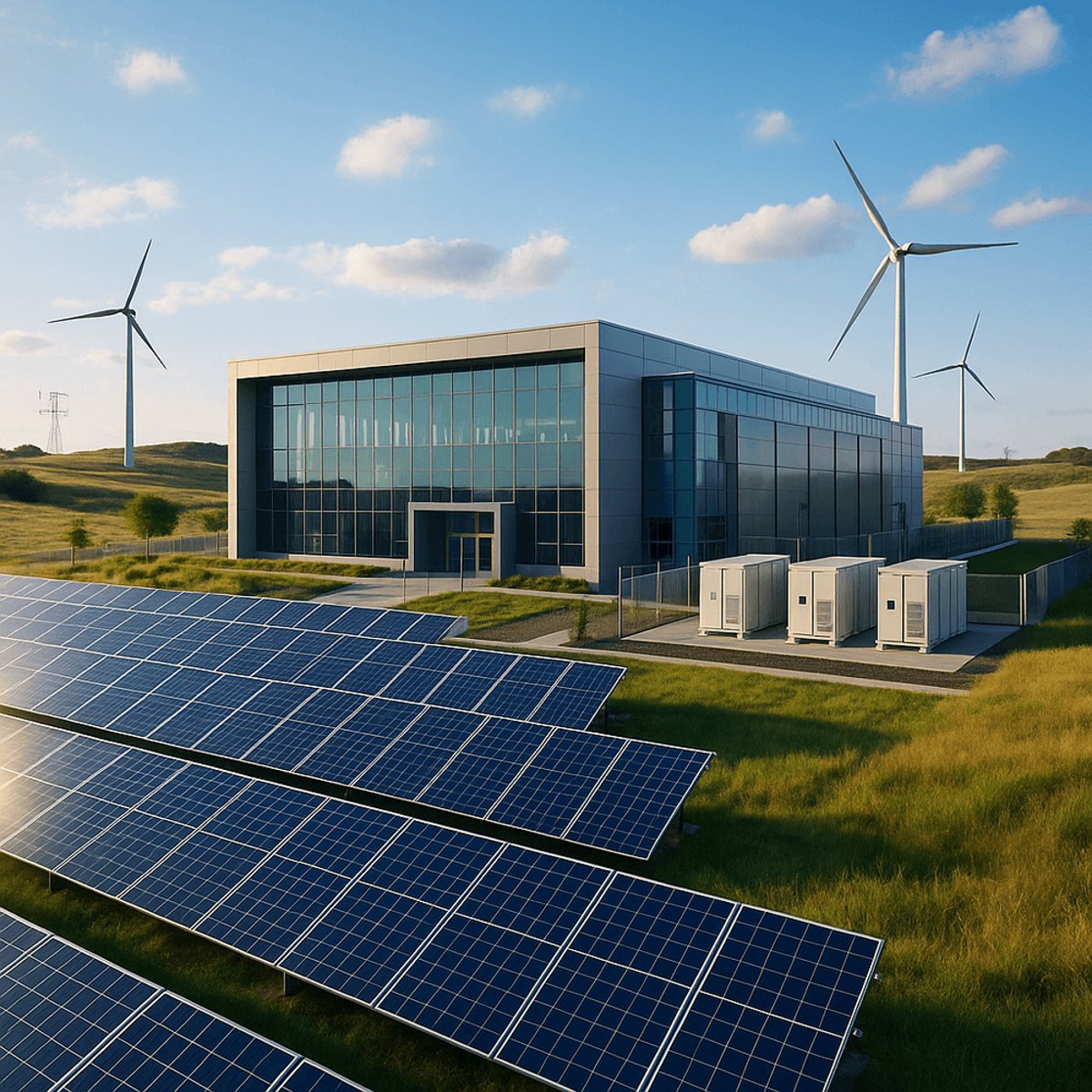
Google just unveiled plans for a Minnesota data center that won't touch the local power grid - at least not in the way you'd expect. The facility will be powered entirely by new renewable energy infrastructure, including solar panels, wind turbines, and battery storage built specifically for the project.
The announcement comes as tech giants face mounting pressure over their AI infrastructure's appetite for electricity. Data centers already consume roughly 2% of U.S. electricity, and that figure's climbing fast as companies race to deploy large language models and machine learning workloads at scale.
"What Google is doing is ensuring that when we show up, we aren't putting additional costs on other ratepayers," the company's head of data center energy told CNBC. It's a notable shift in tone from an industry that's historically negotiated special power deals with utilities, often leaving residential customers to absorb infrastructure upgrade costs.
The Minnesota project represents a different calculation than Google's recent Texas data center announcement. While both facilities support the company's expanding cloud and AI operations, the Minnesota site's self-contained energy approach suggests Google's testing multiple strategies for navigating local opposition and regulatory scrutiny.
Minnesota's renewable energy landscape made it an attractive candidate. The state's already home to significant wind capacity, and its regulatory framework supports power purchase agreements that let large buyers contract directly for new renewable projects. By bundling generation and storage together, Google can theoretically operate independently of the local utility during peak production hours while avoiding the grid stability issues that have plagued other renewable-heavy data center projects.
The battery storage component is crucial here. Data centers can't afford downtime, which means they need reliable power 24/7 - something wind and solar alone can't guarantee. Industry observers expect Google to deploy several hundred megawatt-hours of storage capacity, though the company hasn't released specific figures.
This ratepayer-neutral approach could become a template as other hyperscalers expand. Microsoft, Amazon, and Meta have all faced community pushback over data center power consumption in recent months. Virginia's Loudoun County, the world's largest data center market, recently tightened approval requirements after residents complained about infrastructure strain.
The timing aligns with Google's broader AI infrastructure buildout. The company's been burning through capital expenditures - hitting record levels in recent quarters - as it competes with Microsoft and OpenAI in the generative AI race. But unlike previous infrastructure cycles, this one's happening against a backdrop of grid capacity constraints and climate commitments that make traditional utility partnerships more complicated.
Minnesota officials haven't disclosed tax incentives or land agreements yet, but data center projects typically involve substantial local economic development packages. The construction phase alone will likely employ hundreds of workers, while ongoing operations require specialized technical staff.
The renewable energy bundling also helps Google maintain its carbon-neutral commitments without relying on controversial offset markets. The company's pledged to run on 24/7 carbon-free energy by 2030 - a tougher standard than matching annual renewable purchases with annual consumption.
What remains unclear is how Google will handle the inevitable gaps when renewables underperform. Will the facility curtail non-critical workloads? Will it maintain a grid connection for backup? The company's been tight-lipped on operational details, but industry engineers say some level of grid interconnection is nearly unavoidable for reliability.
Competitors are watching closely. If Google can make the economics work on a fully self-powered facility, it could accelerate a broader industry shift away from utility dependence. That'd be a massive change for power markets that have largely treated big tech as guaranteed demand growth.
Google's Minnesota experiment could rewrite the rules for data center development. If the self-powered model works economically, expect other hyperscalers to follow - potentially easing community tensions while accelerating renewable deployment. But the real test comes when the facility goes live and Google has to prove it can keep AI workloads humming without leaning on the grid. That's when we'll know if this is the future of infrastructure or just an expensive proof of concept.