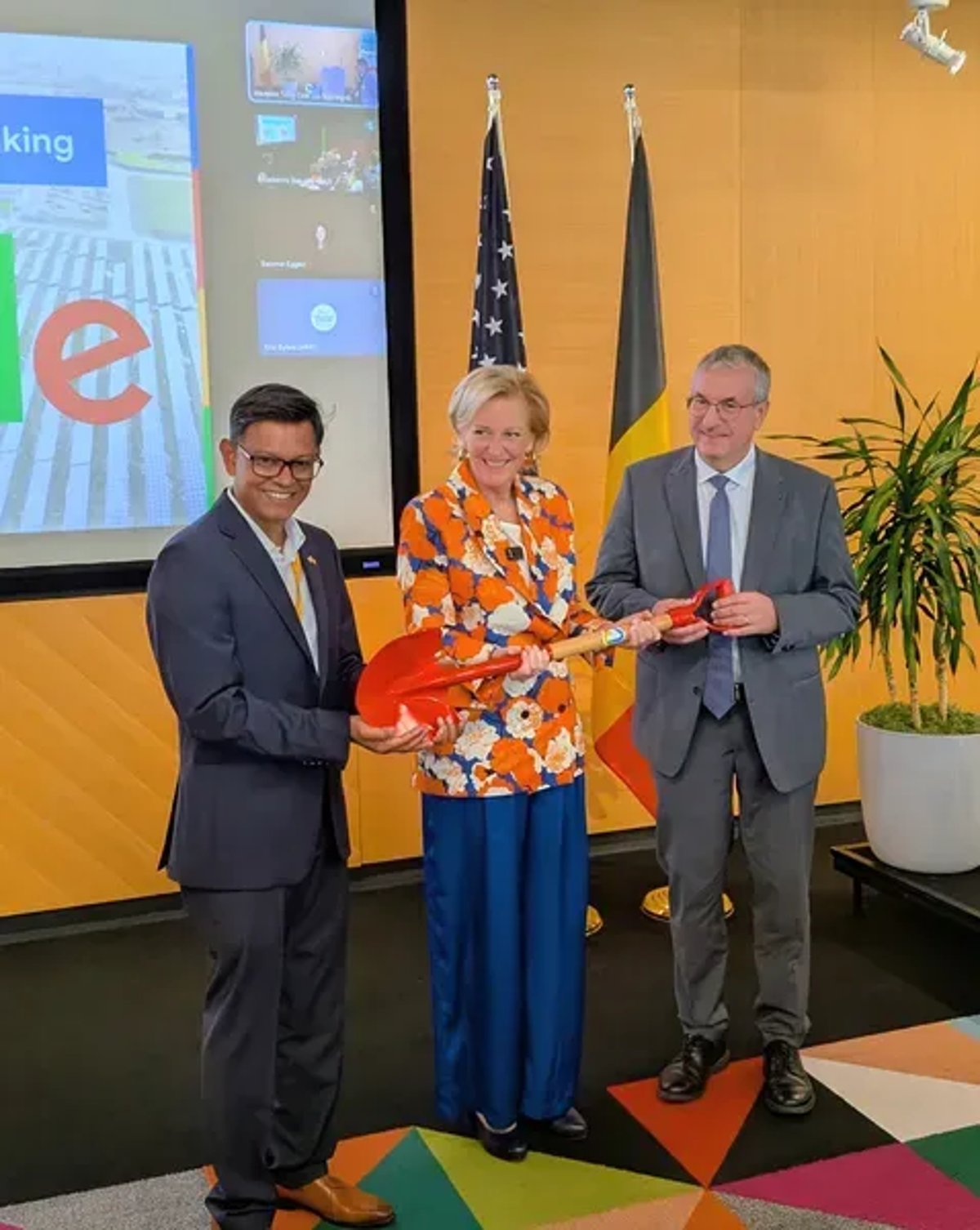
Google just announced a massive €5 billion investment in Belgium's AI infrastructure over the next two years, marking one of the tech giant's largest European commitments. The investment will expand Google's Saint-Ghislain data center campus and create 300 new jobs while powering the country's digital transformation with clean energy partnerships.
Google is making its biggest bet yet on Europe's AI future with a €5 billion infrastructure blitz in Belgium. The two-year investment, announced today, centers on expanding the company's Saint-Ghislain data center campus while adding 300 full-time positions to support the growing AI workload.
The timing couldn't be more strategic. As European regulators tighten AI oversight and data sovereignty becomes a political flashpoint, Google is doubling down on local infrastructure. The Saint-Ghislain facility, already one of Europe's most advanced data centers, will get a massive upgrade to handle the computational demands of large language models and cloud AI services.
But this isn't just about raw computing power. Google has signed clean energy agreements with three Belgian companies - Eneco, Luminus, and Renner - to support new onshore wind farms. It's a calculated move that addresses Europe's growing scrutiny of Big Tech's environmental impact while securing the massive energy supply these AI operations require.
The investment comes as Google faces intensifying competition from Microsoft and Amazon for European cloud dominance. Microsoft's partnership with OpenAI has given it an early edge in enterprise AI, while Amazon Web Services continues to dominate the broader cloud infrastructure market across Europe.
"This is an extraordinary time for European innovation and its digital and economic future," Google stated in the announcement. The company is clearly positioning itself as a long-term partner for European digital sovereignty, not just another American tech company extracting value.
The workforce development component adds another layer to Google's European strategy. The company will fund nonprofits to provide free AI training for low-skilled workers, directly addressing concerns about AI displacing jobs. It's smart politics in a region where labor protections and social responsibility carry significant political weight.
Belgium's geographic position makes it an ideal European hub - it's centrally located with excellent connectivity to major population centers. The Saint-Ghislain site already serves as a critical node for Google's European operations, and this expansion will significantly boost capacity just as AI workloads are exploding.
The €5 billion figure puts this investment in the same league as Google's recent infrastructure commitments in the United States. It signals that the company sees Europe not as a secondary market, but as a critical battleground for AI supremacy. With regulatory clarity still evolving around AI deployment in Europe, having local infrastructure becomes increasingly valuable for compliance and performance.
What makes this particularly interesting is the timing relative to Europe's AI Act implementation. By investing heavily in local infrastructure and workforce development, Google is positioning itself as the responsible AI partner European governments want to work with.
The clean energy component also addresses one of AI's biggest challenges - the massive power consumption required for training and running advanced models. By partnering with local renewable energy providers, Google is getting ahead of potential energy constraints while building goodwill with environmental regulators.
Google's €5 billion Belgian investment represents more than infrastructure expansion - it's a strategic play for European AI leadership. By combining massive computing capacity with clean energy partnerships and workforce development, Google is positioning itself as the AI partner European governments can trust. As the global AI race intensifies and regulatory frameworks solidify, having local infrastructure and community investment gives Google significant advantages over competitors relying purely on cross-border services. Watch for similar announcements across other EU markets as tech giants scramble to establish local presence before new regulations kick in.