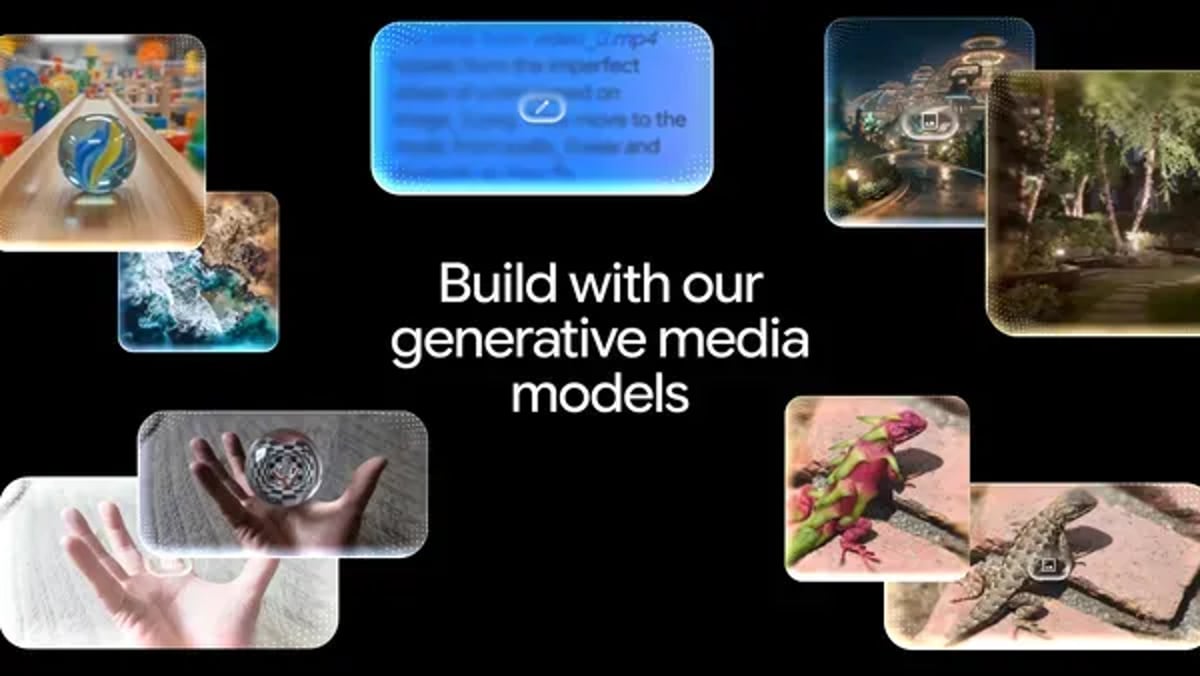
Google just dropped two new Gemini models that could reshape how developers build AI-powered creative tools. The company's DeepMind division announced Nano Banana 2 Lite - its fastest and most cost-efficient image generation model yet - alongside Gemini Omni Flash for high-quality video editing and conversational workflows. The dual launch signals Google's push to dominate both the enterprise AI infrastructure market and the creative generative AI space where competitors like OpenAI and Anthropic have been gaining ground.
Google is making a serious play for the generative AI creative tools market. The tech giant's DeepMind division just unveiled two new Gemini models designed to help developers scale AI-powered applications faster and cheaper than ever before.
Nano Banana 2 Lite arrives as Google's answer to the growing demand for cost-efficient image generation at scale. According to Google's announcement, the model delivers the fastest performance in the Gemini image lineup while slashing costs - a critical combination for enterprises evaluating AI infrastructure investments. Product Manager Alisa Fortin from Google DeepMind positioned the release as a way to "scale your ideas" without the typical computational overhead.
But Google isn't stopping at still images. Gemini Omni Flash tackles the more complex challenge of video generation and editing through what the company calls "conversational editing." The model promises high-quality video output that developers can manipulate through natural language commands, putting it in direct competition with startups like Runway and established players experimenting with video AI.
The timing matters. While OpenAI has dominated headlines with ChatGPT and DALL-E, and Meta pushes its Llama models, Google's been quietly building out its Gemini ecosystem across multiple modalities. These launches suggest the company's betting that developers want specialized models optimized for specific tasks rather than one-size-fits-all solutions.
The enterprise angle is clear. Cost efficiency and speed aren't just technical specs - they're the key factors that determine whether companies can actually deploy AI at scale. A marketing team generating thousands of product images daily cares deeply about per-image costs. A video production studio needs fast turnaround times. Google's positioning both models as production-ready tools, not research experiments.
What's particularly interesting is the "Lite" branding on Nano Banana 2. Google's signaling a tiered approach where developers can choose between maximum quality and maximum efficiency depending on their use case. It's the same strategy that's worked for cloud infrastructure - give customers options across the price-performance spectrum.
The conversational editing feature in Gemini Omni Flash could be the real differentiator. If developers can build interfaces where users simply describe what they want changed in a video and the AI handles the technical execution, that removes massive friction from creative workflows. It's one thing to generate a video from scratch. It's another to let non-technical users iterate on results through natural conversation.
Both models are available now through Google's AI platform, which means we should see real-world implementations relatively quickly. The developer community will be the real test - if these models deliver on the speed and cost promises, we'll see them powering everything from e-commerce product visualization to social media content creation tools within months.
Google's also smart to launch both models simultaneously. Image and video generation are increasingly intertwined in creative workflows. A company building a marketing automation platform wants to offer both capabilities, and buying into a single vendor's ecosystem has obvious advantages for integration and support.
The competitive landscape just got more crowded. Adobe has Firefly, Microsoft backs OpenAI's models, Stability AI continues pushing open-source alternatives, and dozens of startups are building specialized tools. Google's advantage is distribution - these Gemini models plug into the broader Google Cloud ecosystem that millions of developers already use.
What remains to be seen is pricing details and benchmark comparisons. Google claims Nano Banana 2 Lite is the most cost-efficient option, but developers will run their own tests against alternatives. The model's actual performance on edge cases, handling of diverse visual styles, and ability to maintain consistency across generated images will determine real-world adoption.
Google's dual model launch reflects a maturation of the generative AI market. Instead of chasing the biggest, most capable model, the company's building specialized tools optimized for real production workloads. If Nano Banana 2 Lite and Gemini Omni Flash deliver on their speed and cost promises, they could capture significant enterprise market share from developers who've been waiting for production-ready alternatives to early generative AI tools. The real question is whether Google can move fast enough to establish these models as industry standards before competitors catch up or startups unbundle specific use cases with even more specialized offerings.