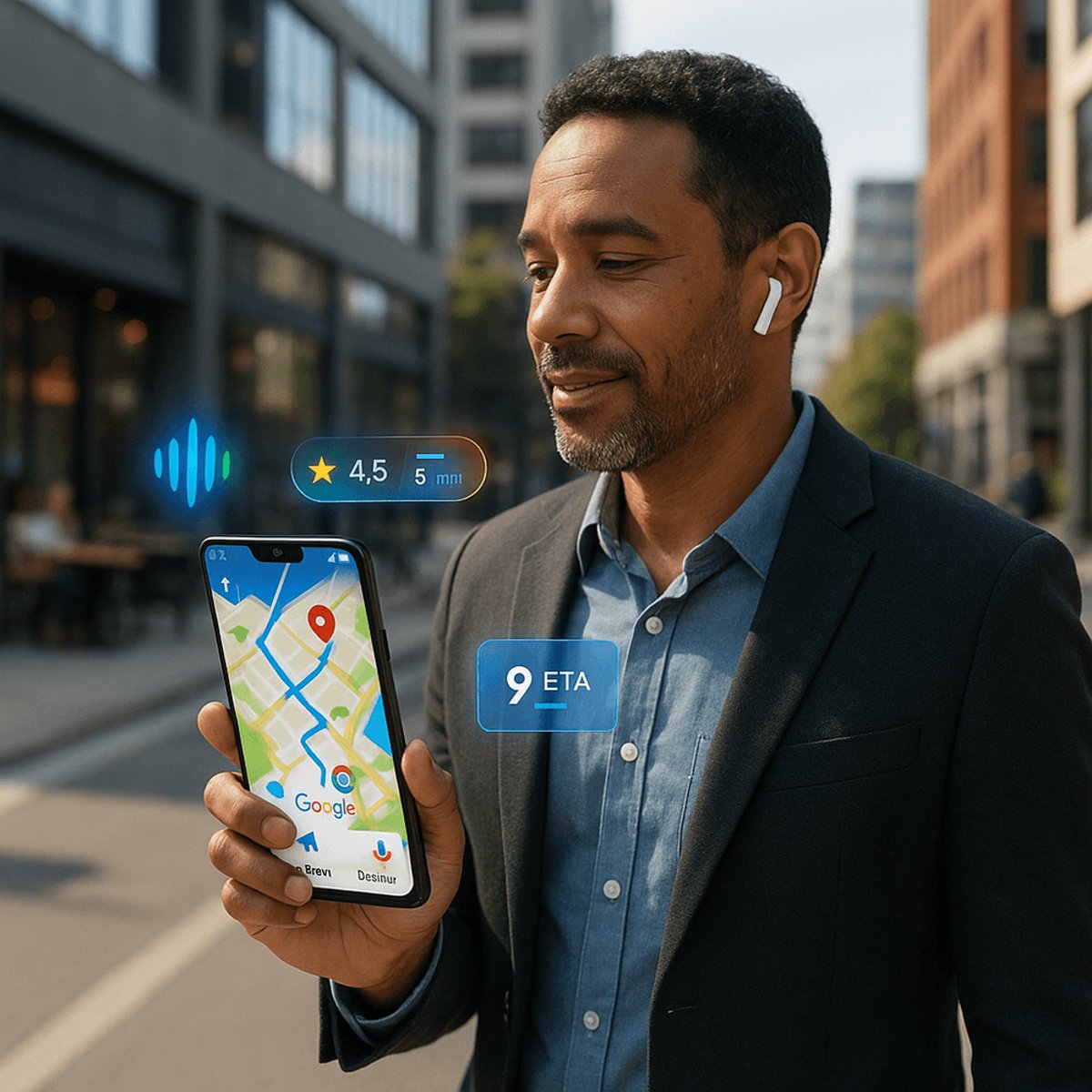
Google just made its Gemini AI assistant a whole lot more useful for anyone not behind a wheel. The company's rolling out conversational AI navigation to walkers and cyclists worldwide, expanding beyond the driving-only feature it launched last year. Now pedestrians can ask Gemini for restaurant recommendations mid-stroll, while cyclists get hands-free access to ETAs and messaging without letting go of their handlebars. It's Google's latest push to weave its AI assistant into everyday mobility, competing directly with Siri and Alexa for voice-first utility.
Google Maps is turning every walk and bike ride into an AI-assisted experience. The company announced today it's expanding Gemini AI navigation - previously available only for drivers - to pedestrians and cyclists across iOS and Android devices worldwide.
The move comes as Google races to embed its Gemini assistant into every corner of daily life, transforming Maps from a simple routing tool into a conversational AI platform. According to the company's blog post, the feature positions Gemini as "like talking to a friend in the passenger seat" - except now that friend walks and bikes alongside you too.
For pedestrians exploring unfamiliar neighborhoods, Gemini acts as an on-demand tour guide. Users can trigger the assistant with "OK Google, what neighborhood am I in?" and follow up with contextual queries like "What are top-rated restaurants nearby?" The AI pulls from Maps' real-time business data, reviews, and location intelligence to serve up recommendations without breaking stride.
It's a direct shot at Apple's Siri integration in Apple Maps, though Google's betting its superior local business data gives it an edge. The feature leverages the same large language model infrastructure powering Gemini across Search and Workspace, but tuned specifically for location-aware queries.
Cyclists get a different flavor of utility focused on safety and hands-free operation. The implementation recognizes that bikers can't safely tap screens or fumble with phones mid-ride. Voice queries like "What's my ETA?" or "When's my next meeting?" keep eyes on the road, while commands like "Text Sarah I'm 10 minutes behind" handle communication without requiring riders to let go of handlebars.
The cycling features tap into Google Calendar integration and messaging APIs, creating a mobile command center activated entirely by voice. It's functionality that Meta's Ray-Ban smart glasses have been pitching, but now available to anyone with a smartphone and earbuds.
Timing matters here. Google launched Gemini in driving navigation just months ago, and this rapid expansion to other travel modes shows the company's urgency to claim the AI assistant space before competitors lock in user habits. OpenAI doesn't have mapping data, Microsoft's Copilot lacks location context, and Amazon's Alexa never cracked mobile utility.
The global rollout - hitting all markets where Gemini is currently available - suggests Google is confident in the feature's performance after testing with drivers. No word yet on usage metrics from the driving version, but the company's willingness to expand indicates positive early signals.
What's not mentioned in the announcement is how this plays with Google's broader AI monetization strategy. Maps already serves ads for local businesses, and an AI assistant recommending restaurants creates new inventory for sponsored placements. The company's Q4 earnings showed Services revenue growth, and AI-driven recommendations in Maps could become a significant driver.
The feature requires users to have Gemini enabled on their devices and works through standard voice activation. It pulls from the same conversational AI that powers Gemini in Gmail and Docs, meaning it learns user preferences over time and can handle multi-turn conversations with context retention.
For competitors, this is a warning shot. Apple has been relatively quiet on AI integration in Maps beyond basic Siri commands, while upstart navigation apps like Waze (owned by Google) and Citymapper lack the AI infrastructure to match conversational capabilities. Google's advantage lies in controlling both the mapping data and the AI model, creating a vertically integrated experience competitors will struggle to replicate.
Google's pushing Gemini beyond the car marks a critical moment in the AI assistant wars. By embedding conversational AI into the moments when people can't use their hands - walking through new cities, gripping bike handlebars - the company's claiming territory competitors haven't prioritized. The real test comes in daily usage: will people actually talk to their phones while walking down the street, or will the feature join the graveyard of voice-first experiments that never caught on? With global availability starting now, we'll know soon whether Google's bet on ambient AI assistance pays off or becomes another underused feature buried in settings menus.