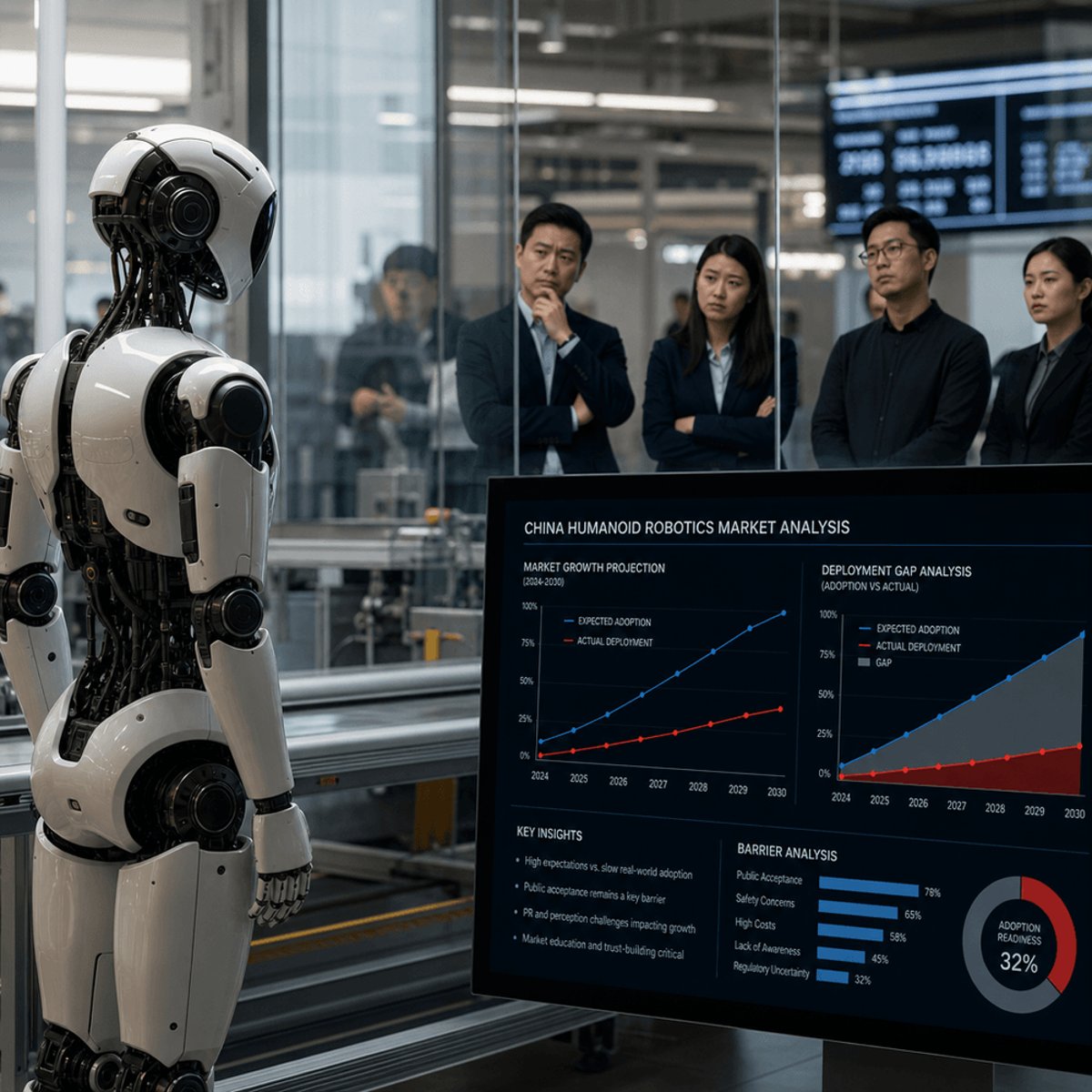
China's humanoid robot industry just hit an unexpected wall, and it's not about the technology. Morgan Stanley analysts dropped a cautionary note this morning, warning that a fundamental 'PR problem' is threatening to derail what many expected would be the sector's breakout year. The assessment marks a sharp pivot from the bullish sentiment that's dominated robotics coverage since early 2025, signaling deeper challenges ahead for Chinese manufacturers betting billions on humanoid automation.
Morgan Stanley's latest sector analysis is sending ripples through the robotics investment community. The bank's analysts, who declined to be named in the CNBC report, point to what they're calling a fundamental disconnect between technological capability and public readiness - a gap that's wider in China than most investors realized.
The timing couldn't be more awkward for Chinese manufacturers. Companies like Unitree, Fourier Intelligence, and UBTech have collectively raised over $2 billion in the past 18 months alone, building massive production facilities designed to churn out humanoid robots at automotive-scale volumes. Their pitch has been simple: China's manufacturing prowess plus lower labor costs equals a winning formula for dominating the global humanoid market before Western competitors like Tesla and Figure can scale.
But Morgan Stanley's analysts see several cracks forming. The 'PR problem' they reference isn't just about marketing - it's about fundamental public acceptance of human-shaped machines in workplaces, homes, and public spaces. Recent surveys cited in industry reports show Chinese consumers are significantly more wary of humanoid robots compared to traditional industrial automation, with concerns centered on job displacement and unpredictable behavior.
That perception gap matters because it directly impacts the commercial deployment timelines these companies have promised investors. If factories, warehouses, and retail chains hesitate to roll out humanoid workers due to employee pushback or customer discomfort, the entire business case starts crumbling. You can't achieve economies of scale when your primary customers are sitting on the sidelines.
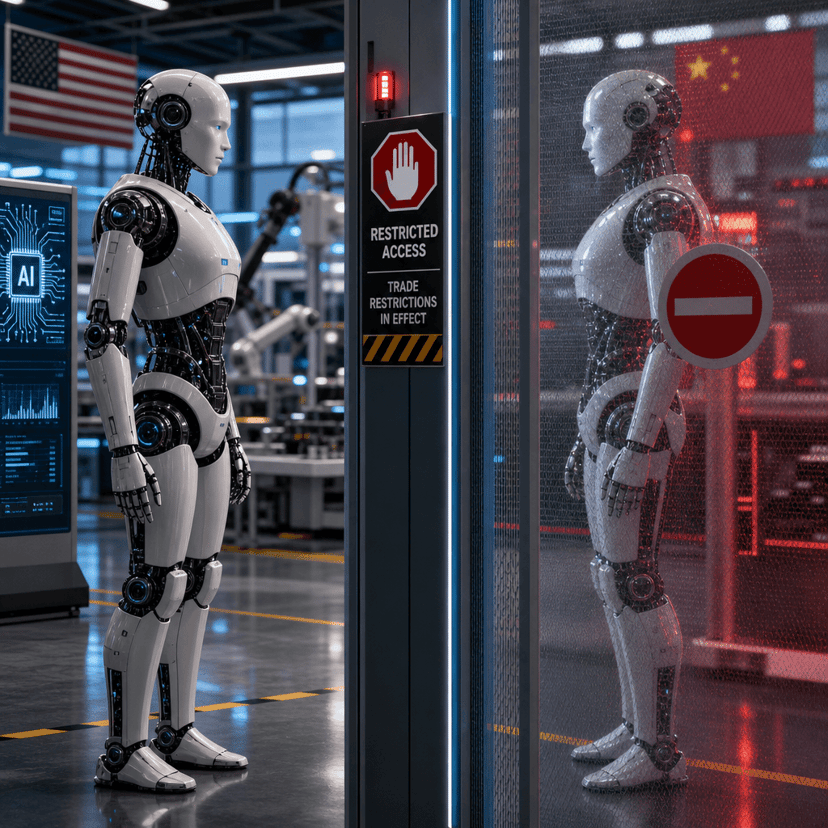
The headwinds extend beyond PR challenges. Morgan Stanley's note reportedly flags supply chain bottlenecks for specialized actuators and AI chips, regulatory uncertainty around liability for autonomous humanoid actions, and growing skepticism about near-term return on investment. Several pilot programs at major Chinese manufacturers have quietly stalled in recent months, industry sources suggest, though companies haven't publicly acknowledged the delays.
What makes this particularly significant is the source. Morgan Stanley has been generally bullish on robotics and AI automation throughout 2025 and early 2026, viewing China's manufacturing ecosystem as uniquely positioned to win the humanoid race. This cautionary pivot suggests the bank's analysts are seeing real-world deployment data that doesn't match the rosy projections coming from robotics startups and their venture backers.
The competitive implications are massive. If China's humanoid sector stumbles on perception and adoption issues, it opens a window for American and European competitors to catch up on manufacturing scale while simultaneously solving the human factors problems. Tesla's Optimus program, for instance, has taken a deliberately gradual approach focused on limited factory deployments - a strategy that looked overly cautious six months ago but might prove prescient if public acceptance becomes the binding constraint.
Investors are already reacting. Several robotics-focused funds have quietly reduced their exposure to Chinese humanoid plays in recent weeks, according to market sources, shifting capital toward companies focused on less human-like industrial automation or specialized service robots. The recalibration reflects growing recognition that humanoid form factors might be solving the wrong problem - impressive from an engineering standpoint but potentially off-putting in practical applications.
The regulatory environment isn't helping. Chinese authorities have been slower than expected to establish clear frameworks for humanoid robot deployment, particularly around workplace safety standards and liability allocation when things go wrong. That ambiguity is making risk-averse enterprise customers even more hesitant to commit to large-scale pilots, creating a chicken-and-egg problem for manufacturers who need deployment data to prove their business case.
For the global robotics industry, Morgan Stanley's warning serves as a reality check on timelines that have grown increasingly aggressive. The path from impressive demo videos to profitable commercial deployment has always been longer and messier than PowerPoint decks suggest. China's experience might prove that the human element - worker acceptance, customer comfort, regulatory frameworks - is harder to engineer than the robots themselves.
Morgan Stanley's cautionary note on China's humanoid robot sector crystallizes what many industry insiders have quietly worried about - that the gap between technological capability and real-world acceptance might be wider and harder to bridge than balance sheets suggest. The 'PR problem' isn't just about marketing messaging or better demos. It's about whether societies are ready to work alongside, be served by, and share spaces with human-shaped machines at the scale these business models require. For investors who've poured billions into the humanoid robotics thesis, the next 12 months will reveal whether this is a temporary adoption curve bump or a fundamental miscalculation about what customers actually want. The companies that survive won't just need better robots - they'll need better answers to very human questions about trust, safety, and the future of work.