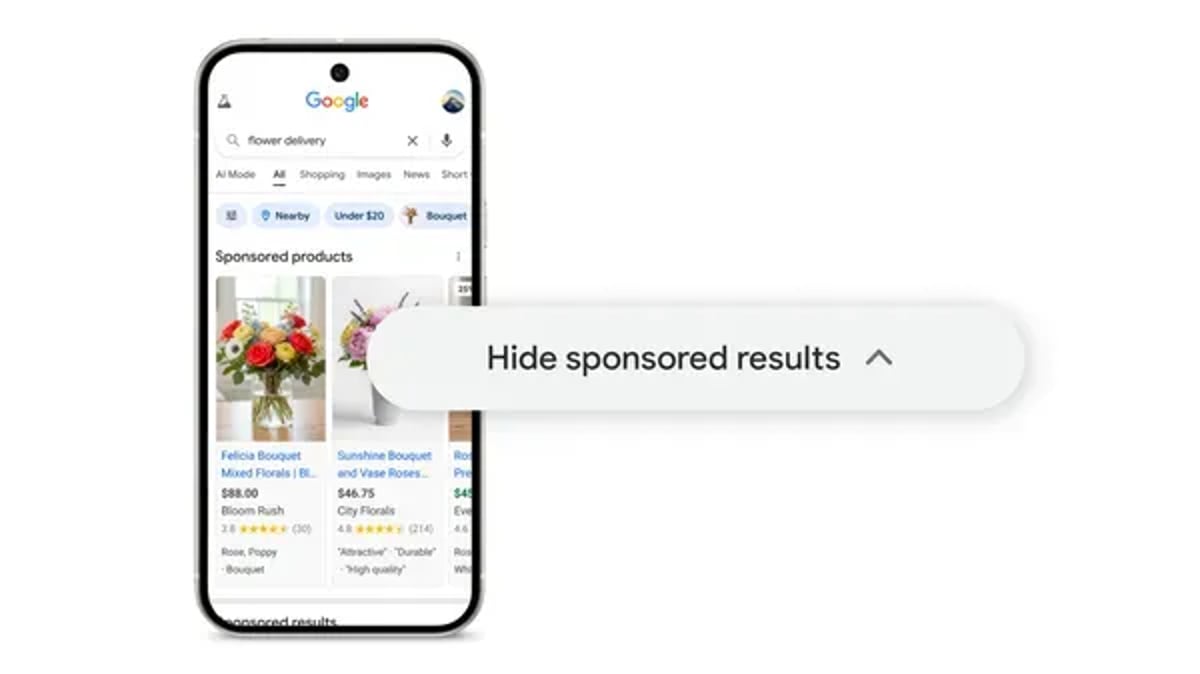
Google just rolled out a major overhaul to how ads appear on Search, introducing a grouped 'Sponsored results' label and a new 'Hide sponsored results' control that lets users collapse ads with a single click. The changes are going live globally on both desktop and mobile, marking the biggest shift in Google's search ad presentation in years as the company responds to growing user demand for cleaner search experiences.
Google is making its biggest change to search advertising in years, giving users unprecedented control over their search experience while maintaining its advertising revenue engine. The company's rolling out a comprehensive redesign that groups text ads under a single 'Sponsored results' label and adds a hide button that collapses ads entirely.
The timing isn't coincidental. As regulatory pressure mounts across Europe and the US over digital advertising practices, Google is proactively addressing transparency concerns. The new grouped labeling system makes sponsored content more obvious than ever, with a larger, persistent label that stays visible as users scroll through results.
But the real game-changer is the hide function. 'We're also adding a new Hide sponsored results control that allows you to collapse text ads with a single click if you want to focus only on organic results,' Omkar Muralidharan, VP of Product Management and Data Science at Google Ads, explained in the company's official announcement.
This move signals a significant shift in Google's strategy. For years, the search giant has faced criticism for making ads increasingly indistinguishable from organic results. Now it's doing the opposite, betting that transparency will actually improve user experience and, paradoxically, advertiser performance.
The technical implementation reveals Google's careful balance between user control and business needs. The system maintains the current four-ad maximum while reorganizing how they're presented. Shopping ads and other ad units across the search results page are getting the same 'Sponsored' treatment, creating consistency that was previously lacking.
Google's internal testing showed the new design helps people navigate more easily, though the company hasn't released specific metrics on click-through rates or user satisfaction scores. What's clear is that this represents a bet on quality over quantity - fewer accidental clicks, but more intentional engagement.
The competitive implications are massive. Microsoft's Bing has been pushing its cleaner interface as a differentiator, while newer players like Perplexity emphasize ad-free experiences. Google's responding by essentially letting users create their own ad-free experience when needed, while keeping the revenue model intact.
Industry watchers see this as Google playing defense against both regulatory pressure and competitive threats. The company's facing antitrust scrutiny over its search practices, and demonstrating user choice could strengthen its legal position. Meanwhile, the hide function might actually reduce ad blindness by making sponsored content more intentional when users choose to see it.
The rollout timing, just ahead of the holiday shopping season, suggests Google's confident the changes won't hurt advertiser performance. In fact, the company might be betting that better-targeted, more intentional ad interactions will prove more valuable than the current system's mixed organic-sponsored results.
Google's search advertising overhaul represents more than just interface tweaks - it's a strategic response to mounting regulatory pressure and competitive threats. By giving users control over ad visibility while maintaining advertiser access, Google is betting that transparency and choice will strengthen both user satisfaction and its legal position. The real test will be whether advertisers see improved engagement from users who actively choose to view sponsored content, potentially validating a more sustainable advertising model for the search giant.