Apple just completed its M5 family rollout and, as expected, the headlines are loud: “most advanced cores yet,” “engineered for AI,” performance measured in multiples.
The real question is quieter. If you already own an M3 or M4 machine, is this a leap… or just another turn on Apple’s annual silicon carousel?
Here’s what actually changed.
The base M5 sticks to 3nm, keeps the familiar 10-core layout, but adds something genuinely new: neural accelerators baked directly into every GPU core. That matters for AI workloads. Benchmarks show around 13% faster single-core and roughly 20% faster multi-core over M4. GPU gains are larger, about 30 to 45% depending on workload. Local LLM tasks can be up to 4x faster in time-to-first-token scenarios.
Translation: if you run on-device models, render 3D scenes, or lean hard into ML workflows, you will feel it. If your daily life is email, browser tabs, and Zoom, the difference is mostly theoretical.
The bigger architectural shift shows up in the M5 Pro and M5 Max. Apple moved to a chiplet-style “Fusion” design, bonding multiple dies together for higher core counts and bandwidth. CPU cores climb, memory bandwidth increases, Thunderbolt 5 arrives. It is an engineering flex. It is not a lifestyle revolution.
Pricing climbed, too. MacBook Air models rose by $100. MacBook Pro models jumped by $200 to $400 depending on configuration. Apple softens the blow with higher base storage, but your credit card will still notice.
So who should care?
If you are on M4, this is almost certainly a skip. The gains are real but incremental.
If you are on M3, it becomes situational. The jump is meaningful, especially for creative or AI-heavy workflows. But rumors point to a larger M6 redesign cycle ahead, possibly with OLED and a 2nm process shift. Timing, not performance, is the real debate here.
If you are on M1 or M2, this is where the math changes. Four generations of cumulative improvement means dramatically faster CPU, stronger GPU, better thermals, faster storage. That should feel transformative.
Conclusion
The M5 story is strongest where Apple is betting its future: AI acceleration and graphics performance. The silicon is undeniably better at those tasks. The open question is whether most users need that power today.
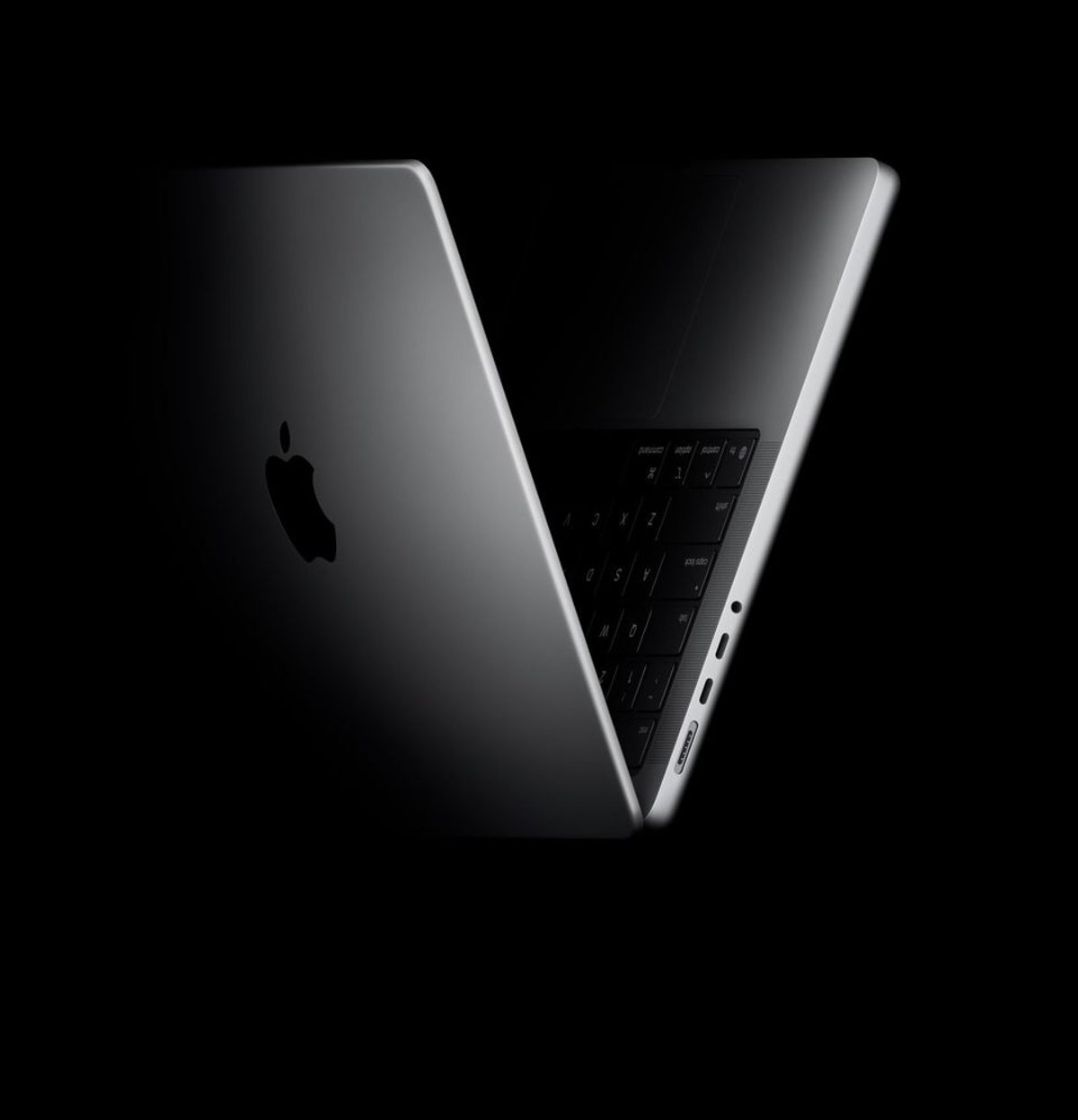
The M5 MacBook is not a revolution. It is a confident, muscular refinement. Whether that is worth thousands of dollars depends less on Apple’s benchmarks and more on what your laptop actually does between 9 a.m. and midnight.