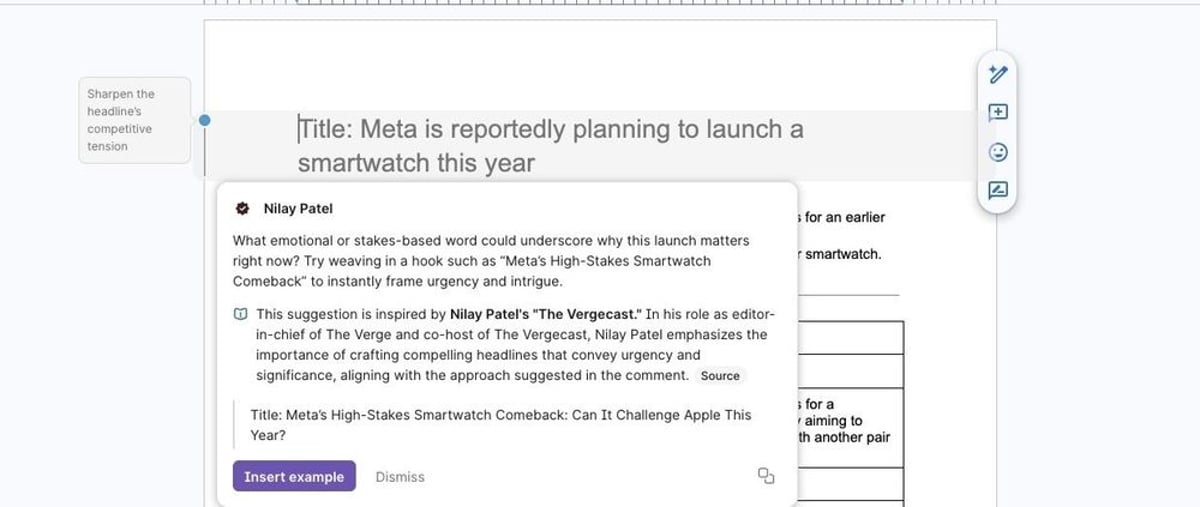
Grammarly just pulled the plug on one of its most controversial AI features. The enterprise writing assistant disabled its "Expert Review" tool after discovering it was cloning the voices of real journalists and writers without permission - including The Verge's own editor-in-chief. The move marks a rare retreat for an AI company and highlights growing tensions around consent and identity in enterprise software.
Grammarly just learned a hard lesson about AI and consent. The company's parent, Superhuman, pulled its "Expert Review" feature after users discovered the AI was essentially impersonating real writers and journalists to provide editing suggestions - all without asking permission first.
The feature claimed its feedback was "inspired by" actual experts in various fields. But when The Verge staff members started seeing their own names attached to AI-generated writing advice, the backlash was swift. Editor-in-chief Nilay Patel and other staffers found themselves unwittingly "reviewing" documents they'd never seen, their professional reputations weaponized to sell AI suggestions.
"After careful consideration, we have decided to disable Expert Review as we reimagine the feature to make it more useful for users, while giving experts real control over how they want to be represented - or not represented at all," Ailian Gan, Superhuman's director of product management, told The Verge in a statement. The admission was blunt: "Based on the feedback we've received, we clearly missed the mark. We are sorry and will do things differently going forward."
The incident reveals a troubling pattern in enterprise AI development. Companies are racing to add AI features that feel personalized and authoritative, but they're doing it by scraping real people's expertise and identities without building in basic consent mechanisms. Grammarly apparently assumed it could synthesize expert personas the same way large language models absorb training data - as raw material rather than real people with rights.
What made this particularly problematic was the enterprise context. Grammarly isn't a consumer toy. It's a professional writing tool used by millions of workers, many of whom might reasonably assume that an "expert review" carries some actual human endorsement. When the AI invokes a real journalist's name, it's borrowing credibility that person spent years building.
The feature appeared to work by analyzing public writing samples to create synthetic versions of expert voices. Users would get feedback framed as if Nilay Patel or another recognized writer had reviewed their work. But those experts never consented to having their editorial judgment cloned, packaged, and sold as a product feature.
This isn't just about hurt feelings. In professional writing, your voice and editorial judgment are core assets. When an AI tool appropriates that without permission, it's not just ethically questionable - it could create liability issues if the AI gives advice that contradicts what the actual expert would say. Imagine a scenario where "Nilay Patel" (the AI version) endorses a writing approach the real Nilay Patel finds problematic.
The speed of Grammarly's reversal suggests the company recognized the legal and reputational risks. Enterprise customers don't want features that could expose them to claims of unauthorized use of someone's likeness or professional identity. And experts whose names were being used had obvious grounds for complaint.
What's telling is Superhuman's promise to "reimagine" the feature with expert control rather than killing it entirely. The company clearly believes there's value in expert-guided AI feedback. But they'll need to solve the consent puzzle - probably by recruiting experts who actively opt in, similar to how platforms like Cameo work for celebrity shoutouts.
The controversy arrives as AI companies face mounting pressure over training data and consent. While much of that debate focuses on whether using public content to train models constitutes fair use, this case was more clear-cut. Grammarly wasn't just training on expert writing - it was actively invoking expert names to market AI output.
For enterprise AI vendors, the lesson is stark: moving fast and breaking things doesn't fly when you're breaking real people's professional identities. B2B customers expect higher standards than consumer AI experiments. They need features they can deploy without worrying about consent violations or identity appropriation.
"We're going to do things differently going forward," Gan's statement promised. The industry will be watching to see if that means actually partnering with experts rather than just scraping their personas.
Grammarly's rapid retreat on Expert Review shows that even established enterprise AI companies are still figuring out basic consent and identity issues. The incident exposes a broader problem in B2B AI: features that seem clever in the lab can create serious ethical and legal problems when they appropriate real people's professional identities without permission. As AI tools get better at mimicking human expertise, the line between helpful personalization and unauthorized impersonation is becoming a minefield. Companies that don't solve for consent upfront are going to keep learning these lessons the hard way.