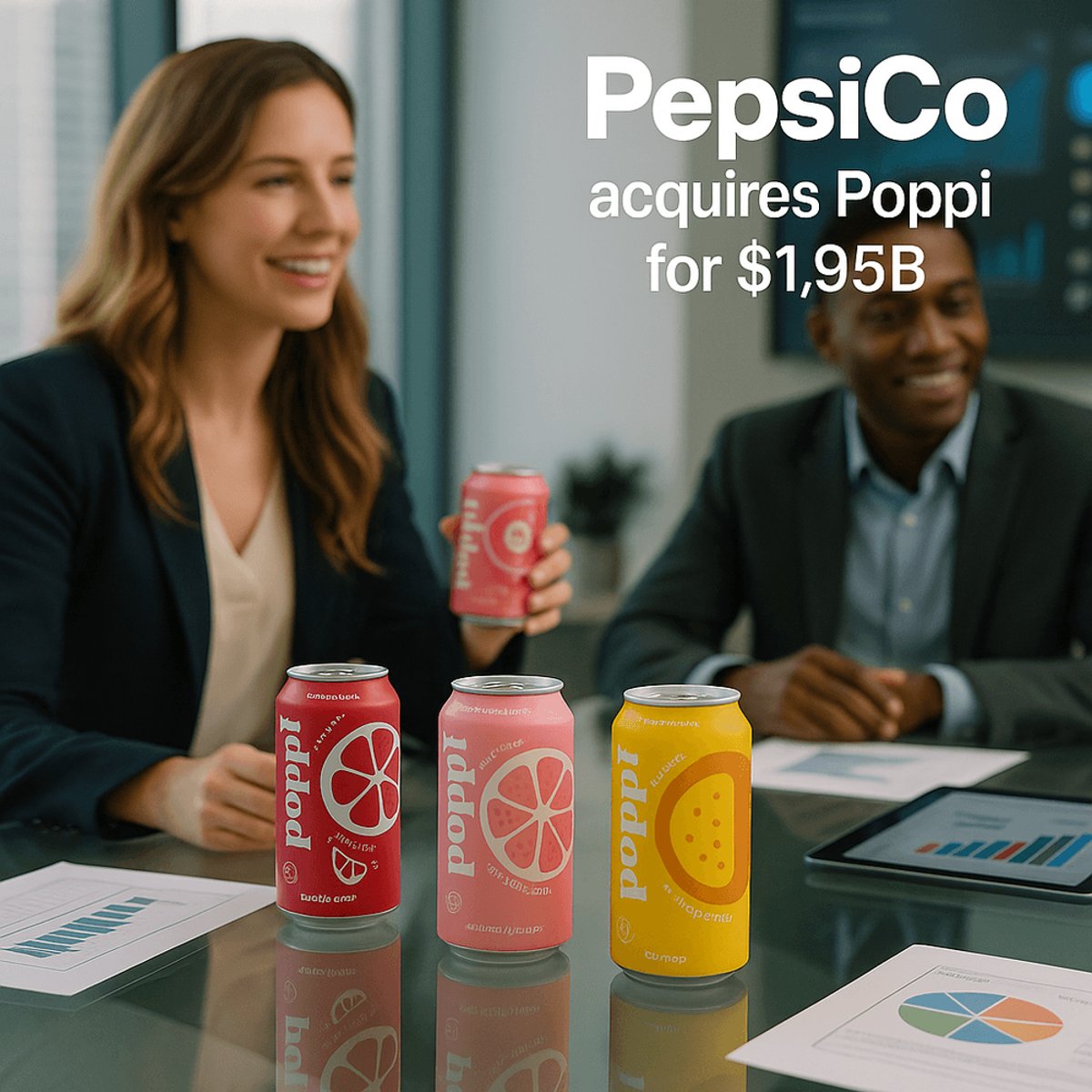
PepsiCo just made its biggest functional beverage bet yet, acquiring prebiotic soda brand Poppi for $1.95 billion. The deal marks a stunning validation for founder Allison Ellsworth, who turned a kitchen experiment into a unicorn exit by leveraging TikTok virality and Super Bowl advertising to crack the notoriously brutal beverage distribution game. The acquisition signals that Big Soda is scrambling to capture the functional drinks market as younger consumers abandon traditional sodas for gut-health alternatives.
PepsiCo is betting nearly $2 billion that gut health is the future of soda. The beverage giant's acquisition of Poppi for $1.95 billion represents one of the largest functional beverage deals in recent history, and a striking reversal for an industry that's long dismissed prebiotic sodas as a niche fad.
For years, venture capitalists warned entrepreneurs away from beverage startups, pointing to razor-thin margins, brutal retailer negotiations, and distribution nightmares that killed promising brands. But Poppi founder Allison Ellsworth proved the playbook had changed. By building a digital-first brand on TikTok and converting viral moments into retail momentum, she cracked the code that's eluded countless beverage founders.
The Poppi story started in Ellsworth's kitchen, where she experimented with apple cider vinegar-based sodas as a gut-health solution. After appearing on Shark Tank and securing early backing, she pivoted hard into social media marketing, turning the brand's colorful cans and wellness positioning into TikTok catnip. The strategy worked. Poppi became one of the platform's most talked-about beverage brands, with user-generated content driving trial among Gen Z and millennial consumers who'd largely abandoned traditional sodas.
That digital momentum translated into retail power. According to TechCrunch, Ellsworth parlayed the TikTok virality into major retailer partnerships, eventually securing enough distribution to justify Super Bowl advertising. The bold move paid off, with the brand's awareness spiking among mainstream consumers who'd never heard of prebiotics.
PepsiCo watched all of this closely. The company has struggled as traditional soda consumption declines, with health-conscious consumers fleeing sugary drinks. Meanwhile, functional beverage upstarts like Poppi, Olipop, and Culture Pop have been growing at triple-digit rates, capturing shelf space and consumer mindshare. The $1.95 billion price tag reflects PepsiCo's urgency to catch up.
The acquisition gives PepsiCo instant credibility in the functional soda category, along with Ellsworth's expertise in digital-first brand building. For PepsiCo's legacy distribution network, Poppi's TikTok-native marketing approach offers a blueprint for reaching younger consumers who ignore traditional advertising. The deal also includes Ellsworth staying on to lead the brand's continued expansion, suggesting PepsiCo wants to preserve Poppi's startup culture rather than absorbing it into corporate bureaucracy.
Industry insiders see the deal as a watershed moment for functional beverages. If PepsiCo can scale Poppi's production while maintaining its authentic brand voice, it could force rivals like Coca-Cola and Keurig Dr Pepper to make their own functional soda acquisitions. Several other prebiotic brands are already fielding acquisition interest, according to sources familiar with the conversations.
The timing couldn't be better for functional soda founders. Consumer demand for gut-health products continues accelerating, with the global prebiotics market projected to reach $12.4 billion by 2028. Retailers are expanding functional beverage sections, and major chains like Target and Whole Foods have given these brands premium placement. What seemed like a niche wellness trend three years ago now looks like a fundamental shift in how Americans think about soda.
For Ellsworth, the PepsiCo deal vindicates her bet on social media marketing over traditional brand building. While legacy beverage companies spent millions on TV spots and celebrity endorsements, she built a billion-dollar brand largely through organic TikTok content and influencer partnerships. Her return to Shark Tank, presumably to share the success story, will offer aspiring founders a masterclass in using digital platforms to overcome structural barriers.
The Poppi acquisition marks a turning point for functional beverages, proving that digital-first brands can command unicorn valuations even in capital-intensive industries like CPG. For PepsiCo, the nearly $2 billion bet reflects the existential threat posed by declining soda consumption and the urgent need to capture wellness-focused consumers. Whether the company can scale Poppi without diluting its authentic brand voice remains to be seen, but one thing's clear: the functional soda wave isn't slowing down. Founders building in adjacent wellness categories should take note - the strategic acquirers are watching, and they're willing to pay premium prices for brands that can crack the Gen Z distribution code.