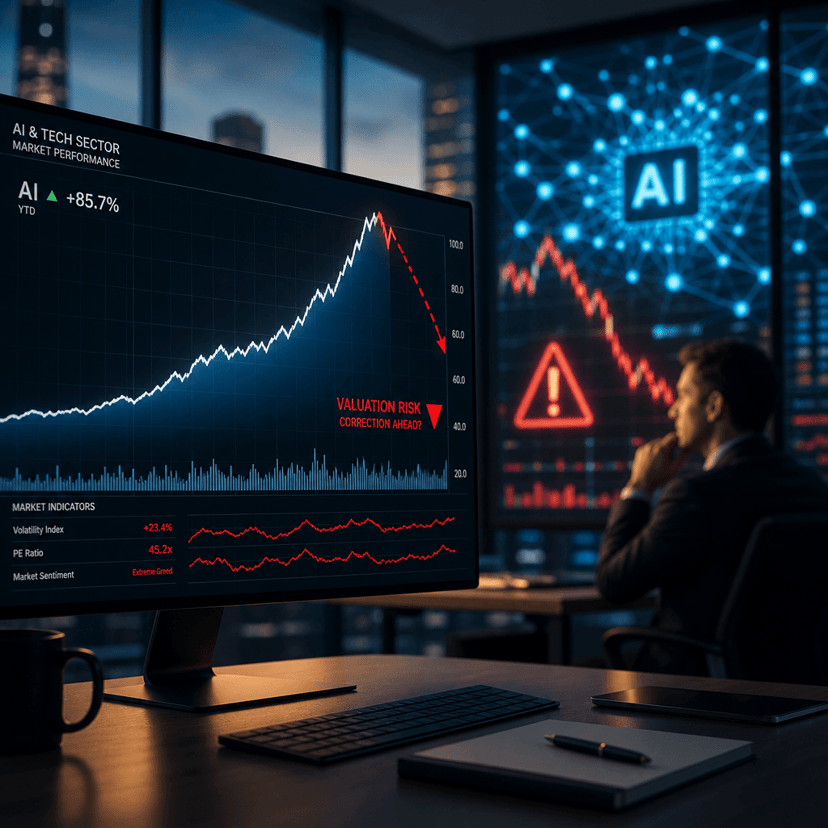
Intel is riding an unprecedented wave, with shares climbing 56% over nine consecutive trading days - one of the chipmaker's longest winning streaks on record. The rally comes as the struggling semiconductor giant announces major partnerships with Google and Elon Musk's ventures, signaling renewed confidence in Intel's foundry ambitions and AI chip capabilities. For a company that's spent the past few years battling market share losses and manufacturing delays, this surge represents a dramatic reversal that's caught Wall Street's attention.
Intel just delivered the kind of stock performance that seemed impossible a year ago. The chipmaker's shares are on track for a historic 9-day winning streak, surging 56% over that run as a flurry of strategic partnerships breathes new life into the company's turnaround narrative.
The catalyst? Recent deals with Google and ventures tied to Elon Musk have investors convinced that Intel's bet on becoming a foundry powerhouse is finally paying off. While specific deal terms haven't been fully disclosed, the partnerships reportedly involve custom chip production and AI accelerator development - exactly the kind of high-margin, cutting-edge work that Intel needs to compete with Taiwan Semiconductor Manufacturing Company.
For context, this isn't just any rally. Intel has struggled through years of manufacturing setbacks, losing its technology lead to rivals and watching Nvidia dominate the AI chip market while Intel sat on the sidelines. The company's stock spent much of the past two years trading near decade lows as investors questioned whether CEO Pat Gelsinger's ambitious turnaround plan would ever deliver results.
Now the narrative is shifting fast. The Google deal appears to center on producing custom silicon for data center applications, tapping into Intel's advanced packaging technologies and emerging foundry capabilities. It's a validation of the strategy Gelsinger has been pushing since returning to Intel in 2021 - transforming the company from a pure-play chip designer into a contract manufacturer that can serve hyperscalers and tech giants.
The Musk connection adds another dimension. While details remain scarce, industry watchers speculate the partnership could involve chip production for artificial intelligence workloads or even automotive applications tied to Tesla. Musk's companies have increasingly needed custom silicon for everything from self-driving systems to data center infrastructure powering AI training.
What makes this rally particularly striking is the timing. Intel has been pouring billions into new fabrication plants across the U.S. and Europe, betting that geopolitical tensions and supply chain concerns would drive customers to seek alternatives to Asian foundries. Those investments have weighed on margins and cash flow, but the recent deal announcements suggest the strategy is attracting exactly the kind of marquee clients Intel needs.
The market is responding with enthusiasm. Trading volumes have spiked as both institutional investors and retail traders pile in, seeing the partnerships as proof that Intel can compete in the foundry business while simultaneously developing competitive AI chips. Some analysts are now revising their price targets upward, though others caution that execution risk remains high.
Intel's foundry ambitions face formidable competition. TSMC still controls the majority of advanced chip production globally, with manufacturing processes that remain a generation ahead in some areas. Samsung is also investing heavily in foundry expansion. But Intel's pitch is different - it's offering U.S. and European manufacturing at a time when governments are desperate to reshore chip production.
The Google and Musk deals could be just the beginning. Intel has hinted at additional partnership announcements in coming months, and the company is eligible for billions in subsidies under the CHIPS Act to support domestic manufacturing expansion. If Intel can prove it can deliver cutting-edge chips on time and at competitive prices, more customers will likely follow.
Still, questions linger. Can Intel maintain manufacturing yields as it ramps production? Will its AI chip offerings gain traction against Nvidia's dominant GPUs? And can the company balance its own product roadmap with foundry commitments? The 56% stock surge suggests investors are betting yes, but the real test comes when these partnerships move from announcements to actual chip shipments.
For now, Intel is enjoying a rare moment of momentum. The 9-day winning streak has erased months of losses and restored some confidence in Gelsinger's vision. Wall Street is watching closely to see if this marks a genuine inflection point or just another false start in Intel's long journey back to semiconductor leadership.
Intel's historic rally reflects more than just short-term trading enthusiasm - it signals a potential turning point for a company that's been struggling to find its footing in the AI era. The partnerships with Google and Musk's ventures validate the foundry strategy that Intel has staked its future on, while offering a pathway back to relevance in high-performance computing. But stock surges are easy; executing on billion-dollar manufacturing commitments while developing competitive AI chips is the hard part. The next few quarters will reveal whether this 56% run is the start of Intel's comeback story or just another chapter in the semiconductor industry's endless cycle of hype and reality. For investors betting on American chipmaking's resurgence, Intel's ability to deliver on these partnerships will be the ultimate test.