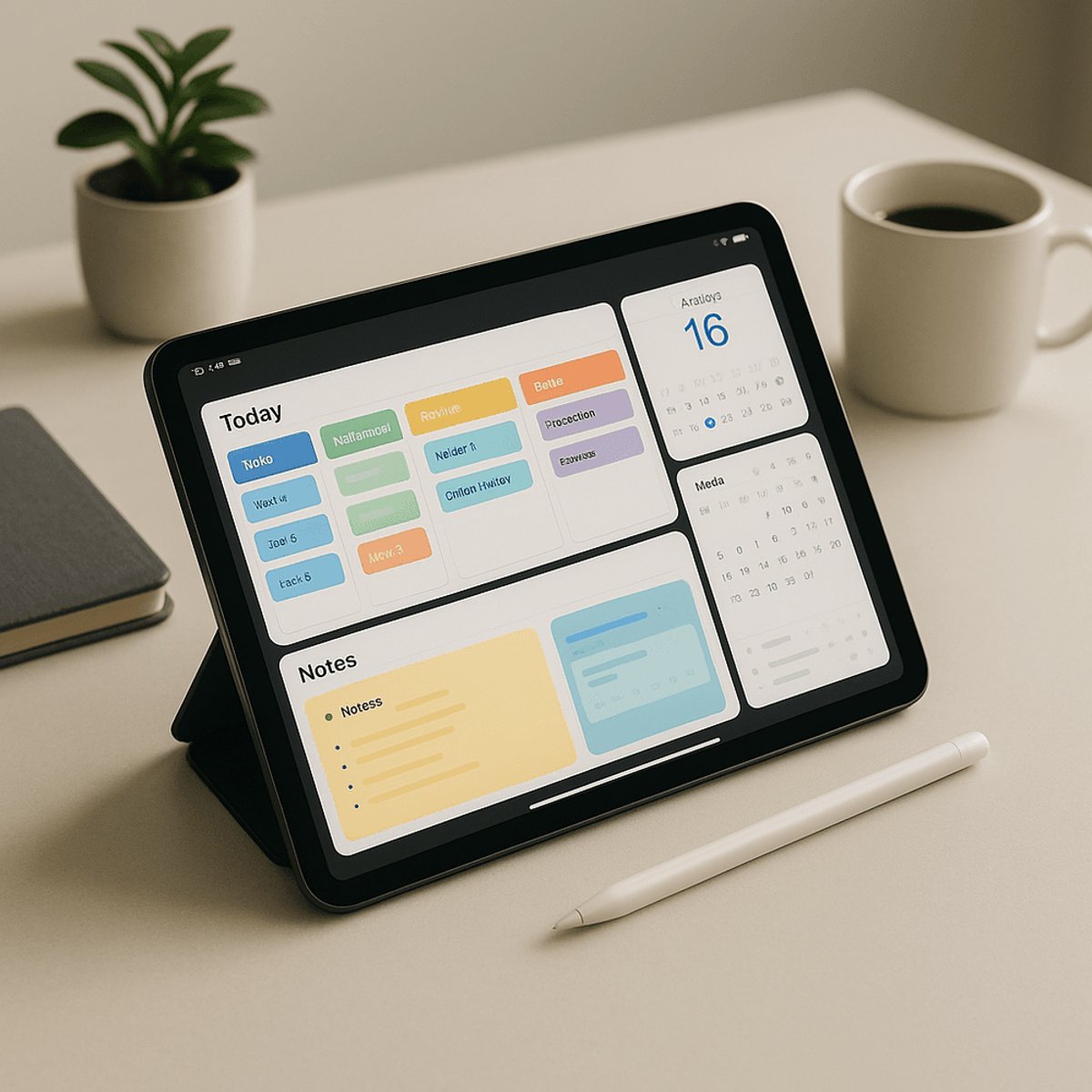
Apple's iPad ecosystem is getting a productivity makeover as users ditch basic built-in tools for specialized apps that promise to transform how they work, study, and stay organized. From gamified focus sessions to AI-powered note-taking, the App Store's latest productivity champions are reshaping what's possible on the tablet that started as a simple content consumption device.
The productivity app revolution on Apple's iPad is hitting full stride, with specialized tools now challenging the dominance of built-in apps like Notes, Calendar, and Reminders. According to TechCrunch's latest roundup, users are increasingly turning to third-party solutions that promise more sophisticated organization and focus features.
Goodnotes leads the charge in digital note-taking, capitalizing on the iPad's Apple Pencil integration. The app combines handwritten and typed text on single pages while offering AI-powered note summaries and audio recording synced to writing moments. With three free notebooks and unlimited access for $9.99 annually, it's become one of the platform's most popular choices.
Task management gets a gamification twist with Forest, which plants virtual trees during focus sessions. Users who abandon tasks before completion watch their digital trees wither - a psychological trick that's proving effective for distraction-prone workers. The $3.99 app even converts virtual achievements into real tree plantings through partnership with Trees for the Future.
Notion represents the all-in-one approach, consolidating calendars, tasks, and notes into a single customizable workspace. The platform's flexibility allows integration with tools like Slack and Dropbox, while its AI features help summarize content and generate action items. Free for personal use, it scales to $15 monthly for business teams.
The distraction-blocking category sees competition from Freedom, which blocks selected apps and websites across all devices during focus sessions. At $3.99 monthly, it includes ambient sounds for concentration and educational content about digital wellness - addressing the growing concern over device addiction.
Specialized productivity extends to cooking with Crouton, which organizes recipes from websites and physical cookbooks while generating meal plans and grocery lists. The $14.99 annual subscription reflects how productivity apps are expanding into every aspect of daily life organization.
For traditional task management, TickTick and Todoist offer sophisticated alternatives to Apple's Reminders. TickTick's Pomodoro timer integration costs $35.99 annually, while Todoist's natural language processing for task creation runs $4 monthly for premium features.
The visual organization approach gets representation through Trello, which mimics sticky note workflows with digital boards, lists, and cards. Its Kanban-style interface appeals to users who think visually, with premium features starting at $5 monthly.
Note-taking competition intensifies with Notability, which matches Goodnotes in handwriting recognition while adding AI-generated summaries and side-by-side note editing. Its $4.99 monthly subscription includes math conversion and unlimited cloud storage.
This productivity app boom reflects the iPad's transformation from Steve Jobs' original vision of a simple content consumption device to Apple's current positioning as a laptop replacement. The company has embraced this shift, turning iPads into computers capable of handling complex workflows for students, professionals, and creative users.
The iPad productivity app ecosystem signals a broader shift in how we think about mobile computing and work organization. As these specialized tools continue gaining traction, they're not just replacing Apple's built-in apps - they're redefining what productivity means in an increasingly digital world. For users willing to invest in premium subscriptions, the payoff comes in the form of streamlined workflows and better focus management that traditional desktop software struggled to achieve.