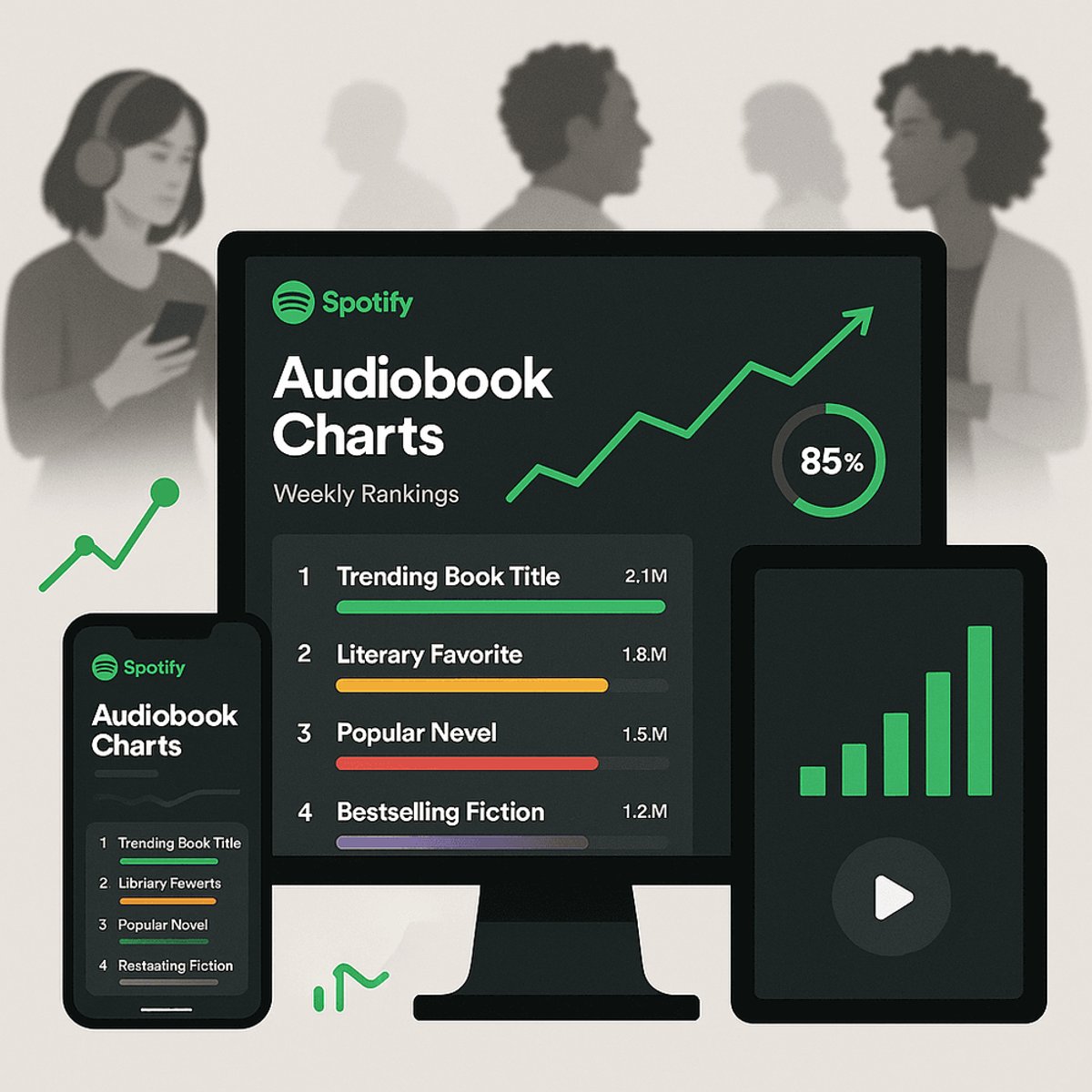
Spotify is rolling out Audiobook Charts, marking its latest push to establish dominance in the audiobook space since entering the market in 2022. The weekly-updated charts will track the most popular audiobooks globally and across genre categories, mirroring the data-driven approach that's made Spotify's music and podcast rankings industry benchmarks. The move signals the company's intent to position itself as the go-to discovery platform for spoken-word content, directly challenging Amazon's Audible and Apple Books.
Spotify just made audiobooks a lot more competitive. The streaming giant is launching Audiobook Charts that will update weekly, tracking the most-listened-to titles across its platform. According to TechCrunch, the new feature follows the same format as Spotify's wildly successful Music and Podcast Charts, offering both overall rankings and genre-specific breakdowns.
The timing isn't accidental. Spotify entered the audiobook market in late 2022, initially offering 300,000 titles to Premium subscribers. Since then, the company's been quietly building out its audiobook infrastructure, adding features like personalized recommendations and curated collections. Now it's weaponizing the same data transparency that made Spotify Charts a must-watch metric for the music industry.
For publishers and authors, these charts represent a new visibility engine. Just as Spotify's playlist placements can make or break a song's success, audiobook chart positions could drive significant discovery. The difference is scale - Spotify's 600 million-plus users dwarf the audiences of traditional audiobook platforms. Getting featured on a Spotify chart means exposure to listeners who might never have visited Audible or downloaded Apple Books.
The competitive implications run deep. Amazon's Audible has dominated audiobook distribution for years, but it doesn't publish real-time listening data publicly. Apple keeps its audiobook metrics even more tightly guarded. Spotify's transparency play could force both companies to open up their own analytics, fundamentally changing how the audiobook industry measures success.
Genre-specific charts add another layer of strategic value. Romance, mystery, and science fiction audiobooks have massive dedicated audiences, but discoverability has always been fragmented across multiple platforms and recommendation engines. Spotify's genre charts could standardize what's trending in each category, giving publishers clearer signals about where to invest their marketing dollars.
The broader context matters too. Audiobook consumption jumped 25% year-over-year in 2025, according to the Audio Publishers Association, with streaming platforms capturing an increasingly large slice of that growth. Spotify's audiobook rollout has been methodical - first securing catalog rights, then building playback features, and now adding the social proof of popularity metrics. It's the same playbook that helped the company overtake traditional radio.
For Spotify itself, audiobooks solve a critical business problem. The company's podcast push generated buzz but struggled with profitability as exclusive content deals ballooned costs. Audiobooks, by contrast, operate on a licensing model similar to music, with clearer unit economics. Every hour of audiobook listening keeps users engaged without the production overhead of original podcasts.
What makes this launch particularly smart is how it leverages Spotify's existing algorithmic infrastructure. The same recommendation engines that predict what song you'll like next can now suggest audiobooks based on your listening history. Charts amplify that effect by showing you what millions of other users are gravitating toward, creating powerful network effects around popular titles.
Publishers are watching closely. Major houses like Penguin Random House and HarperCollins have already shifted resources toward audio production, betting that younger audiences prefer listening to reading. Spotify's charts could accelerate that trend by making audiobook performance metrics as visible and immediate as streaming music numbers.
The feature also positions Spotify as an entertainment super-app rather than just a music service. Users who come for playlists stick around for podcasts, then discover audiobooks - all within the same interface. That cross-pollination reduces churn and increases lifetime value, two metrics Spotify obsesses over as it chases sustainable profitability.
Industry analysts expect the charts to update every Monday, matching the cadence of Spotify's music rankings. That weekly refresh creates a predictable news cycle for publishers to plan campaigns around, similar to how music labels time releases for maximum chart impact.
Spotify's Audiobook Charts aren't just another feature drop - they're a declaration that the company sees audiobooks as a core content pillar equal to music and podcasts. By making listening data public and updating it weekly, Spotify is forcing the entire audiobook industry to operate with the same transparency that transformed music streaming. For listeners, that means better discovery. For publishers, it means a new battleground for attention. And for competitors like Audible and Apple Books, it means Spotify just raised the stakes on what it takes to win in spoken-word content. Watch for publishers to start timing major audiobook releases around Spotify's Monday chart updates within the next few months.