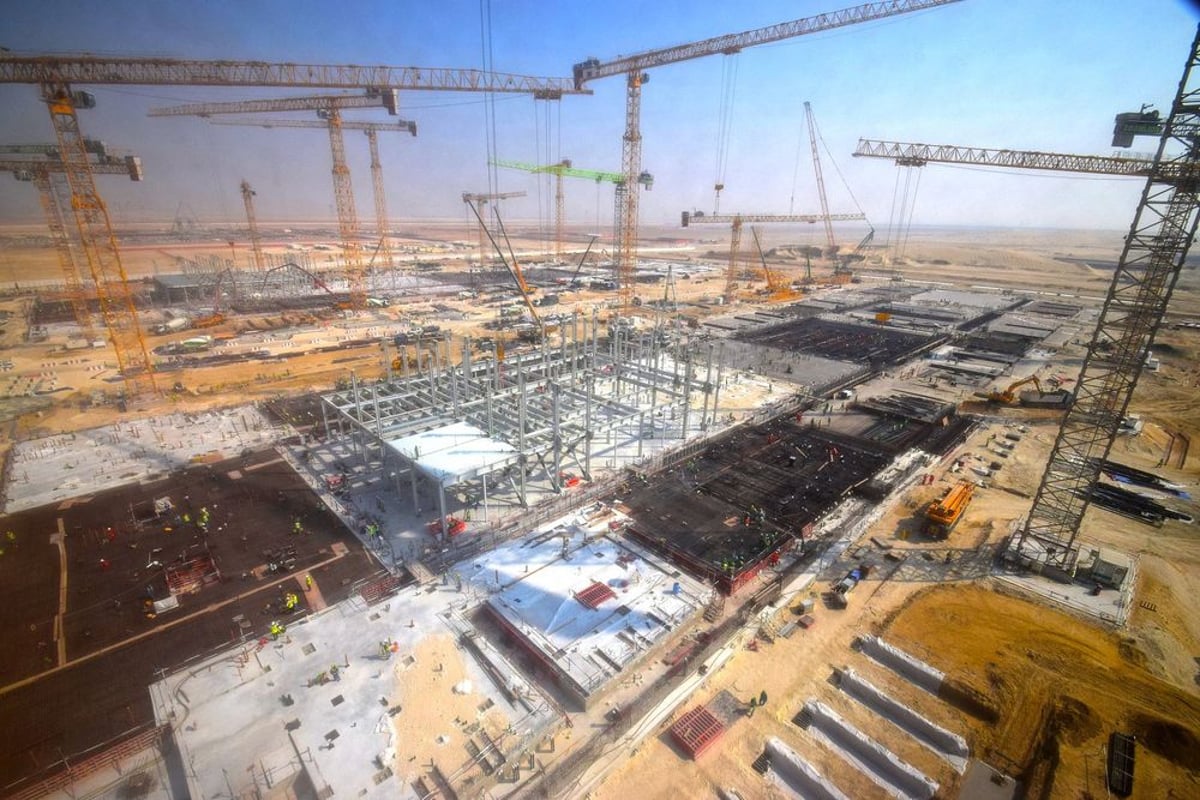
OpenAI's massive $30 billion data center in Abu Dhabi just became a geopolitical flashpoint. Iran's Islamic Revolutionary Guard Corps released a video threatening the "complete and utter annihilation" of the under-construction Stargate facility if the US attacks Iranian power infrastructure. The threat, published April 3rd via state media, marks an unprecedented escalation where AI infrastructure becomes a proxy in international tensions - and raises urgent questions about the physical security of enterprise AI deployments in volatile regions.
OpenAI's ambitious push to build AI infrastructure in the Middle East just collided with geopolitical reality. Iran's Islamic Revolutionary Guard Corps released a chilling video on April 3rd threatening to obliterate the company's $30 billion Stargate data center currently under construction in Abu Dhabi - if the United States follows through on threats to attack Iranian power plants.
The video, published to an Iranian state-backed news outlet's X account, doesn't mince words. It promises the "complete and utter annihilation" of US-linked energy and technology companies operating in the region, then cuts to satellite imagery of OpenAI's sprawling construction site in the United Arab Emirates. Tom's Hardware first reported the threatening footage, which emerged as tensions between Washington and Tehran reached new heights.
The timing couldn't be worse for OpenAI's international expansion. The Abu Dhabi facility is the centerpiece of the company's overarching $500 billion Stargate project, announced earlier this year with backing from SoftBank and Oracle. The UAE location was supposed to solve OpenAI's most pressing challenge - securing enough computing power to train increasingly massive AI models without overwhelming US energy grids or triggering domestic political backlash.
But the calculus around global AI infrastructure just got a lot more complicated. While tech companies have long factored in regulatory risk and data sovereignty concerns when building international data centers, outright military threats represent uncharted territory. The IRGC's message isn't subtle - it's essentially saying that AI infrastructure can become collateral damage in geopolitical conflicts.
According to UAE officials speaking to The National News, the facility was slated to become one of the world's largest AI-focused data centers, consuming over 1 gigawatt of power when fully operational. Construction began late last year with images from October showing massive foundation work and crane activity across the site. The scale is staggering - this single facility was designed to handle training runs that would be impossible anywhere else due to power constraints.
The threat exposes a vulnerability that Silicon Valley hasn't fully grappled with. As AI companies race to secure computing capacity wherever they can find it, they're placing billion-dollar bets in regions where geopolitical stability can't be guaranteed. The UAE has positioned itself as a neutral tech hub, but its proximity to Iran - just 140 miles across the Persian Gulf - now looks like a liability rather than an advantage.
For enterprise customers relying on OpenAI's infrastructure, the implications are immediate. Any disruption to the Stargate facility would ripple through ChatGPT services, API availability, and model training timelines. Companies that built AI strategies around OpenAI's promised capacity expansion now face questions about geographic risk that didn't exist in their threat models.
Neither OpenAI nor UAE authorities have publicly responded to the IRGC's video. That silence speaks volumes - there's no playbook for how AI companies should handle state-backed military threats against their infrastructure. Do you evacuate personnel? Accelerate construction to get operational faster? Quietly pivot investment to safer locations?
The broader Stargate initiative includes plans for facilities across multiple countries, but the UAE location was meant to be the flagship - a proof point that AI infrastructure could scale globally. Now it's become a test case for whether the industry's breakneck expansion has outpaced its ability to manage geopolitical risk.
What happens next will set precedents. If OpenAI continues construction without visible security enhancements, it signals confidence that Iran's threat is empty posturing. If the company quietly scales back or delays the project, every other tech giant planning Middle East expansion will take note. And if actual security incidents occur, the entire calculus around international AI infrastructure gets rewritten overnight.
The IRGC's threat against OpenAI's Abu Dhabi facility marks a turning point where AI infrastructure becomes explicitly entangled in international conflicts. For an industry that's spent years worrying about algorithmic bias and regulatory compliance, the prospect of physical attacks on data centers opens an entirely new risk dimension. As companies pour hundreds of billions into global AI buildouts, the Stargate situation is a wake-up call - securing computing power isn't just about kilowatts and cooling systems anymore. It's about calculating whether your multi-billion-dollar investment could become a military target. That's a risk assessment Silicon Valley hasn't had to make before, and there's no algorithm that can solve it.