Samsung just dominated one of the world's most prestigious design competitions, walking away with 77 awards at the iF Design Awards 2026. The Korean tech giant claimed two gold awards for its Music Studio 5 speaker and a sustainable design system for home appliance accessories, reinforcing its push to blend cutting-edge tech with human-centered design. The wins span everything from the ultra-thin Galaxy Z Fold7 to AI-powered TV interfaces, marking Samsung's most comprehensive showing at the German competition.
Samsung Electronics is making a statement that goes beyond spec sheets. The company just claimed 77 awards at the iF Design Awards 2026, one of the industry's most respected design competitions, with two products earning the coveted gold distinction. It's a clean sweep that touches nearly every corner of Samsung's product lineup, from foldable phones to smart home interfaces.
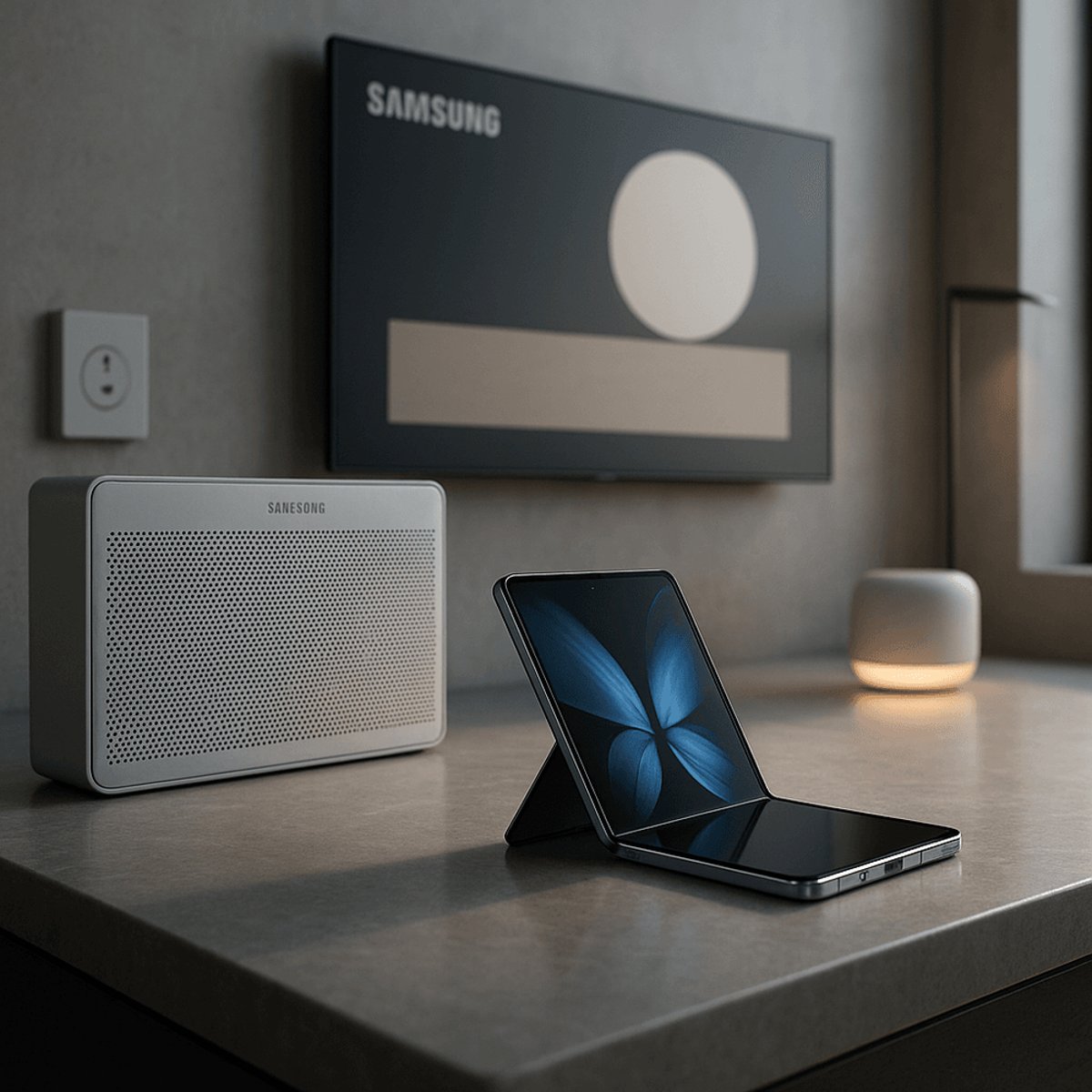
The gold winners reveal where Samsung's design thinking is heading. Music Studio 5, a deceptively simple rectangular speaker, hides high-performance audio units behind a finely perforated grille with dynamic front lighting that guides users through functions. But the real trick is Q-Symphony, Samsung's wireless interface that syncs the speaker with Samsung TVs for what the company calls a cinema-like experience at home. It's the kind of ecosystem play that locks users deeper into Samsung's world.
The second gold went to something less flashy but potentially more useful - a color-coding system for home appliance accessories. Vacuum filters, air purifier components, and other replaceable parts now come in three distinct colors based on maintenance needs and disposal methods. "Design goes far beyond products or user interfaces. It shapes meaningful experiences that resonate with people," Mauro Porcini, Samsung's President and Chief Design Officer, told Samsung Newsroom. "Human-centered design will remain at the heart of our efforts."
The 77 awards span nine design disciplines evaluated by the iF competition, which has been running since 1953. Samsung's haul includes recognition for the S95H OLED, a TV with an ultra-slim, bezel-free design that mimics a picture frame on the wall, and the Galaxy Z Fold7, which Samsung bills as its thinnest and lightest foldable yet. The Fold7 combines precision engineering with AI features, though Samsung's been careful not to overpromise on the AI front after mixed reception to earlier Galaxy AI rollouts.
Other winners show Samsung hedging its bets across different form factors. The Movingstyle is a lifestyle screen that follows users around, while Vision AI TV adapts its interface based on context. There's also Spatial Signage, a glasses-free 3D display that could have implications for retail and advertising beyond consumer TVs. One UI 7, the latest version of Samsung's Android skin, earned recognition for AI-driven enhancements and what the company describes as greater personalization.
The smart home category brought wins for Home Insight, a feature that analyzes appliance status and usage patterns to recommend personalized solutions. It's part of Samsung's broader push into connected home ecosystems, an area where the company's competing with Apple, Google, and Amazon for dominance. The challenge isn't just making smart appliances - it's making them talk to each other in ways that feel intuitive rather than gimmicky.
What's notable is the breadth. Samsung didn't just win in one category - it swept across Product Design, Communication Design, User Experience, User Interface, and more. That suggests a coordinated design language flowing through the entire organization, from hardware to software to services. It's the kind of vertical integration that's hard to pull off at Samsung's scale.
The timing matters too. As smartphone and TV hardware specs plateau, design differentiation becomes the battleground. Apple has long competed on aesthetics and user experience rather than raw specs. Samsung's iF sweep signals it's ready to fight on that terrain, especially as AI features become table stakes across the industry. The question is whether awards translate to sales, particularly in markets like North America where Samsung still trails Apple in premium segments.
The iF Design Awards carry weight in the industry, but they're also a marketing tool. Companies submit products for consideration, judges evaluate based on differentiation and impact, and winners get PR wins like this. Still, 77 awards across nine disciplines isn't easy to fake - it requires consistent execution across product lines and regions.
What comes next is whether Samsung can turn design recognition into market momentum. The Galaxy Z Fold7 faces competition from Chinese foldable makers like Huawei and Xiaomi, which are pushing thinner, lighter designs at lower prices. The TV market is brutal, with razor-thin margins and LG and Sony competing hard on OLED panels. And smart home remains fragmented, with no clear platform winner.
But the 77 awards give Samsung ammunition for its marketing campaigns and retail positioning. Expect to see "iF Design Award Winner" stickers on packaging and in ads. More importantly, the wins validate Samsung's pivot toward experience design over pure specs - a shift that could define the next phase of consumer tech competition.
Samsung's 77-award sweep at iF Design 2026 isn't just a trophy haul - it's a signal that the company's competing on aesthetics and user experience as hardware specs converge across the industry. With golds for ecosystem plays like Music Studio 5's Q-Symphony and practical innovations like color-coded appliance accessories, Samsung's betting that design differentiation will drive premium sales against Apple and Chinese competitors. The real test comes in retail, where awards need to translate into purchases in a market that's increasingly skeptical of incremental upgrades.